Overview
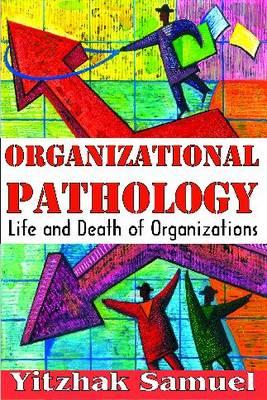
""Organizational Pathology"" draws an extended metaphor that the life cycle of an organization is akin to the biological life cycle. Like all living things, organizations will encounter problems that lead to decline and eventual failure. This work discusses the basic problems and life-threatening diseases responsible for organizations' failure and death, including organizational politics, organizational corruption, and organizational crime. The book also contains critical work on crises and fixations; failure and survival; and, processes of disbandment and closure of dying organizations. The consideration of these issues follows a diagnostic model of failure. Samuel argues that if the problems that lead to failure can be predicted or diagnosed early, their severity can be assessed and possible remedies can be implemented to avoid escalating crises. At the very least, an understanding of why and how decline happens can be gained from this analysis. This book offers facts about the causes and consequences of organizational downfall and clues about diagnoses of certain symptoms of abnormal behavior, and how to identify early signs of decline or failure. In order to illustrate these abstract arguments and concepts, Samuel uses various real-life examples of events that have occurred in cross-country contexts. In this way, ""Organizational Pathology: Life and Death of Organizations"" should serve a variety of readers. Although primarily intended for students and scholars in the social and behavioral sciences that are familiar with the study and the practice of organizations, this book's informal style makes it easily accessible to a wide range of readers. Just as Samuel's previous book on organizational politics led to new lines of research and theory, this book will encourage similar studies in organizational pathology and institutional malaise.
Full Product Details
Author: Nicos P. Mouzelis ,
Yitzhak Samuel
Publisher: Taylor & Francis Inc
Imprint: Transaction Publishers
Dimensions:
Width: 15.70cm
, Height: 1.80cm
, Length: 23.40cm
Weight: 0.408kg
ISBN: 9781412810647
ISBN 10: 1412810647
Pages: 170
Publication Date: 30 January 2010
Audience:
College/higher education
,
Professional and scholarly
,
Tertiary & Higher Education
,
Professional & Vocational
Format: Hardback
Publisher's Status: No Longer Our Product
Availability: In Print

This item will be ordered in for you from one of our suppliers. Upon receipt, we will promptly dispatch it out to you. For in store availability, please contact us.
Reviews
To aid scholars and managers in predicting organizational failure, Samuel provides a model to help diagnose and predict an organization's decline and potential end. Particularly noteworthy are the author's observations regarding a firm's ability to survive failure based on its dependability and legitimacy. Samuel notes that public sector organizations with strong unions seem more likely to survive failure and become, in effect, 'permanent failures' that should not persist. This occurs, he says because of certain stakeholders' dependency on the organization that should fail. --Choice
<p> To aid scholars and managers in predicting organizational failure, Samuel provides a model to help diagnose and predict an organization's decline and potential end. Particularly noteworthy are the author's observations regarding a firm's ability to survive failure based on its dependability and legitimacy. Samuel notes that public sector organizations with strong unions seem more likely to survive failure and become, in effect, 'permanent failures' that should not persist. This occurs, he says because of certain stakeholders' dependency on the organization that should fail. <p> --Choice
To aid scholars and managers in predicting organizational failure, Samuel provides a model to help diagnose and predict an organization's decline and potential end. Particularly noteworthy are the author's observations regarding a firm's ability to survive failure based on its dependability and legitimacy. Samuel notes that public sector organizations with strong unions seem more likely to survive failure and become, in effect, 'permanent failures' that should not persist. This occurs, he says because of certain stakeholders' dependency on the organization that should fail. --Choice To aid scholars and managers in predicting organizational failure, Samuel provides a model to help diagnose and predict an organization's decline and potential end. Particularly noteworthy are the author's observations regarding a firm's ability to survive failure based on its dependability and legitimacy. Samuel notes that public sector organizations with strong unions seem more likely to survive failure and become, in effect, 'permanent failures' that should not persist. This occurs, he says because of certain stakeholders' dependency on the organization that should fail. --Choice To aid scholars and managers in predicting organizational failure, Samuel provides a model to help diagnose and predict an organization's decline and potential end. Particularly noteworthy are the author's observations regarding a firm's ability to survive failure based on its dependability and legitimacy. Samuel notes that public sector organizations with strong unions seem more likely to survive failure and become, in effect, 'permanent failures' that should not persist. This occurs, he says because of certain stakeholders' dependency on the organization that should fail. --Choice -To aid scholars and managers in predicting organizational failure, Samuel provides a model to help diagnose and predict an organization's decline and potential end. Particularly noteworthy are the author's observations regarding a firm's ability to survive failure based on its dependability and legitimacy. Samuel notes that public sector organizations with strong unions seem more likely to survive failure and become, in effect, 'permanent failures' that should not persist. This occurs, he says because of certain stakeholders' dependency on the organization that should fail.- --Choice
To aid scholars and managers in predicting organizational failure, Samuel provides a model to help diagnose and predict an organization's decline and potential end. Particularly noteworthy are the author's observations regarding a firm's ability to survive failure based on its dependability and legitimacy. Samuel notes that public sector organizations with strong unions seem more likely to survive failure and become, in effect, 'permanent failures' that should not persist. This occurs, he says because of certain stakeholders' dependency on the organization that should fail. </p> --<em>Choice</em></p>
Author Information
Yitzhak Samuel is professor emeritus in the department of sociology and anthropology and the director of the graduate program in organizational development at the University of Haifa. He is the author of numerous articles and books, including The Political Agenda of Organizations (Transaction, 2005), Work and Organizations in Israel, and The Political Game: Power and Influence in Organizations.