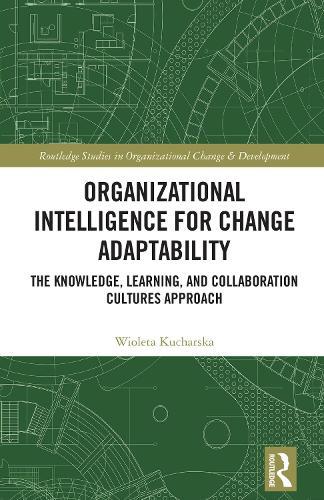
Organizational Intelligence for Change Adaptability: The Knowledge, Learning, and Collaboration Cultures Approach

Author:   Wioleta Kucharska
Publisher:   Taylor & Francis Ltd
ISBN:  

9781032777665


Pages:   188
Publication Date:   22 May 2025
Format:   Hardback
Availability:   In Print   Availability explained
This item will be ordered in for you from one of our suppliers. Upon receipt, we will promptly dispatch it out to you. For in store availability, please contact us.

Our Price $305.00 Quantity:  
Add to Cart

Share |

Organizational Intelligence for Change Adaptability: The Knowledge, Learning, and Collaboration Cultures Approach


Overview

This book offers a pioneering exploration of how the synergy between knowledge, learning, and collaboration (the KLC approach) drives organizational intelligence and adaptability. Grounded in empirical research and case studies, it examines how the impact of the KLC approach varies based on company culture (adhocracy, clan, market, and hierarchy) and management levels (team, division and organization). Readers will discover actionable strategies for fostering collective intelligence and adapting to change, especially in the context of remote work and AI-driven environments. The book highlights the critical role of leaders as architects of company culture and provides practical guidance for aligning culture with business goals. Case studies bring the concepts to life, offering valuable lessons for designing and sustaining a growth-agile mindset. This research-rich volume is an essential resource for researchers, academics, and students in organizational change, knowledge management, and strategy, as well as business leaders seeking to enhance their company’s collective intelligence and adaptability.

Full Product Details

Author:   Wioleta Kucharska
Publisher:   Taylor & Francis Ltd
Imprint:   Routledge
Weight:   0.520kg
ISBN:  

9781032777665


ISBN 10:   1032777664
Pages:   188
Publication Date:   22 May 2025
Audience:   College/higher education ,  Tertiary & Higher Education
Format:   Hardback
Publisher's Status:   Active
Availability:   In Print   Availability explained
This item will be ordered in for you from one of our suppliers. Upon receipt, we will promptly dispatch it out to you. For in store availability, please contact us.

Table of Contents

Introduction Section I: Organizational Intelligence activation through the KLC approach - scientific evidence 1. Company culture matters – study background 2. From Company culture to organizational intelligence - conceptual framework 3. Methodology - study method 4. Empirical evidence – study results 5. Meaning of the given findings - discussion 6. What else do we need to know? – emerging questions raised from limitations and implications Section II: Organizational Intelligence activation through the KLC approach implementation – manual 7. Motivation matters – organizational change drivers impact the KLC approach implementation methods 8. Adhocracy culture 9. Market culture 10. Clan culture 11. Hierarchy culture Section III: Organizational intelligence: collective human vs. artificial? 12. What culture, such algorithms - algorithmic management and company culture type 90 13. What culture, such virtual workspace standards 14. Agile mindset leader’s era - new leadership quality to support organizational intelligence in AI-supported workplaces What Have We Learnt from This Book – closing conclusions Appendixes Appendix 1: Bibliometric analysis Appendix 2: The functional KLC-cultures approach moderated by division and team power influence on organizational change adaptability - SPSS PROCESS output for hierarchy, market, clan, and adhocracy cultures. Appendix 3: Company culture assessment tools

Reviews

Author Information

Wioleta Kucharska is a professor in the Management Department of the Faculty of Management and Economics at the Gdansk University of Technology, Fahrenheit Universities Union, Poland. Along with scientific passion and achievements, she has 12 years of intensive managerial experience; therefore, her works, in addition to theoretical foundations, always actively refer to management practice.

Tab Content 6

Author Website:  

Countries Available

All regions
Latest Reading Guide

MRGC26


Shopping Cart
Your cart is empty
Shopping cart
Mailing List