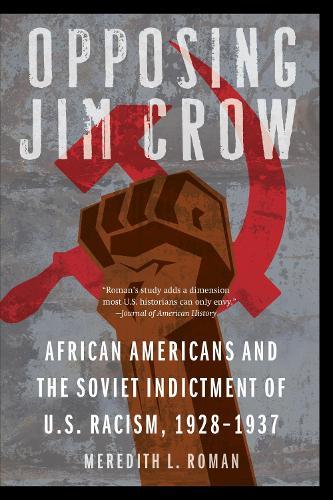
Full Product Details
Author: Meredith L. Roman
Publisher: University of Nebraska Press
Imprint: University of Nebraska Press
ISBN: 9781496216663
ISBN 10: 1496216660
Pages: 318
Publication Date: 01 December 2019
Audience:
Professional and scholarly
,
Professional & Vocational
Format: Paperback
Publisher's Status: Active
Availability: Manufactured on demand

We will order this item for you from a manufactured on demand supplier.
Reviews
A clear and vibrant read. -Amanda Higgins, The Register -- Amanda Higgins * The Register * Opposing Jim Crow sheds light on the very real impact of institutionalized Soviet antiracism, which makes this book a welcome addition to the history of the Soviet Union. -Tony Pecinovsky, People's World -- Tony Pecinovsky * People's World * Well written and well argued. -Randi Storch, Journal of Southern History -- Randi Storch * Journal of Southern History * Essential reading for those seeking a deeper understanding of the uneasy relationship between black radicals and Soviet propaganda, in both the decade it covers and beyond. -Allison Blakely, Russian Review -- Allison Blakely * Russian Review * A rich addition to the literature on Russian-American relations. -W. B. Whisenhunt, Choice -- W. B. Whisenhunt * Choice * Breaks new theoretical ground. . . . Roman's work, when closely read, might yet yield clues to a better understanding of the seemingly mysterious origins (and virulence) of post-Soviet racism. -Maxim Matusevich, Slavic Review -- Maxim Matusevich * Slavic Review * Roman's study adds a dimension most U.S. historians can only envy. . . . A fuller account is unlikely to appear, and the logic of Opposing Jim Crow could not easily be impeached. -James G. Ryan, Journal of American History -- James G. Rya * Journal of American History *
Roman's study adds a dimension most U.S. historians can only envy. . . . A fuller account is unlikely to appear, and the logic of Opposing Jim Crow could not easily be impeached. -James G. Ryan, Journal of American History A rich addition to the literature on Russian-American relations. -W. B. Whisenhunt, Choice Breaks new theoretical ground. . . . Roman's work, when closely read, might yet yield clues to a better understanding of the seemingly mysterious origins (and virulence) of post-Soviet racism. -Maxim Matusevich, Slavic Review Essential reading for those seeking a deeper understanding of the uneasy relationship between black radicals and Soviet propaganda, in both the decade it covers and beyond. -Allison Blakely, Russian Review Well written and well argued. -Randi Storch, Journal of Southern History Opposing Jim Crow sheds light on the very real impact of institutionalized Soviet antiracism, which makes this book a welcome addition to the history of the Soviet Union. -Tony Pecinovsky, People's World A clear and vibrant read. -Amanda Higgins, The Register
Roman's study adds a dimension most U.S. historians can only envy. . . . . . A fuller account is unlikely to appear, and the logic of Opposing Jim Crow could not easily be impeached. - James G. Ryan, Journal of American History Breaks new theoretical ground. . . . Roman's work, when closely read, might yet yield clues to a better understanding of the seemingly mysterious origins (and virulence) of post-Soviet racism. - Maxim Matusevich, Slavic Review A rich addition to the literature on Russian-American relations. - W. B. Whisenhunt, Choice Essential reading for those seeking a deeper understanding of the uneasy relationship between black radicals and Soviet propaganda, in both the decade it covers and beyond. - Allison Blakely, Russian Review Well written and well argued. - Randi Storch, Journal of Southern History Opposing Jim Crow sheds light on the very real impact of institutionalized Soviet antiracism, which makes this book a welcome addition to the history of the Soviet Union. - Tony Pecinovsky, People's World A clear and vibrant read. - Amanda Higgins, The Register
A clear and vibrant read. -Amanda Higgins, The Register -- Amanda Higgins * The Register * Opposing Jim Crow sheds light on the very real impact of institutionalized Soviet antiracism, which makes this book a welcome addition to the history of the Soviet Union. -Tony Pecinovsky, People's World -- Tony Pecinovsky * People's World * Well written and well argued. -Randi Storch, Journal of Southern History -- Randi Storch * Journal of Southern History * Essential reading for those seeking a deeper understanding of the uneasy relationship between black radicals and Soviet propaganda, in both the decade it covers and beyond. -Allison Blakely, Russian Review -- Allison Blakely * Russian Review * A rich addition to the literature on Russian-American relations. -W. B. Whisenhunt, Choice -- W. B. Whisenhunt * Choice * Breaks new theoretical ground. . . . Roman's work, when closely read, might yet yield clues to a better understanding of the seemingly mysterious origins (and virulence) of post-Soviet racism. -Maxim Matusevich, Slavic Review -- Maxim Matusevich * Slavic Review * Roman's study adds a dimension most U.S. historians can only envy. . . . A fuller account is unlikely to appear, and the logic of Opposing Jim Crow could not easily be impeached. -James G. Ryan, Journal of American History -- James G. Rya * Journal of American History *
A clear and vibrant read. -Amanda Higgins, The Register -- Amanda Higgins * The Register * Opposing Jim Crow sheds light on the very real impact of institutionalized Soviet antiracism, which makes this book a welcome addition to the history of the Soviet Union. -Tony Pecinovsky, People's World -- Tony Pecinovsky * People's World * Well written and well argued. -Randi Storch, Journal of Southern History -- Randi Storch * Journal of Southern History * Essential reading for those seeking a deeper understanding of the uneasy relationship between black radicals and Soviet propaganda, in both the decade it covers and beyond. -Allison Blakely, Russian Review -- Allison Blakely * Russian Review * Breaks new theoretical ground. . . . Roman's work, when closely read, might yet yield clues to a better understanding of the seemingly mysterious origins (and virulence) of post-Soviet racism. -Maxim Matusevich, Slavic Review -- Maxim Matusevich * Slavic Review * A rich addition to the literature on Russian-American relations. -W. B. Whisenhunt, Choice -- W. B. Whisenhunt * Choice * Roman's study adds a dimension most U.S. historians can only envy. . . . A fuller account is unlikely to appear, and the logic of Opposing Jim Crow could not easily be impeached. -James G. Ryan, Journal of American History -- James G. Ryan * Journal of American History *
Author Information
Meredith L. Roman is an assistant professor of history at SUNY–Brockport. Her articles have appeared in the Journal of Communist Studies and Transition Politics, International Labor and Working-Class History, Race & Class, and Critique: A Journal of Socialist Theory.