Overview
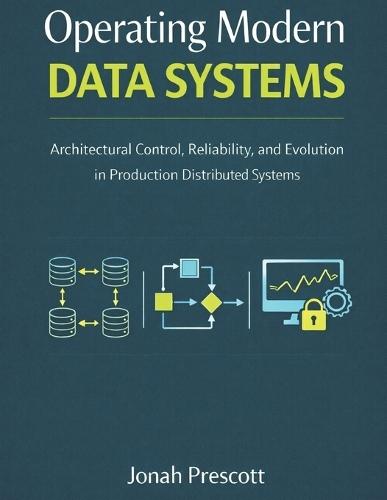
Operational architecture for long-lived data systems. Modern data systems rarely fail because of broken code. They fail because architectural intent erodes under time, pressure, and continuous change. Operating Modern Data Systems is a deep, architecture-first examination of what happens after systems leave the whiteboard and enter production. It reframes operations as an architectural discipline-where guarantees are defended or lost, authority is exercised under stress, and reliability is proven over years rather than releases. This book is not about tools, dashboards, or incident checklists. It focuses instead on the structural forces that shape real production systems: failure as a normal condition, time and ordering ambiguity, load and pressure propagation, migration risk, cost as a signal, security as operational trust, and the human and organizational realities embedded in every system. Written for experienced practitioners, the book develops architectural judgment rather than prescribing solutions. It examines how systems drift, how meaning degrades silently, and how design decisions are continuously rewritten through operational action. What This Book Covers Why correct designs still fail after deployment How operational shortcuts quietly become architectural commitments Reliability as preserved meaning-not just uptime Failure as a continuous condition, not an exceptional event Time, ordering, and partial truth in distributed systems Recovery, migration, and change as extended failure modes Load, pressure, backpressure, and containment Observability as the ability to explain behavior Cost, security, and governance as architectural signals Human judgment and organizational structure as part of the system How systems age-and what allows architecture to hold over time What Makes This Book Different Operations treated as architecture Production behavior, failure, and recovery are examined as structural concerns, not operational afterthoughts. Decision- and consequence-focused The book emphasizes how choices accumulate, constrain future change, and shape long-term reliability. Tool-agnostic and durable Concepts are designed to remain relevant as platforms, frameworks, and AI systems evolve. Reliability redefined Availability alone is not success. Reliability is the preservation of meaning, guarantees, and trust under stress. Written for the AI era without hype The book situates modern data and AI-driven systems within the same architectural forces, showing where automation amplifies risk and responsibility. Who This Book Is ForThis book is written for: Software engineers operating backend and platform systems Data engineers responsible for production pipelines and storage Senior, staff, and principal engineers shaping system architecture Architects and technical leaders accountable for long-term reliability Practitioners working with distributed data systems and AI platforms It assumes familiarity with production systems and distributed environments. Who This Book Is Not For Beginners seeking introductions or tutorials Readers looking for step-by-step guides or tool-specific instructions Those expecting quick fixes, patterns, or checklists Order now to develop architectural judgment for systems that must endure pressure, change, and time.
Full Product Details
Author: Jonah Prescott
Publisher: Independently Published
Imprint: Independently Published
Dimensions:
Width: 21.60cm
, Height: 1.80cm
, Length: 27.90cm
Weight: 0.771kg
ISBN: 9798241706195
Pages: 332
Publication Date: 28 December 2025
Audience:
General/trade
,
General
Format: Paperback
Publisher's Status: Active
Availability: Available To Order

We have confirmation that this item is in stock with the supplier. It will be ordered in for you and dispatched immediately.