Overview
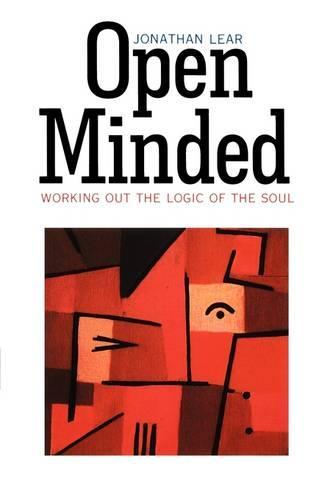
Freud is discredited, so we don't have to think about the darker strains of unconscious motivation anymore. We know what moves our political leaders, so we don't have to look too closely at their thinking either. In fact, everywhere we look in contemporary culture, knowingness has taken the place of thought. This book is a spirited assault on that deadening trend, especially as it affects our deepest attempts to understand the human psyche-in philosophy and psychoanalysis. It explodes the widespread notion that we already know the problems and proper methods in these fields and so no longer need to ask crucial questions about the structure of human subjectivity. ""What is psychology?"" Open Minded is not so much an answer to this question as an attempt to understand what is being asked. The inquiry leads Jonathan Lear, a philosopher and psychoanalyst, back to Plato and Aristotle, to Freud and psychoanalysis, and to Wittgenstein. Lear argues that Freud and, more generally, psychoanalysis are the worthy inheritors of the Greek attempt to put our mindedness on display. There are also, he contends, deep affinities running through the works of Freud and Wittgenstein, despite their obvious differences. Both are concerned with how fantasy shapes our self-understanding; both reveal how life's activities show more than we are able to say. The philosophical tradition has portrayed the mind as more rational than it is, even when trying to account for irrationality. Psychoanalysis shows us the mind as inherently restless, tending to disrupt its own functioning. And empirical psychology, for its part, ignores those aspects of human subjectivity that elude objective description. By triangulating between the Greeks, Freud, and Wittgenstein, Lear helps us recover a sense of what it is to be open-minded in our inquiries into the human soul.
Full Product Details
Author: Jonathan Lear
Publisher: Harvard University Press
Imprint: Harvard University Press
Edition: New edition
Dimensions:
Width: 15.60cm
, Height: 2.30cm
, Length: 23.50cm
Weight: 0.522kg
ISBN: 9780674455344
ISBN 10: 0674455347
Pages: 356
Publication Date: 01 September 1999
Audience:
College/higher education
,
Professional and scholarly
,
Undergraduate
,
Postgraduate, Research & Scholarly
Format: Paperback
Publisher's Status: Active
Availability: Out of stock

The supplier is temporarily out of stock of this item. It will be ordered for you on backorder and shipped when it becomes available.
Reviews
Our capacity to mean more than we say is the common thread of all the essays here, which explore philosophically the phenomenon of transference in psychotherapy, the nature of the unconscious mind and the role of Eros in Freud's thinking...In the chapter 'Knowingness and Abandonment: An Oedipus for Our Time,' Mr. Lear reinterprets Sophocles's Oedipus Tyrannus...[arguing] that Oedipus's flaw was to have understood the Delphic oracle too easily, to have assumed that 'meaning is transparent to human reason' and to have ignored 'unconscious meaning'...Mr. Lear offers similarly astute and original readings of Aristotle's Poetics, Plato's Symposium and Republic and Wittgenstein's Philosophical Investigations. He feels free to range so widely because he sees the work of these writers as related; each in its own way was 'working out the logic of the soul.' Each knew 'that one of the most important truths about us is that we have the capacity to be open minded: the capacity to live nondefensively with the question of how to live'...The critical essays will prove of value to anyone seriously engaged by literature. And the chapters on Freud and Oedipus are worth the price of admission alone...Mr. Lear concludes...'What matters, as Freud himself well understood, is what we are able to do with the meanings we make'...These essays prompt us to examine those meanings, which activity, as Plato famously said, is what makes life worth living. -- Christopher Lehmann-Haupt New York Times Jonathan Lear explores what is at stake in our willingness to submit to inquiry, and the danger in positing that we already know the end of an inquiry... Lear masterfully chronicles the most basic claim of psychoanalysis: human behavior is an activity that is meaning-seeking and meaning-forming...Throughout Open Minded Lear presents his reader with a textured reading of familiar figures. In connecting the fields of philosophy and psychoanalysis, Lear does more than ask us to see these disciplines as coincidental in their modes of inquiry... Lear leaves his readers with a finely crafted example of that activity. -- Jeannie Ridings JPCS: Journal for the Psychoanalysis of Culture and Society [This] collection of essays on psychoanalysis and philosophy...demonstrates the compatibilities between philosophy at its best and Freud's psychoanalysis, and argues for the continuing cultural need for Freud's influence...[Lear] is singularly well suited for the defense of Freud. He is deeply versed in the major works of Western philosophy and knows Freud in and out. As an active therapist he can refer to the exigencies of actual analyses to buttress, and refine, his points. More than that, Lear is a fine writer, clear, rigorous, good-humored, in command of a humane irony. Lear's essay proceeds in the spirit of Freud's own best work. It is shot through with common sense, while also being remarkably provocative...Lear sees deeply into the current war over Freud, much more so than Freud's programmatic attackers...The kind of writing that [he] offers...[is] forceful, original, questing and open, [and] far from standard academic prose...Open Minded is a remarkable book--highly articulate, learned, thoughtful and fresh...Jonathan Lear is one of the most independent and perceptive analysts of contemporary intellectual culture currently at work. -- Mark Edmundson New York Times Book Review Philosopher and psychoanalyst Jonathan Lear [believes that] Freud's work, however flawed, still affords the best map to our layered, often irrational mental landscape. In his new book, Open Minded, he offers a rousing defense of Freud, discarding the egregious errors like penis envy and castration complex, while reassessing Freud's broader conception of the unconscious as a repository of repressed meaning. 'There's been a tremendous need to trim the sails in the claims of what psychoanalysis can do,' he admits. But still, 'when we see the irrational behavior of Lewinsky and Clinton and Starr, we want to know not what their serotonin levels were or what evolutionary imperative they were following. We want to know what was going through their minds.' For this, he argues, we still rely on Freud. Without him, after all, a cigar would be just a cigar. -- John Leland and Claudia Kalb Newsweek Whatever one may think of its transcendental claims for psychoanalysis in particular, this is certainly an important book, drawing together classical and modern philosophy in support of a view of the mind that has been excluded from contemporary psychology. Of course, no philosophical system can succeed unquestionably in an attempt to justify itself. But if the nature of Mr. Lear's claims makes him vulnerable, this also demonstrates his point: It's only by being open to question that a system of philosophy can stay alive. So bring on the critics. Jonathan Lear is waiting to meet them. -- Matthew Belmonte Washington Times These essays reveal Lear to be counterintuitive, playful, empathetic--oh, yes, and funny too. He may be the world's perfect analyst...Lear reminds us that Freud's great achievement was to locate meaning and conflict squarely within the human psyche, rather than in the realm of what the ancients called fate and the religious call divine. -- Susie Linfield Los Angeles Times A wise defense of Freud by a psychoanalyst and philosopher who argues that without Freud's insights, citizens in a democratic polity are apt to believe that whatever they think and whatever they want make some kind of rational sense. New York Times Book Review Both a philosopher and a psychoanalyst, Jonathan Lear has an exploratory conversational turn of mind...In the course of 300 pages, he has moved you from the hostile vision of psychoanalysis which he confronts at the outset--that it is, after all, a waste of money better spent on Prozac--to a prospect of fertile ground, so immediate that you feel you can reach down and touch it. Set side by side, you discover anew, [that] psychoanalysis and the philosophy of mind stand in a relation to one another which is inherently bountiful. -- Liam Hudson Times Literary Supplement [UK It is through his consistent challenging of our taken-for-granted views of the world that Lear holds true to his book's title. In our explorations of consciousness, how easy is it to fall prey to the assumptions of knowingness that subtly preclude open mindedness? How often are we willing to challenge our fundamental assumptions in order to be open to the possibility of learning something truly unknown to us? Lear shows us how being open minded can lead to asking new questions that open up new possibilities for understanding. -- Jonathan Reams Journal of Consciousness Studies
This is a rich, imaginative and subtle book. It has an intricate structure, and though clearly written it requires concentration to read. Lear is a philosopher writing on psycho-analysis from inside, himself being a practising psycho-analyst. He also brings his insight, as a psycho-analyst, to bear on the philosophy he discusses. The parallels he sees and develops between different philosophers, between philosophers and psycho-analysts, what he has to say about Sophocles' Oedipus, about Freud and modernity's response to his ideas, about Plato's Republic and Symposium , about Wittgenstein and Kant make this book interesting and well worth reading. -- Ilham Dilman Philosophical Investigations [UK
This is a rich, imaginative and subtle book. It has an intricate structure, and though clearly written it requires concentration to read. Lear is a philosopher writing on psycho-analysis from inside, himself being a practising psycho-analyst. He also brings his insight, as a psycho-analyst, to bear on the philosophy he discusses. The parallels he sees and develops between different philosophers, between philosophers and psycho-analysts, what he has to say about Sophocles' Oedipus, about Freud and modernity's response to his ideas, about Plato's Republic and Symposium , about Wittgenstein and Kant make this book interesting and well worth reading. --Ilham Dilman Philosophical Investigations [UK
Author Information
Jonathan Lear is John U. Nef Distinguished Service Professor on the Committee on Social Thought and in the Department of Philosophy at the University of Chicago. His works include Wisdom Won from Illness, Radical Hope, A Case for Irony, and Happiness, Death, and the Remainder of Life.