Overview
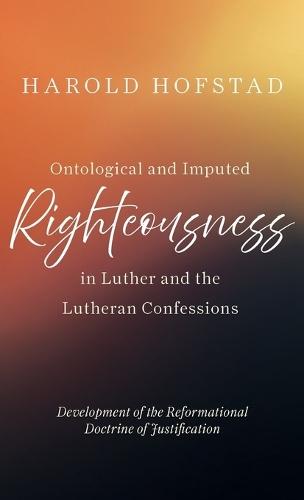
The purpose of this book is to trace how Luther's theology evolved from early Catholic stages, eventually arriving at a reformational interpretation of the doctrine of justification. Milestones and two primary turning points are identified in order to best clarify the true historical significance of his theology and its continuing effects until today. The late medieval penitential system caused Luther great spiritual anxiety, and he came into intense conflict with church authorities. Influences and engagement with colleagues (especially Philip Melanchthon) and a working recovery of ancient and biblical sources also spurred theological development that exhibited a shift away from traditional emphasis on intrinsic-sanative, ontological righteousness, to extrinsic-passive, imputed, alien righteousness from Christ. Luther's mature theology was preserved in the Lutheran Church's confessional documents. The Formula of Concord resulted from resolving a series of intra-Lutheran controversies, cementing confessional identity from that point on. Ecumenical dialogues conducted in the twentieth century (with special attention given to the doctrine of justification) helped bridge divides between Lutherans, Catholics, and Orthodox.
Full Product Details
Author: Harold Hofstad
Publisher: Wipf & Stock Publishers
Imprint: Wipf & Stock Publishers
Dimensions:
Width: 14.00cm
, Height: 0.80cm
, Length: 21.60cm
Weight: 0.268kg
ISBN: 9798385254378
Pages: 104
Publication Date: 31 December 2025
Audience:
General/trade
,
General
Format: Hardback
Publisher's Status: Active
Availability: Available To Order

We have confirmation that this item is in stock with the supplier. It will be ordered in for you and dispatched immediately.
Reviews
""Harold Hofstad has written an accessible primer on the defining Lutheran doctrine of justification by grace through faith. His careful attention to the development of this teaching in the Reformation period and his focus on its continuing relevance provides a foundation for informed Lutheran engagement with ecumenical and interfaith partners."" --Maria Erling, Professor of Modern Church History and Global Mission, United Lutheran Seminary, Gettysburg and Philadelphia ""As few others before him, Hofstad goes below the surface to bring out the themes and disputes surrounding the later appropriation of Luther's theology. He traces and evaluates the main positions in this story as they relate to the reformer's understanding of the gospel--how we are made right with God."" --Gerald Christianson, Professor Emeritus of Church History, United Lutheran Seminary, Gettysburg
Author Information
Harold Hofstad is a retired technical writer and electrical engineer who recently graduated from United Lutheran Seminary with a master of arts degree. He is the anonymous author of many corporate and military technical manuals, but this is the first book published under his own name. He has had a lifelong interest in theology and church history. This book comes as a culmination of both his informal and formal studies.