Overview
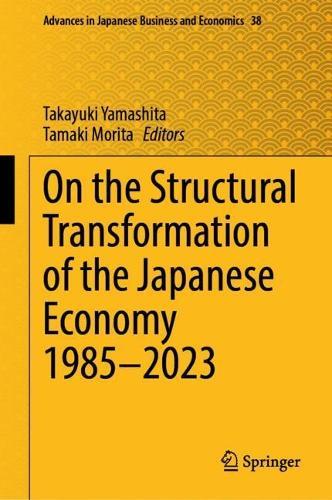
This book clarifies the cause and effect of Japan’s “Lost Three Decades”. By analyzing factors such as exchange rates, industrial structure, internal migration, and the labor market, and in part comparing them with those of the U.S. economy, it offers new insights into the significant structural transformations that have occurred in the Japanese economy. It particularly highlights the different performance between the manufacturing and non-manufacturing sectors as a cause of the prolonged stagnation. The asset price bubble of the 1980s and the strong yen in the 1990s altered the employment structure of the export-driven manufacturing sector, drawing laborers to the service sector. The resulting allocation of resources to the low-productivity service sector has delayed economic recovery. It also discusses problems of an excess concentration in the Tokyo Metropolitan area. This book not only identifies structural change in the Japanese economy but also provides a practical framework for a differential productivity economic growth model. The studies offer a fresh understanding of Japan’s economic transformation, with implications that can be directly applied to real-world economic scenarios, making it a valuable resource for economists, researchers, policymakers, and anyone interested in the dynamics of the Japanese economy.
Full Product Details
Author: Takayuki Yamashita ,
Tamaki Morita
Publisher: Springer Verlag, Singapore
Imprint: Springer Verlag, Singapore
ISBN: 9789819572298
ISBN 10: 9819572290
Pages: 214
Publication Date: 31 March 2026
Audience:
Professional and scholarly
,
College/higher education
,
Professional & Vocational
,
Postgraduate, Research & Scholarly
Format: Hardback
Publisher's Status: Active
Availability: Not yet available

This item is yet to be released. You can pre-order this item and we will dispatch it to you upon its release.
Author Information
TAKAYUKI YAMASHITA is a Professor of Economics at Aoyama Gakuin University. He is the author of articles on Industrial Organization and Regional Economics. In several articles, he analyzes the impact of exchange rate changes on competition among domestic retailers or manufacturers. He serves as vice president and editorial board chair of the Japan Chapter of the System Dynamics Society and previously served on the board of directors of the Japan Economic Policy Association. TAMAKI MORITA is a Professor of Economics in the Faculty of Aviation Management at J. F. Oberlin University. She is an interdisciplinary applied economist whose research bridges macroeconomic growth theory and micro-level analysis, investigating subjective well-being, resource allocation, education, and the evolving role of artificial intelligence (AI). Her work contributes to empirically grounded approaches to economic policy that enhance social welfare.