Overview
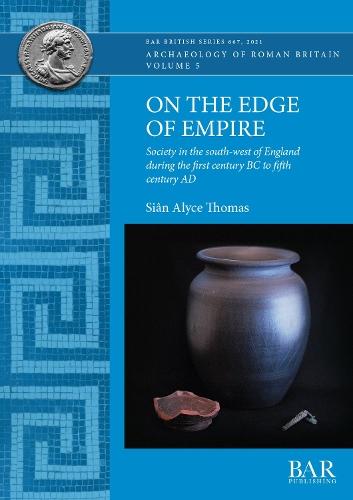
This volume explores the relationship between people and material culture in the south-west peninsula from the first century BC to the fifth century AD. This area has often been ignored in the narratives of Britannia and the application of traditional theoretical models to the archaeology of the region has perpetuated the idea that it was largely 'un-Romanised'. In recent years new theoretical concepts have been developed which recognise that interactions in the provinces were far more complex than the simplistic dichotomy of Roman versus Native. More emphasis is also being placed on artefacts and their use in the creation of identity. This work builds on this and explores the relationship between material culture and the creation of identity. This is achieved through the analysis of the ceramics, personal adornment items and coins found in the region, gathered from excavation reports and from data recorded through the Portable Antiquities Scheme. The analysis sheds new light on the role these objects played in the renegotiation of identity that resulted from the Roman conquest.
Full Product Details
Author: Siân Alyce Thomas
Publisher: BAR Publishing
Imprint: BAR Publishing
Weight: 0.893kg
ISBN: 9781407358468
ISBN 10: 1407358464
Pages: 224
Publication Date: 31 December 2021
Audience:
Professional and scholarly
,
Professional & Vocational
Format: Paperback
Publisher's Status: Active
Availability: Available To Order 
We have confirmation that this item is in stock with the supplier. It will be ordered in for you and dispatched immediately.
Table of Contents
List of figures List of tables Abstract Acknowledgements 1. Introduction 1.1 Aims and Objectives 1.2 Research Context 1.3 Research Parameters 1.3.1 Geology and Topography 1.3.2 Chronology 1.4 The Data 1.4.1 The Database Structure 1.4.2 Interrogation of the Dataset and GIS Mapping 1.5 Structure 2. The Dumnonii 2.1 The Late Iron Age 2.1.1 Late Iron Age Settlement Pattern 2.1.1.1 Promontory Forts 2.1.1.2 Hillforts 2.1.1.3 Multiple Enclosure Forts 2.1.1.4 Rounds and Hillslope Enclosures 2.1.1.5 Unenclosed Settlements 2.1.2 Material Culture 2.1.3 Trade 2.1.4 Religion and Ritual 2.1.5 Political and Social Structure 2.2 The Roman Period 2.2.1 Settlement Pattern 2.2.1.1 Rural Settlements 2.2.1.2 Villa Landscape 2.2.1.3 Roadside Settlements 2.2.1.4 Towns 2.2.2 Administration 2.2.3 Manufacture and Trade 2.2.4 Religion and Ritual 2.3 Towards a New Perspective 3. Material Culture and Identity 3.1 Theorising Roman Studies 3.2 Identity 3.3 Material Culture 3.4 Theoretical Perspectives 4. The Ceramic Assemblage 4.1 Methodology 4.2 The Social Life of Clay 4.2.1 Case Study 1: Regional and Local Identities: the use of gabbroic clay within Cornwall 4.2.2 Case Study 2: Brilliant Vessels: the use of mica rich clays in Devon 4.2.3 Conclusion 4.3 Regional Overview 4.3.1 The Rural Settlements 4.3.1.1 The Middle and Late Iron Age Period 4.3.1.2 The Romano-British Period 4.3.2 Exeter 4.3.3 Conclusion 4.4 Change Through Time 4.4.1 The Middle and Late Iron Ages, CP1 and CP2 4.4.2 The Late Iron Age to Roman Transition period, CP3 4.4.3 The Early to Mid Romano-British period, CP4 4.4.4 The Mid to Late Romano-British period, CP5 4.4.5 The Late Romano-British period to Post Roman period, CP6 4.5 Discussion 5. Personal Adornment Items 5.1 Methodology 5.2 Biographical Objects 5.2.1 Case Study 1: Identity, Power and Memory: Decorated Brooches in Roman Cornwall 5.2.2 Personal Adornment Items as Votives and the Shrine at Nornour 5.2.3 Conclusion 5.3 Regional Overview 5.3.1 Exeter 5.3.2 The Rural Settlements 5.3.3 Personal Adornment in the Wider Region 5.3.4 Conclusion 5.4 Change Through Time 5.4.1 The Late Iron Age, CP2 5.4.2 The Late Iron Age to Roman Transition period, CP3 5.4.3 The Early to Mid Romano-British period, CP4 5.4.4 The Mid to Late Romano-British period, CP5 5.4.5 The Late Romano-British period to Post Roman period, CP6 5.5 Discussion 6. Coinage in the South-West 6.1 Methodology 6.1.1 Single and Settlement Finds 6.1.1.1 Nature of the Evidence 6.1.1.2 Methodology 6.1.2 Hoards 6.1.2.1 Nature of the Evidence 6.1.2.2 Hoard Methodology 6.2 Regional Overview 6.3 Change Through Time 6.3.1 The Iron Age 6.3.2 The Early Period 6.3.2.1 The Republican to Flavian Period 6.3.2.2 The Flavian to Mid Second Century Period 6.3.2.3 The Mid Second Century to Caracalla 6.3.2.4 The Final Years of the Early Period 6.3.3 The Radiate Period 6.3.4 The Late Period 6.4 Discussion 7. Narratives of Change in the South-West Peninsula 7.1 People, Material, and Identity in the South-West 7.1.2 Memory and Identity in the South-West 7.2 The Dumnonii: A New Perspective for the South-West Appendix 1. The Sites 1.1 Introduction 1.2 Notes on the Sites 1.3 Map of the Sites 1.4 Gazetteer Bibliography
Reviews
'The south-west is a very important region but has been relatively neglected. The importance relates to the pre-Roman contacts in this region and the disparate ways in which its communities developed. The book communicates an excellent study of discrepant experiences which will bring the archaeology of the region into a national and international perspective.' Professor Richard Hingley, Durham University
Author Information
Siân Alyce Thomas undertook her bachelor's and master's degrees at the University of Bristol in 2004 and 2007. She then went on to work in commercial archaeology before starting her PhD research at Cardiff University in 2013, which she completed in 2018. Siân currently works as a Project Officer for Archaeology Wales Ltd and has worked on several of their large excavation projects over the last few years.
Tab Content 6
Author Website:
Countries Available
All regions
|