Overview
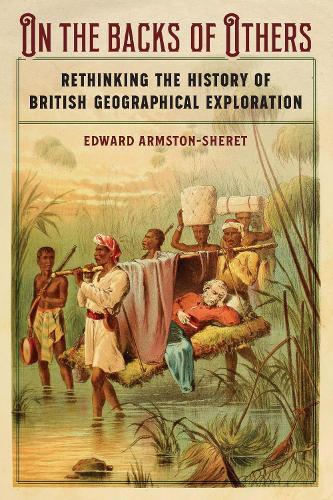
In the Victorian and Edwardian eras British explorers sought to become respected geographers and popular public figures, downplaying or reframing their reliance on others for survival. Far from being solitary heroes, these explorers were in reality dependent on the bodies, senses, curiosity, and labor of subaltern people and animals. In On the Backs of Others Edward Armston-Sheret offers new perspectives on British exploration in this era by focusing on the contributions of the people and animals, ordinarily written out of the mainstream histories, who made these journeys possible. He explores several well-known case studies of enduring popular and academic interest, such as Richard Francis Burton and John Hanning Speke’s Nile expeditions (1856–59 and 1860–63); Isabella Bird’s travels in North America, Persia, and East Asia (1872–c. 1900); and Captain Robert Falcon Scott’s two Antarctic expeditions (1901–4 and 1911–13). Armston-Sheret argues that numerous previously ignored stories show the work and agency of subaltern groups. In rethinking the history of exploration On the Backs of Others offers the first book-length study of the relationship between exploration and empire and their legacies within academic geography.
Full Product Details
Author: Edward Armston-Sheret
Publisher: University of Nebraska Press
Imprint: University of Nebraska Press
ISBN: 9781496230973
ISBN 10: 1496230973
Pages: 336
Publication Date: 01 December 2024
Audience:
Professional and scholarly
,
Professional & Vocational
Format: Hardback
Publisher's Status: Active
Availability: In Print

This item will be ordered in for you from one of our suppliers. Upon receipt, we will promptly dispatch it out to you. For in store availability, please contact us.
Reviews
“On the Back of Others questions traditional readings of the history of nineteenth-century British exploration through the lens of bodily experience. Behind the veil of heroic narratives and scientific authority, we discover a world of complex intimacies, unexpected encounters, and physical constraints. Explorers’ bodies, Ed Armston-Sheret shows us, were not imperishable bronze statues but fleshy and leaky organisms dependent on the support and care of others—porters, cooks, guides, translators, and even animals—whose stories have gone largely forgotten. Thoroughly researched, fully illustrated, and engaging, this book uncovers many of these stories.”—Veronica della Dora, professor of human geography at Royal Holloway, University of London
“On the Backs of Others questions traditional readings of the history of nineteenth-century British exploration through the lens of bodily experience. Behind the veil of heroic narratives and scientific authority, we discover a world of complex intimacies, unexpected encounters, and physical constraints. Explorers’ bodies, Edward Armston-Sheret shows us, were not imperishable bronze statues but fleshy and leaky organisms dependent on the support and care of others—porters, cooks, guides, translators, and even animals—whose stories have gone largely forgotten. Thoroughly researched, fully illustrated, and engaging, this book uncovers many of these stories.”—Veronica della Dora, professor of human geography at Royal Holloway, University of London “Though not the first work to situate the history of exploration in relation to the history of the body and physical experience, On the Backs of Others does so more fully and extensively than any work of which I am aware. Moreover, Edward Armston-Sheret moves beyond the body of the individual explorer to consider those of the many other people and animals on which the ‘heroic’ explorer relied.”—Stewart A. Weaver, author of Exploration: A Very Short Introduction
""I can certainly recommend On the Backs of Others: Rethinking the History of British Geographical Exploration for all readers interested in exploration, cartography, and geographical studies.""-Benjamin B. Olshin, Terrae Incognitae “On the Backs of Others questions traditional readings of the history of nineteenth-century British exploration through the lens of bodily experience. Behind the veil of heroic narratives and scientific authority, we discover a world of complex intimacies, unexpected encounters, and physical constraints. Explorers’ bodies, Edward Armston-Sheret shows us, were not imperishable bronze statues but fleshy and leaky organisms dependent on the support and care of others-porters, cooks, guides, translators, and even animals-whose stories have gone largely forgotten. Thoroughly researched, fully illustrated, and engaging, this book uncovers many of these stories.”-Veronica della Dora, professor of human geography at Royal Holloway, University of London “Though not the first work to situate the history of exploration in relation to the history of the body and physical experience, On the Backs of Others does so more fully and extensively than any work of which I am aware. Moreover, Edward Armston-Sheret moves beyond the body of the individual explorer to consider those of the many other people and animals on which the ‘heroic’ explorer relied.”-Stewart A. Weaver, author of Exploration: A Very Short Introduction
Author Information
Edward Armston-Sheret is the Alan Pearsall Fellow in Naval and Maritime History at the Institute of Historical Research, School of Advanced Studies, University of London.