Overview
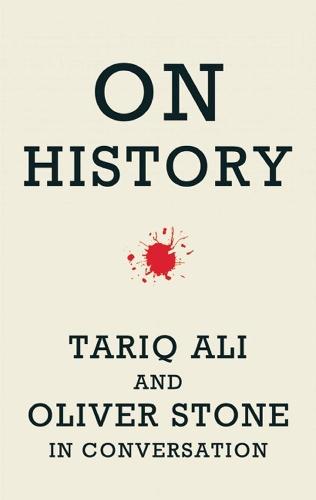
In working together on two challenging new documentaries-South of the Border and the forthcoming The Untold History of the United States series for Showtime-filmmaker Oliver Stone engaged with author and filmmaker Tariq Ali in a probing, hard-hitting conversation on the politics of history. Their dialogue brings to light a number of forgotten-or deliberately buried-episodes of American history, from the US intervention against the Russian Revolution and the dynamic radicalism of the Industrial Workers of the World to Henry Wallace's sidelining by Democratic Party machine insiders and the ongoing interference of the United States in Pakistani political affairs. For Stone and Ali-two of our most insightful observers on history and popular culture-no topic is sacred, no orthodoxy goes unchallenged. TARIQ ALI is an internationally acclaimed Pakistani writer and filmmaker. He has written more than two dozen books on world history and politics and seven novels (translated into over a dozen languages) as well as scripts for the stage and screen. He is an editor of New Left Review and lives in London. OLIVER STONE has directed, among other films, Wall Street: Money Never Sleeps, W., World Trade Center, Alexander, Any Given Sunday, Nixon, Natural Born Killers, Heaven and Earth, JFK, The Doors, Born on the Fourth of July, Talk Radio, Wall Street, Platoon, Salvador, and the documentaries Looking for Fidel, Comandante, Persona Non Grata, South of the Border, and the upcoming The Untold History of the United States series for Showtime.
Full Product Details
Author: Tariq Ali ,
Oliver Stone
Publisher: Haymarket Books
Imprint: Haymarket Books
Dimensions:
Width: 14.00cm
, Height: 1.30cm
, Length: 21.60cm
Weight: 0.150kg
ISBN: 9781608461493
ISBN 10: 1608461491
Pages: 108
Publication Date: 08 November 2011
Audience:
General/trade
,
General
Format: Paperback
Publisher's Status: Active
Availability: Temporarily unavailable

The supplier advises that this item is temporarily unavailable. It will be ordered for you and placed on backorder. Once it does come back in stock, we will ship it out to you.
Reviews
Oliver Stone and Tariq Ali, two of our most provocative and radical voices, engage in a thought-provoking conversation about history--ripping apart entrenched establishment narratives which have suppressed the alternative visions we desperately need for our radical social movements and a true participatory democracy. --Katrina vanden Heuvel, editor and publisher, the Nation Reading On History is like watching a fascinating and mesmerizing film . . . a must read if you want to understand the world today. --Michael Ratner, president, Center for Constitutional Rights Oliver Stone asks smart questions about the rise and fall of the United States and its empire in the twentieth century, and Tariq Ali provides smart answers. The result is a provocative book that is sure to incite controversy and stimulate debate. --Jon Wiener, professor of history at the University of California at Irvine Oliver Stone and Tariq Ali, two of our most provocative and radical voices, engage in a thought-provoking conversation about historyripping apart entrenched establishment narratives which have suppressed the alternative visions we desperately need for our radical social movements and a true participatory democracy. Katrina vanden Heuvel, editor and publisher, the Nation Reading On History is like watching a fascinating and mesmerizing film . . . a must read if you want to understand the world today. Michael Ratner, president, Center for Constitutional Rights Oliver Stone asks smart questions about the rise and fall of the United States and its empire in the twentieth century, and Tariq Ali provides smart answers. The result is a provocative book that is sure to incite controversy and stimulate debate. Jon Wiener, professor of history at the University of California at Irvine Oliver Stone and Tariq Ali, two of our most provocative and radical voices, engage in a thought-provoking conversation about history--ripping apart entrenched establishment narratives which have suppressed the alternative visions we desperately need for our radical social movements and a true participatory democracy. --Katrina vanden Heuvel, editor and publisher, the Nation Reading On History is like watching a fascinating and mesmerizing film . . . a must read if you want to understand the world today. --Michael Ratner, president, Center for Constitutional Rights Oliver Stone asks smart questions about the rise and fall of the United States and its empire in the twentieth century, and Tariq Ali provides smart answers. The result is a provocative book that is sure to incite controversy and stimulate debate. --Jon Wiener, professor of history at the University of California at Irvine
<br> Oliver Stone and Tariq Ali, two of our most provocative and radical voices, engage in a thought-provoking conversation about history--ripping apart entrenched establishment narratives which have suppressed the<br>alternative visions we desperately need for our radical social movements and a true participatory democracy. <br>--Katrina vanden Heuvel, editor and publisher, the Nation <br><br> Reading On History is like watching a fascinating and mesmerizing film . . . a must read if you want to understand the world today. <br>--Michael Ratner, president, Center for Constitutional Rights<br><br> Oliver Stone asks smart questions about the rise and fall of the United States and its empire in the twentieth century, and Tariq Ali provides smart answers. The result is a provocative book that is sure to<br>incite controversy and stimulate debate. <br>--Jon Wiener, professor of history at the University of California at Irvine
Oliver Stone and Tariq Ali, two of our most provocative and radical voices, engage in a thought-provoking conversation about history--ripping apart entrenched establishment narratives which have suppressed the alternative visions we desperately need for our radical social movements and a true participatory democracy. --Katrina vanden Heuvel, editor and publisher, the Nation Reading On History is like watching a fascinating and mesmerizing film . . . a must read if you want to understand the world today. --Michael Ratner, president, Center for Constitutional Rights Oliver Stone asks smart questions about the rise and fall of the United States and its empire in the twentieth century, and Tariq Ali provides smart answers. The result is a provocative book that is sure to incite controversy and stimulate debate. --Jon Wiener, professor of history at the University of California at Irvine
Oliver Stone and Tariq Ali, two of our most provocative and radical voices, engage in a thought-provoking conversation about historyripping apart entrenched establishment narratives which have suppressed thealternative visions we desperately need for our radical social movements and a true participatory democracy. Katrina vanden Heuvel, editor and publisher, the Nation Reading On History is like watching a fascinating and mesmerizing film . . . a must read if you want to understand the world today. Michael Ratner, president, Center for Constitutional Rights Oliver Stone asks smart questions about the rise and fall of the United States and its empire in the twentieth century, and Tariq Ali provides smart answers. The result is a provocative book that is sure toincite controversy and stimulate debate. Jon Wiener, professor of history at the University of California at Irvine Oliver Stone and Tariq Ali, two of our most provocative and radical voices, engage in a thought-provoking conversation about history--ripping apart entrenched establishment narratives which have suppressed thealternative visions we desperately need for our radical social movements and a true participatory democracy. --Katrina vanden Heuvel, editor and publisher, the Nation Reading On History is like watching a fascinating and mesmerizing film . . . a must read if you want to understand the world today. --Michael Ratner, president, Center for Constitutional Rights Oliver Stone asks smart questions about the rise and fall of the United States and its empire in the twentieth century, and Tariq Ali provides smart answers. The result is a provocative book that is sure toincite controversy and stimulate debate. --Jon Wiener, professor of history at the University of California at Irvine
Author Information
OLIVER STONE has won Oscars for directing Born On The Fourth Of July"" and Platoon"", and for writing Midnight Express"". He was nominated for director (JFK) and co-writer (Nixon). He's also received three Golden Globes for directing (Platoon"", Born On The Fourth Of July"" and JFK""), one for writing (Midnight Express""). He is director for the forthcoming Showtime 10-hour series Forgotten History of the United States."" Stone wrote a novel, published in 1997 by St. Martin's Press, entitled A Child's Night Dream"", based on Stone's experiences as a young man. He is a contributor of some 200 pages of essays on movies, culture, politics and history to the book Oliver Stone's USA"", edited by Robert Brent Toplin and published by the University Press of Kansas (2000). Stone wrote the afterword for a book of scholarly essays analyzing his film Alexander"" called Oliver Stone's Alexander: Film, History, and Cultural Studies"" (2009). Stone was born September 15, 1946 in New York, New York. Prior to his film career, Stone worked as a schoolteacher in Vietnam, a Merchant Marine sailor, taxi driver, messenger, production assistant, and sales representative. He served in the U.S. Army Infantry in Vietnam in 1967-68. He was wounded twice and decorated with the Bronze Star for Valor. After returning from Vietnam, he completed his undergraduate studies at New York University Film School in 1971. * TARIQ ALI is a writer and filmmaker. He has written more than two dozen books on world history and politics, and seven novels (translated into over a dozen languages) as well as scripts for the stage and screen. He is an editor of New Left Review and lives in London. His website is http://tariqali.org/.