Full Product Details
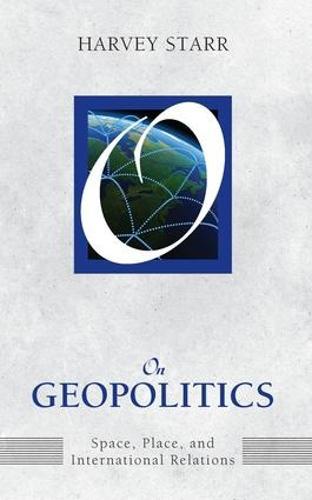
Author: Harvey Starr
Publisher: Taylor & Francis Inc
Imprint: Routledge
Dimensions:
Width: 12.90cm
, Height: 1.00cm
, Length: 19.80cm
Weight: 0.204kg
ISBN: 9781594518775
ISBN 10: 1594518777
Pages: 192
Publication Date: 30 January 2014
Audience:
Professional and scholarly
,
College/higher education
,
Professional & Vocational
,
Tertiary & Higher Education
Format: Paperback
Publisher's Status: Active
Availability: In Print

This item will be ordered in for you from one of our suppliers. Upon receipt, we will promptly dispatch it out to you. For in store availability, please contact us.
Reviews
For those who want to know what the field of geography has to offer international relations, this is the place to come. Starr provides a penetrating overview of geopolitics-its concepts, research, new techniques (like GIS), and future prospects-a book not to be missed. -John A. Vasquez, University of Illinois at Urbana-Champaign General readers, students, and researchers will appreciate this concise review of the major research streams relating to geopolitics. Despite the de-territorialization of politics, Starr makes the case that 'place' still has a major role in understanding international relations. -Beth Simmons, Harvard University The first attempt by a political scientist to seriously engage with the core concerns of geography by going beyond the usual focus on space and distance to consider the character of places as well as ... the 'context of politics,' a recent theoretical concern of geographers. The book discusses both macro-geopolitics and micro-geopolitics, and correctly rejects the notion of a 'borderless world' to offer a much more nuanced approach to the study of borders and territory. -John O'Loughlin, University of Colorado at Boulder A quite innovative and very useful text that should reanimate some neglected debates within the field. -Timothy W. Luke, Virginia Polytechnic Institute and State University An excellent introduction to the importance of geography in the study of international relations. Starr reviews an extensive range of existing research in both geography and political science and provides specific examples of its applications to issues such as alliances, borders, and territorial conflict. -Kristian Skrede Gleditsch, University of Essex
For those who want to know what the field of geography has to offer international relations, this is the place to come. Starr provides a penetrating overview of geopolitics-its concepts, research, new techniques (like GIS), and future prospects-a book not to be missed. -John A. Vasquez, University of Illinois at Urbana-Champaign General readers, students, and researchers will appreciate this concise review of the major research streams relating to geopolitics. Despite the de-territorialization of politics, Starr makes the case that 'place' still has a major role in understanding international relations. -Beth Simmons, Harvard University The first attempt by a political scientist to seriously engage with the core concerns of geography by going beyond the usual focus on space and distance to consider the character of places as well as . . . the 'context of politics,' a recent theoretical concern of geographers. The book discusses both macro-geopolitics and micro-geopolitics, and correctly rejects the notion of a 'borderless world' to offer a much more nuanced approach to the study of borders and territory. -John O'Loughlin, University of Colorado at Boulder A quite innovative and very useful text that should reanimate some neglected debates within the field. -Timothy W. Luke, Virginia Polytechnic Institute and State University An excellent introduction to the importance of geography in the study of international relations. Starr reviews an extensive range of existing research in both geography and political science and provides specific examples of its applications to issues such as alliances, borders, and territorial conflict. -Kristian Skrede Gleditsch, University of Essex
For those who want to know what the field of geography has to offer international relations, this is the place to come. Starr provides a penetrating overview of geopolitics-its concepts, research, new techniques (like GIS), and future prospects-a book not to be missed. -John A. Vasquez, University of Illinois at Urbana-Champaign General readers, students, and researchers will appreciate this concise review of the major research streams relating to geopolitics. Despite the de-territorialization of politics, Starr makes the case that `place' still has a major role in understanding international relations. -Beth Simmons, Harvard University The first attempt by a political scientist to seriously engage with the core concerns of geography by going beyond the usual focus on space and distance to consider the character of places as well as . . . the `context of politics,' a recent theoretical concern of geographers. The book discusses both macro-geopolitics and micro-geopolitics, and correctly rejects the notion of a `borderless world' to offer a much more nuanced approach to the study of borders and territory. -John O'Loughlin, University of Colorado at Boulder A quite innovative and very useful text that should reanimate some neglected debates within the field. -Timothy W. Luke, Virginia Polytechnic Institute and State University An excellent introduction to the importance of geography in the study of international relations. Starr reviews an extensive range of existing research in both geography and political science and provides specific examples of its applications to issues such as alliances, borders, and territorial conflict. -Kristian Skrede Gleditsch, University of Essex
Author Information
Harvey Starr is the Dag Hammarskjöld Professor in International Affairs at the University of South Carolina. He is author or co-author of 14 books and monographs, including World Politics: The Menu for Choice, now in its 10th edition.