Overview
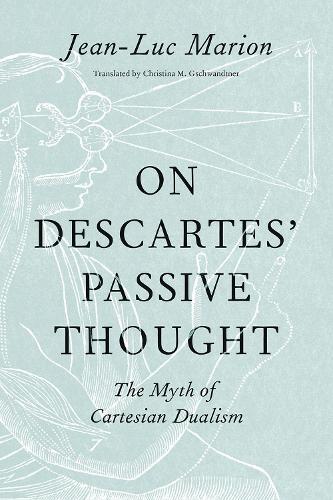
On Descartes’ Passive Thought is the culmination of a life-long reflection on the philosophy of Descartes by one of the most important living French philosophers. In it, Jean-Luc Marion examines anew some of the questions left unresolved in his previous books about Descartes, with a particular focus on Descartes’s theory of morals and the passions. Descartes has long been associated with mind-body dualism, but Marion argues here that this is a historical misattribution, popularized by Malebranche and popular ever since both within the academy and with the general public. Actually, Marion shows, Descartes held a holistic conception of body and mind. He called it the meum corpus, a passive mode of thinking, which implies far more than just pure mind—rather, it signifies a mind directly connected to the body: the human being that I am. Understood in this new light, the Descartes Marion uncovers through close readings of works such as Passions of the Soul resists prominent criticisms leveled at him by twentieth-century figures like Husserl and Heidegger, and even anticipates the non-dualistic, phenomenological concepts of human being discussed today. This is a momentous book that no serious historian of philosophy will be able to ignore.
Full Product Details
Author: Jean-Luc Marion ,
Christina M. Gschwandtner ,
Christina M Gschwandtner
Publisher: The University of Chicago Press
Imprint: University of Chicago Press
Dimensions:
Width: 1.60cm
, Height: 0.20cm
, Length: 2.30cm
Weight: 0.510kg
ISBN: 9780226192581
ISBN 10: 022619258
Pages: 304
Publication Date: 10 April 2018
Audience:
Professional and scholarly
,
Professional & Vocational
Format: Hardback
Publisher's Status: Active
Availability: Out of stock

The supplier is temporarily out of stock of this item. It will be ordered for you on backorder and shipped when it becomes available.
Reviews
Descartes taught us that I think therefore I exist. But it is less well known that when that thought is a sensation--a pain, the taste of a pineapple, the vision of a face--he also taught us that it implies that we are united with an organic body. And so, one might say, I think therefore my body exists. In this characteristically elegant and insightful book, Marion draws out some of the consequences of this observation for understanding Descartes' philosophy, radically transforming our understanding of what Cartesian dualism means. --Daniel Garber, Princeton University This is the first English translation of Marion's Sur la pense e passive de Descartes (2013), which is the culmination of his scholarship on Ren Descartes. In it, Marion develops a radical reinterpretation of Cartesian metaphysics. He argues that in his Meditations on First Philosophy, Descartes quietly distinguishes between extended bodies as understood rationally and quantitatively and the my body of immediate sensation. This my body, distinct from the rational ego and yet inseparable from it, underlies the mysterious mind-body union that Descartes discusses in correspondence with Elisabeth of Bohemia. The my body (contends Marion) manifests a nonrational passive thought that reframes the relationship between mind and physical world, giving reason to abandon the received interpretation of Descartes as substance metaphysician and dualist. Marion deploys this new interpretive framework to analyze Descartes's account of the will in The Passions of the Soul. Marion at times seems bent on retroactively recasting Descartes as a phenomenologist of embodiment, but this study is of undeniable value for its painstaking textual analysis and provocative argument. Highly recommended. --Choice This insightful philological investigation of the writings of Descartes and other authors uncovers avenues for a Cartesian psychology. Through the analysis of the notion of meum corpus, Marion examines issues that were left open, unsolved, or have been revised in the approach or the outcome: from the discovery of the passive mode of the cogitatum, the sixth meditation opens to questions relating to ethics, the passions, and the substantial unity of body and soul. --Marta Fattori, La Sapienza University of Rome On Descartes' Passive Thought is the crowning achievement of Jean-Luc Marion's historic work, spanning five decades, on Cartesian philosophy. Marion's remarkable creativity and unparalleled erudition are here on full display while he advances a novel and provocative argument: for Descartes, as for us, passivity is perhaps the most privileged mode of thinking. This book is not only a novel interpretation of Descartes. It is required reading for anyone interested in contemporary philosophical debates concerning affectivity and embodied ways of thinking. --Ryan Coyne, University of Chicago
Descartes taught us that I think therefore I exist. But it is less well known that when that thought is a sensation--a pain, the taste of a pineapple, the vision of a face--he also taught us that it implies that we are united with an organic body. And so, one might say, I think therefore my body exists. In this characteristically elegant and insightful book, Marion draws out some of the consequences of this observation for understanding Descartes' philosophy, radically transforming our understanding of what Cartesian dualism means. --Daniel Garber, Princeton University Marion's central hypothesis is that the history of the reception of Descartes's philosophy is based on the occultation of what Marion calls Descartes' profound speculative intention (p. 21), which primarily consists in the elaboration of a nondualistic picture of mind-body union. For Marion, such a profound speculative intention has eluded the grasp of the succession of readers and interpreters of Descartes. However, this misinterpretation is the responsibility not only of Descartes's interlocutors but of Descartes himself. . . .Marion concludes that Descartes anticipated Heidegger.--Critical Inquiry This is the first English translation of Marion's Sur la pense e passive de Descartes (2013), which is the culmination of his scholarship on Ren Descartes. In it, Marion develops a radical reinterpretation of Cartesian metaphysics. He argues that in his Meditations on First Philosophy, Descartes quietly distinguishes between extended bodies as understood rationally and quantitatively and the my body of immediate sensation. This my body, distinct from the rational ego and yet inseparable from it, underlies the mysterious mind-body union that Descartes discusses in correspondence with Elisabeth of Bohemia. The my body (contends Marion) manifests a nonrational passive thought that reframes the relationship between mind and physical world, giving reason to abandon the received interpretation of Descartes as substance metaphysician and dualist. Marion deploys this new interpretive framework to analyze Descartes's account of the will in The Passions of the Soul. Marion at times seems bent on retroactively recasting Descartes as a phenomenologist of embodiment, but this study is of undeniable value for its painstaking textual analysis and provocative argument. Highly recommended. --Choice On Descartes' Passive Thought is the crowning achievement of Jean-Luc Marion's historic work, spanning five decades, on Cartesian philosophy. Marion's remarkable creativity and unparalleled erudition are here on full display while he advances a novel and provocative argument: for Descartes, as for us, passivity is perhaps the most privileged mode of thinking. This book is not only a novel interpretation of Descartes. It is required reading for anyone interested in contemporary philosophical debates concerning affectivity and embodied ways of thinking. --Ryan Coyne, University of Chicago This insightful philological investigation of the writings of Descartes and other authors uncovers avenues for a Cartesian psychology. Through the analysis of the notion of meum corpus, Marion examines issues that were left open, unsolved, or have been revised in the approach or the outcome: from the discovery of the passive mode of the cogitatum, the sixth meditation opens to questions relating to ethics, the passions, and the substantial unity of body and soul. --Marta Fattori, La Sapienza University of Rome
Descartes taught us that I think therefore I exist. But it is less well known that when that thought is a sensation--a pain, the taste of a pineapple, the vision of a face--he also taught us that it implies that we are united with an organic body. And so, one might say, I think therefore my body exists. In this characteristically elegant and insightful book, Marion draws out some of the consequences of this observation for understanding Descartes' philosophy, radically transforming our understanding of what Cartesian dualism means. --Daniel Garber, Princeton University This insightful philological investigation of the writings of Descartes and other authors uncovers avenues for a Cartesian psychology. Through the analysis of the notion of meum corpus, Marion examines issues that were left open, unsolved, or have been revised in the approach or the outcome: from the discovery of the passive mode of the cogitatum, the sixth meditation opens to questions relating to ethics, the passions, and the substantial unity of body and soul. --Marta Fattori, La Sapienza University of Rome On Descartes' Passive Thought is the crowning achievement of Jean-Luc Marion's historic work, spanning five decades, on Cartesian philosophy. Marion's remarkable creativity and unparalleled erudition are here on full display while he advances a novel and provocative argument: for Descartes, as for us, passivity is perhaps the most privileged mode of thinking. This book is not only a novel interpretation of Descartes. It is required reading for anyone interested in contemporary philosophical debates concerning affectivity and embodied ways of thinking. --Ryan Coyne, University of Chicago
Author Information
Jean-Luc Marion is a member of the Académie Française and emeritus professor of philosophy at the Université Paris-Sorbonne (Paris IV). He is the Andrew Thomas Greeley and Grace McNichols Greeley Professor of Catholic Studies, professor of the philosophy of religions and theology, and professor in the Committee on Social Thought and the Department of Philosophy at the University of Chicago. Christina M. Gschwandtner is professor of philosophy at Fordham University.