|
|
|||
|
||||
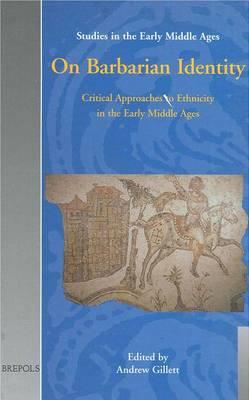
OverviewEthnicity has been central to medieval studies since the Goths, Franks, Alamanni and other barbarian settlers of the Roman empire were first seen as part of Germanic antiquity. Today, two paradigms dominate interpretation of barbarian Europe. In history, theories of how tribes formed ('ethnogenesis') assert the continuity of Germanic identities from prehistory through the Middle Ages, and see cultural rather than biological factors as the means of preserving these identities. In archaeology, the 'culture history' approach has long claimed to be able to trace movements of peoples not attested in the historical record, by identifying ethnically-specific material goods. The papers in this volume challenge the concepts and methodologies of these two models. The authors explore new ways to understand barbarians in the early Middle Ages, and to analyse the images of the period constructed by modern scholarship. Two responses, one by a leading exponent of the 'ethnogenesis' approach, the other by a leading critic, continue this important debate. Full Product DetailsAuthor: Andrew Gillett , Andrew GillettPublisher: Brepols N.V. Imprint: Brepols N.V. Volume: v. 4 Dimensions: Width: 16.60cm , Height: 2.20cm , Length: 25.00cm Weight: 0.615kg ISBN: 9782503511689ISBN 10: 2503511686 Pages: 289 Publication Date: 01 July 2002 Audience: College/higher education , Undergraduate Format: Hardback Publisher's Status: Active Availability: Awaiting stock The supplier is currently out of stock of this item. It will be ordered for you and placed on backorder. Once it does come back in stock, we will ship it out for you. Table of ContentsReviewsAuthor InformationTab Content 6Author Website:Countries AvailableAll regions |
||||