Overview
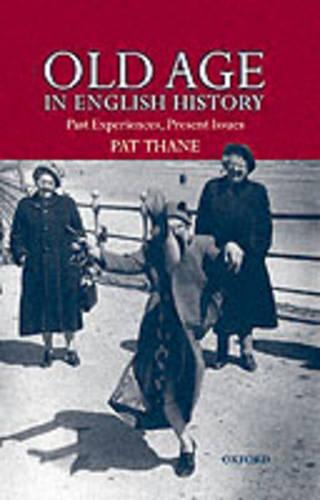
At the end of the twentieth century more people are living into their seventies, eighties, nineties and beyond, a process expected to continue well into the next millennium. The twentieth century has achieved what people in other centuries only dreamed of: many can now expect to survive to old age in reasonably good health and can remain active and independent to the end, in contrast to the high death rate, ill health and destitution which affected all ages in the past. Yet this change is generally greeted not with triumph but with alarm. It is assumed that the longer people live, the longer they are ill and dependent, thus burdening a shrinking younger generation with the cost of pensions and health care. It is also widely believed that 'the past' saw few survivors into old age and these could be supported by their families without involving the taxpayer. In this first survey of old age throughout English history, these assumptions are challenged. Vivid pictures are given of the ways in which very large numbers of older people lived often vigorous and independent lives over many centuries. The book argues that old people have always been highly visible in English communities, and concludes that as people live longer due to the benefits of the rise in living standards, far from being 'burdens' they can be valuable contributors to their family and friends.
Full Product Details
Author: Pat Thane (, Leverhulme Professor of Contemporary British History, Institute of Historical Research, London)
Publisher: Oxford University Press
Imprint: Oxford University Press
Dimensions:
Width: 16.30cm
, Height: 3.30cm
, Length: 24.20cm
Weight: 0.923kg
ISBN: 9780198203827
ISBN 10: 0198203829
Pages: 548
Publication Date: 11 May 2000
Audience:
Professional and scholarly
,
Professional & Vocational
Format: Hardback
Publisher's Status: Active
Availability: To order

Stock availability from the supplier is unknown. We will order it for you and ship this item to you once it is received by us.
Reviews
Monumental ... [Thane] is at her best when she reaches the turn of the nineteenth century and she holds the reader's attention to the end. Apt headlining of short chapters and some arresting conclusions make the book excellent for use as a textbook ... it is never unexciting, thanks to the eloquence of the writing and the way the author has given a voice to government authorities, researchers and the elderly themselves. Scandinavian Economic History Review The book represents a first-rate introduction to the field for nonspecialists. American Historical Review This ambitious synthesis, by a major scholar, reminds us of the richness and importance of the field. Pat Thane drives the point home by using historical perspective to comment intelligently on the present and future prospects of old age and the elderly. American Historical Review This is a landmark study ... it is a work on a grand canvas, from medieval times to the present, which expertly interweaves extensive personal research with the findings of others. Displaying great powers of synthesis and maturity of judgement, Old Age in English History puts a new field of historical studies firmly on the map Roy Porter, Times Literary Supplement