Overview
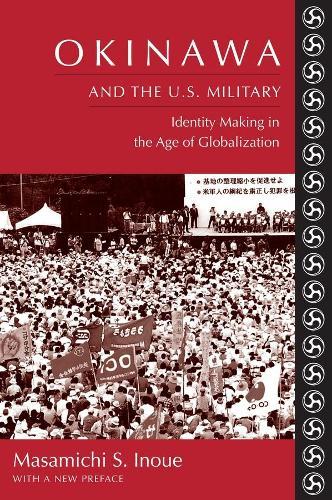
In 1995, an Okinawan schoolgirl was brutally raped by several U.S. servicemen. The incident triggered a chain of protests by women's groups, teachers' associations, labor unions, reformist political parties, and various grassroots organizations across Okinawa prefecture. Reaction to the crime culminated in a rally attended by some 85,000 people, including business leaders and conservative politicians who had seldom raised their voices against the U.S. military presence. Using this event as a point of reference, Inoue explores how Okinawans began to regard themselves less as a group of uniformly poor and oppressed people and more as a confident, diverse, middle-class citizenry embracing the ideals of democracy, human rights, and women's equality. As this identity of resistance has grown, however, the Japanese government has simultaneously worked to subvert it, pressuring Okinawans to support a continued U.S. presence. Inoue traces these developments as well, revealing the ways in which Tokyo has assisted the United States in implementing a system of governance that continues to expand through the full participation and cooperation of residents. Inoue deftly connects local social concerns with the larger political processes of the Japanese nation and the global strategies of the United States. He critically engages social-movement literature along with postmodern/structural/colonial discourses and popular currents and themes in Okinawan and Japanese studies. Rich in historical and ethnographical detail, this volume is a nuanced portrait of the impact of Japanese colonialism, World War II, and U.S. military bases on the formation of contemporary Okinawan identity.
Full Product Details
Author: Masamichi S. Inoue
Publisher: Columbia University Press
Imprint: Columbia University Press
Edition: With a new preface
Dimensions:
Width: 15.20cm
, Height: 1.80cm
, Length: 22.90cm
Weight: 0.454kg
ISBN: 9780231138918
ISBN 10: 0231138911
Pages: 344
Publication Date: 07 March 2017
Audience:
Professional and scholarly
,
College/higher education
,
Professional & Vocational
,
Tertiary & Higher Education
Format: Paperback
Publisher's Status: Active
Availability: Manufactured on demand

We will order this item for you from a manufactured on demand supplier.
Language: English
Reviews
The thoroughness of Inoue's scholarship is incontestable... Recommended. CHOICE A candid, introspective book... For those versed in anthropology and interested in Okinawa, this is an excellent read. -- Arnold G. Fisch Jr. Army History An important addition to the existing studies of the contemporary popular struggle of Okinawa. -- Miyume Tanji The International History Review Inoue has provided an inspired and activist ethnographic account of how Okinawa took on the pervasive state interests of both Japan and the United States. -- David Obermiller The Journal of Asian Studies For anthropologists, historians, and social scientists, Inoue offers an intriguing examination of the complex strands, relationships, and consequences of the processes of globalization. -- Jennifer M. Miller H-US-Japan
The thoroughness of Inoue's scholarship is incontestable... Recommended. CHOICE A candid, introspective book... For those versed in anthropology and interested in Okinawa, this is an excellent read. -- Arnold G. Fisch Jr. Army History An important addition to the existing studies of the contemporary popular struggle of Okinawa. -- Miyume Tanji The International History Review Inoue has provided an inspired and activist ethnographic account of how Okinawa took on the pervasive state interests of both Japan and the United States. -- David Obermiller The Journal of Asian Studies
Author Information
Masamichi (""Marro"") S. Inoue received his Ph.D. in cultural anthropology from Duke University and is assistant professor of the Japan Studies Program and the Department of Modern and Classical Languages, Literatures, and Cultures at the University of Kentucky. He has taught in the United States and Japan and has written extensively on the U.S. base problems in Okinawa in both English and Japanese.