Overview
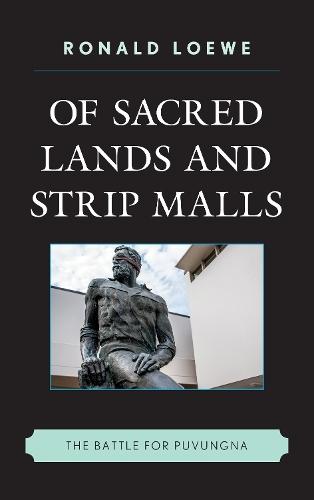
A twenty-two acre strip of land—known as Puvungna—lies at the edge of California State University’s Long Beach campus. The land, indisputably owned by California, is also sacred to several Native American tribes. And these twenty-two acres have been the nexus for an acrimonious and costly conflict over control of the land. Of Sacred Lands and Strip Malls tells the story of Puvungna, from the region’s deep history, through years of struggle between activists and campus administration, and ongoing reverberations from the conflict. As Loewe makes clear, this is a case study with implications beyond a single controversy; at stake in the legal battle is the constitutionality of state codes meant to protect sacred sites from commercial development, and the right of individuals to participate in public hearings. The case also raises questions about the nature of contract archaeology, applied anthropology, and the relative status of ethnography and ethnohistorical research. It is a compelling snapshot of issues surrounding contemporary Native American landscapes.
Full Product Details
Author: Ronald Loewe
Publisher: Bloomsbury Publishing Plc
Imprint: Rowman & Littlefield
Dimensions:
Width: 15.90cm
, Height: 2.20cm
, Length: 23.80cm
Weight: 0.599kg
ISBN: 9780759121607
ISBN 10: 0759121605
Pages: 258
Publication Date: 15 September 2016
Audience:
General/trade
,
General
Format: Hardback
Publisher's Status: Active
Availability: Manufactured on demand

We will order this item for you from a manufactured on demand supplier.
Reviews
Loewe provides an insightful analysis of a contest over control of land on his institution's campus. Owned by the State of California, the land in question is considered common 'green space' for students and community members, as well as an iconic feature of the campus. More importantly, a number of Indigenous communities in southern California define the 22-acre expanse as sacred. Puvungna, as they know it, is a burial site and the birthplace of culture hero Chinigchinich. Several Native communities continue to conduct ceremonies there. The sanctity of the space was threatened during the early 1990s when the university moved to allow the commercial development of the site. Eight chapters divided into three parts effectively provide historical and cultural contexts for understanding Puvungna as a sacred site; detail the six-year political, legal, and academic struggle during the 1990s; and offer broader reflections on contests over sacred lands and how to marshal effective political action. Based primarily on archival sources and oral histories, this excellent and substantive work could not be timelier, given ongoing controversies over Native land and resource rights. It also broadens perspectives found in the literature on repatriation and sacred lands... Summing Up: Highly recommended. General and academic collections. CHOICE Loewe's narrative lands squarely at the intersection where academia meets activism. He adopts the even tone and temper of a patient and observant diarist examining the anatomy of a controversy by dutifully interrogating the biography of a sacred landscape. The book is appealing for its historical depth and breadth, and will also serve as a primer on working within and around grass-roots native groups and organizations. It offers not just hope, but practical, level-headed advice based on real-life experience. -- Kurt W. Russo, Executive Director, Native American Land Conservancy There are very few extended, well-documented case studies of the kind of conflict represented by the Puvungna case. Clear and understandably organized, this book will be especially relevant reading for CRM and EIA practitioners concerned with current issues in the management of historic places. -- Thomas F. King, Owner, Thomas F. King PhD LLC An ethnohistorical approach to a multi-faceted social problem... Loewe ably balances the expression of various subgroup interests, positions, and interpretations related to land use and development, and demonstrates the human complexities surrounding what appears to be a simple situation of a public agency deciding to develop a piece of land. However, the overall society's hegemony fails to acknowledge pre-Columbian indigenous peoples' ownership, use, and spiritual connection with land. -- Donald D. Pepion, New Mexico State University
Loewe's narrative lands squarely at the intersection where academia meets activism. He adopts the even tone and temper of a patient and observant diarist examining the anatomy of a controversy by dutifully interrogating the biography of a sacred landscape. The book is appealing for its historical depth and breadth, and will also serve as a primer on working within and around grass-roots native groups and organizations. It offers not just hope, but practical, level-headed advice based on real-life experience. -- Kurt W. Russo, Executive Director, Native American Land Conservancy There are very few extended, well-documented case studies of the kind of conflict represented by the Puvungna case. Clear and understandably organized, this book will be especially relevant reading for CRM and EIA practitioners concerned with current issues in the management of historic places. -- Thomas F. King, Owner, Thomas F. King PhD LLC An ethnohistorical approach to a multi-faceted social problem... Loewe ably balances the expression of various subgroup interests, positions, and interpretations related to land use and development, and demonstrates the human complexities surrounding what appears to be a simple situation of a public agency deciding to develop a piece of land. However, the overall society's hegemony fails to acknowledge pre-Columbian indigenous peoples' ownership, use, and spiritual connection with land. -- Donald D. Pepion, New Mexico State University
Author Information
Ronald Loewe is professor of anthropology at California State University at Long Beach. His publications include Maya or Mestizo: Nationalism, Modernity and its Discontents.