|
|
|||
|
||||
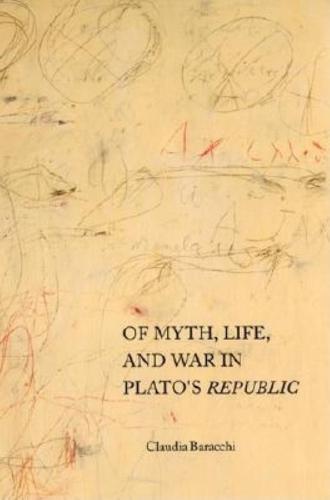
Overview""Baracchi has identified pivotal points around which the Republic operates; this allows a reading of the entire text to unfold. . . . a very beautifully written book."" —Walter Brogan "" . . . a work that opens new and timely vistas within the Republic. . . . Her approach . . . is thorough and rigorous."" —John Sallis Although Plato's Republic is perhaps the most influential text in the history of Western philosophy, Claudia Baracchi finds that the work remains obscure and enigmatic. To fully understand and appreciate its meaning, she argues, we must attend to what its original language discloses. Through a close reading of the Greek text, attentive to the pervasiveness of story and myth, Baracchi investigates the dialogue's major themes. The first part of the book addresses issues of generation, reproduction, and decay as they apply to the founding of Socrates' just city. The second part takes up the connection between war and the cycle of life, employing a thorough analysis of Plato's rendition of the myth of Er. Baracchi shows that the Republic is concerned throughout with the complex but intertwined issues of life and war, locating the site of this tangled web of growth and destruction in the mythical dimension of the Platonic city. Full Product DetailsAuthor: Claudia BaracchiPublisher: Indiana University Press Imprint: Indiana University Press Dimensions: Width: 15.50cm , Height: 2.20cm , Length: 23.50cm Weight: 0.594kg ISBN: 9780253339959ISBN 10: 0253339952 Pages: 277 Publication Date: 10 January 2002 Audience: Professional and scholarly , Professional & Vocational Format: Hardback Publisher's Status: Unknown Availability: Awaiting stock Table of ContentsPreliminary: Acknowledgments Introduction Proleptikon First Part: ""Old women telling tales""(350 e): The City in View, the City Envisioned I. On Regeneration Going Down, Or: In the Degenerating City Figures of Corruption, Or: Against the Degenerating City Regeneration, Or: Away from the City II. The Law of (Re)production The Magnified Letters of Justice The Circle of Growth Of Life: The Dictation of the Muses Dia-logical Necessity Of Justice without Idea Second Part: ""A tale was saved and not lost"" (621 b): Vision at the End of the Visible III. Preliminary Remarks in a Rhapsodic Form Giving Back Of Poets and Distance Healing from Oblivion The Poet and Other Voices Apologa: The Ethos of Poesis IV. War Passing Places The Feast of War Moving Dialogue Socrates' Third Way Socrates contra Socratem War and Greatness V. Vision Beyond the Gateway Metax Souls in a Meadow The Image of the Law The Choice of the Daimon Having Loved Sopha VI. (Re)birth Un-ending Appendix Notes Selected Bibliography IndexReviewsBaracchi has identified pivotal points around which the Republic operates; this allows a reading of the entire text to unfold... a very beautifully written book. - Walter Brogan, Villanova University Dr. Baracchi has produced a work that opens new and timely vistas within the Republic, probably the single most influential text in the history of Western thought. Her approach ... is thorough and rigorous. - John Sallis, Pennsylvania State University Author InformationClaudia Baracchi is Assistant Professor of Philosophy at The New School. Her articles on philosophy, art, and literary theory have appeared in numerous journals in English and Italian. Tab Content 6Author Website:Countries AvailableAll regions |
||||