Overview
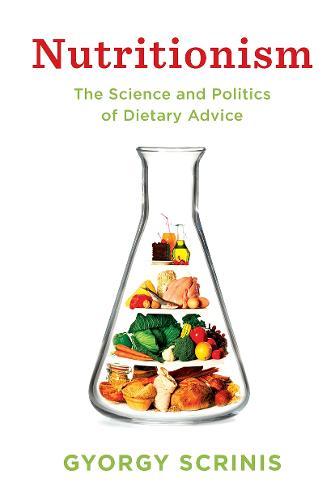
'Gyorgy Scrinis exposes the folly of the reductionist approach and proposes an alternative food quality paradigm, based on respecting traditional dietary patterns and reducing technological processing. It may offend nutritionists and will upset the food industry, but it could also herald a delicious revolution in our ability to eat well.' - Dr Rosemary Stanton OAM, Nutritionist From the fear of 'bad nutrients' such as fat and cholesterol, to the celebration of supposedly health-enhancing vitamins and omega-3 fats, our understanding of food and health has been dominated by a reductive scientific focus on nutrients. It is on this basis that butter and eggs have been vilified, yet highly processed foods such as margarine have been promoted as being healthier than whole foods. Gyorgy Scrinis argues that this ideology of nutritionism has narrowed and distorted our appreciation of food quality, while promoting nutrition confusion and nutritional anxieties. The food industry exploits these anxieties by nutritionally modifying their food products, and marketing them with nutritional and health claims. Through a fascinating investigation into such issues as the butter versus margarine debate, the battle between low-fat, low-carb, low-calorie and low-GI weight-loss diets, the limitations of dietary guidelines, and the search for the optimal dietary pattern - from Mediterranean and vegetarian to paleo diets - Scrinis builds a revealing history of the scientific, social, and economic factors driving our modern fascination with nutrition, and explores alternative ways of understanding food quality.
Full Product Details
Author: Gyorgy Scrinis
Publisher: Taylor & Francis Ltd
Imprint: Routledge
Weight: 0.830kg
ISBN: 9780367718848
ISBN 10: 0367718847
Pages: 362
Publication Date: 31 March 2021
Audience:
College/higher education
,
General/trade
,
Tertiary & Higher Education
,
General
Format: Hardback
Publisher's Status: Active
Availability: In Print

This item will be ordered in for you from one of our suppliers. Upon receipt, we will promptly dispatch it out to you. For in store availability, please contact us.
Reviews
"""Nutritionism"" is an important contribution to the discourse of the alternative food movement, providing a unique, scholarly rationale for the food-quality paradigm. Gyorgy Scrinis provides a new language for talking about how our ideas about what makes a good diet have come to be.--Charlotte Biltekoff, University of California, Davis It is an arithmetic of which too many of us are capable -- casting our eyes over our plates and calculating under our breath the balance of carbohydrate, protein, calorie, and other nutritional values. The origins of this very modern, very capitalist grace are laid bare in Gyorgy Scrinis's important, iconoclastic, and long-awaited study. If you care about the nutritional content of your food, you should care about why you care. Nutritionism, in large doses, has the answers.--Raj Patel, author of ""Stuffed and Starved: The Hidden Battle for the World System"" Scrinis details the ideology of 'nutritionism, ' in which the great majority of dietary advice is reduced to statements about a few nutrients. The resulting cascade is nutrient-based dietary guidelines, nutrition labeling, food engineering, and food marketing. I agree with Scrinis that a broader focus on foods would lead to quite a different scientific and political cascade, including a more healthful diet for many people and a different relationship between the public and the food industry.--David Jacobs, Mayo Professor of Public Health, School of Public Health, University of Minnesota This book artfully brings together two fields. One is the huge body of scholarly and popular texts that provide nutritional advice, or tell us what to eat. Scrinis has combed through this literature in exhaustive detail to provide a magnificent synthesis. The other field is what I would call critical nutrition studies, referring to a growing literature that interrogates and historicizes nutritional advice. Scrinis critiques this on its own terms and then suggests other approaches to evaluating food.--Julie Guthman, author of ""Weighing In: Obesity, Food Justice, and the Limits of Capitalism"""
This book artfully brings together two fields. One is the huge body of scholarly and popular texts that provide nutritional advice, or tell us what to eat. Scrinis has combed through this literature in exhaustive detail to provide a magnificent synthesis. The other field is what I would call critical nutrition studies, referring to a growing literature that interrogates and historicizes nutritional advice. Scrinis critiques this on its own terms and then suggests other approaches to evaluating food.--Julie Guthman, author of Weighing In: Obesity, Food Justice, and the Limits of Capitalism Scrinis details the ideology of 'nutritionism, ' in which the great majority of dietary advice is reduced to statements about a few nutrients. The resulting cascade is nutrient-based dietary guidelines, nutrition labeling, food engineering, and food marketing. I agree with Scrinis that a broader focus on foods would lead to quite a different scientific and political cascade, including a more healthful diet for many people and a different relationship between the public and the food industry.--David Jacobs, Mayo Professor of Public Health, School of Public Health, University of Minnesota It is an arithmetic of which too many of us are capable -- casting our eyes over our plates and calculating under our breath the balance of carbohydrate, protein, calorie, and other nutritional values. The origins of this very modern, very capitalist grace are laid bare in Gyorgy Scrinis's important, iconoclastic, and long-awaited study. If you care about the nutritional content of your food, you should care about why you care. Nutritionism, in large doses, has the answers.--Raj Patel, author of Stuffed and Starved: The Hidden Battle for the World System Nutritionism is an important contribution to the discourse of the alternative food movement, providing a unique, scholarly rationale for the food-quality paradigm. Gyorgy Scrinis provides a new language for talking about how our ideas about what makes a good diet have come to be.--Charlotte Biltekoff, University of California, Davis
""Nutritionism"" is an important contribution to the discourse of the alternative food movement, providing a unique, scholarly rationale for the food-quality paradigm. Gyorgy Scrinis provides a new language for talking about how our ideas about what makes a good diet have come to be.--Charlotte Biltekoff, University of California, Davis It is an arithmetic of which too many of us are capable -- casting our eyes over our plates and calculating under our breath the balance of carbohydrate, protein, calorie, and other nutritional values. The origins of this very modern, very capitalist grace are laid bare in Gyorgy Scrinis's important, iconoclastic, and long-awaited study. If you care about the nutritional content of your food, you should care about why you care. Nutritionism, in large doses, has the answers.--Raj Patel, author of ""Stuffed and Starved: The Hidden Battle for the World System"" Scrinis details the ideology of 'nutritionism, ' in which the great majority of dietary advice is reduced to statements about a few nutrients. The resulting cascade is nutrient-based dietary guidelines, nutrition labeling, food engineering, and food marketing. I agree with Scrinis that a broader focus on foods would lead to quite a different scientific and political cascade, including a more healthful diet for many people and a different relationship between the public and the food industry.--David Jacobs, Mayo Professor of Public Health, School of Public Health, University of Minnesota This book artfully brings together two fields. One is the huge body of scholarly and popular texts that provide nutritional advice, or tell us what to eat. Scrinis has combed through this literature in exhaustive detail to provide a magnificent synthesis. The other field is what I would call critical nutrition studies, referring to a growing literature that interrogates and historicizes nutritional advice. Scrinis critiques this on its own terms and then suggests other approaches to evaluating food.--Julie Guthman, author of ""Weighing In: Obesity, Food Justice, and the Limits of Capitalism""
Author Information
Dr Gyorgy Scrinis lectures in food politics at the University of Melbourne.