Overview
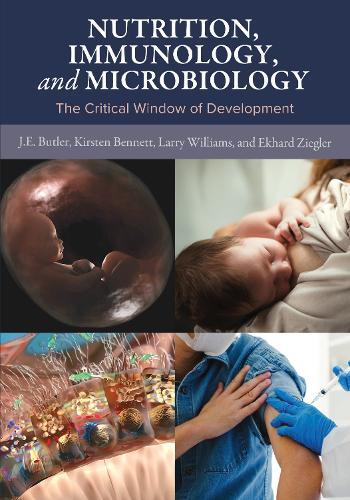
Healthcare training programs that require coursework in microbiology and immunology typically focus on diseases and maladies affecting the adult population, but many such issues can be traced to events in the critical window of development, the period from conception to puberty. Yet, nutrition is less often adequately discussed, even though it is a cornerstone of health during the critical window. This text fills these coverage gaps with an emphasis on nutrition, genetics, immunology, and the microbiome. The text also highlights events in the critical window, the importance of the interdependence of lifeforms, and major concepts that link the medical disciplines and basic biology. The initial six chapters focus on events within the critical window, including fetal and neonatal development, nutrition, and the role of the microbiome in health. It also discusses the impact of antibodies, regulatory factors, pathogens, pharmaceuticals, and environmental contaminants that are transferred to the fetus in utero or the infant through breast feeding. Special attention is given to internal protection provided by the innate and adaptive immune systems. An additional chapter is devoted to evaluating medical evidence (including drug and vaccine trials) and a concluding chapter discusses the myths, misconceptions, and controversies in healthcare. Appendix I is included for the student seeking more in-depth coverage of the underlying basic science such as molecular genetics, the role of meiosis and horizontal gene transfer in creating genetic diversity, and the genetics of adaptive immunity. Appendix I also describes the tools of biotechnology, while discussing bioengineering and modern vaccine development. Appendix II describes mammalian diversity and the value of animal models. Reflecting recent medical events, another appendix reviews the immuno-virology of COVID-19. Numerous figures and tables illustrate and extend the text, and a glossary helps the student navigate the thicket of common acronyms in these fields. Nutrition, Immunology, and Microbiology: The Critical Window of Development is an ideal textbook for professional healthcare training programs, as well as undergraduate biology programs, pre-med and pre-vet programs, and high school AP biology programs. Because it includes over 400 references, the text also serves as an excellent reference book for professionals across the disciplines.
Full Product Details
Author: J .E. Butler ,
Kristen Bennett ,
Larry Williams ,
Ekhard Ziegler
Publisher: Cognella, Inc
Imprint: Cognella, Inc
Dimensions:
Width: 17.80cm
, Height: 2.10cm
, Length: 25.40cm
Weight: 0.703kg
ISBN: 9781793578051
ISBN 10: 1793578052
Pages: 408
Publication Date: 13 March 2025
Audience:
Professional and scholarly
,
Professional & Vocational
Format: Paperback
Publisher's Status: Active
Availability: Out of stock

The supplier is temporarily out of stock of this item. It will be ordered for you on backorder and shipped when it becomes available.
Reviews
""This book provides a resource that connects the health-related sciences of microbiology, immunology, nutrition, and physiology to key areas of medical practice and public health. The material is presented at a level that is rigorous, blessed with a clarity of organization and presentation that makes it accessible for undergraduates pursuing a broad variety of majors. This text is framed with an integrative perspective that emphasizes how these different disciplines interact to weave the varied and complex fabric of modern health science. It succeeds in getting students to think beyond silos of the conventional curriculum and understand health as the product of the interactions of interconnected systems that are diverse and dynamic. Such an approach makes the text an ideal one for introductory courses in various health sciences such as nutrition, microbiology, and other allied health programs. What sets this book apart is its use of the 'Critical Window' as a unifying intellectual framework. By highlighting key life stages such as infancy, adolescence, and pregnancy - when nutrition, immunity, and microbial development are particularly malleable - the authors show students how timing can determine lifelong health outcomes. The concept is not only scientifically important but also pedagogically powerful because it requires an integrative tying together of diverse material, from the perspectives and insights of many different disciplines. This integrative lens fosters critical thinking about why early interventions, such as breastfeeding or micronutrient supplementation, can have disproportionate impact compared to later interventions, and why prevention should be prioritized alongside treatment in health science education. By connecting everyday choices—diet, hygiene, vaccination—to broader issues such as chronic inflammation, malnutrition, and food safety, this text makes science meaningful for students while preparing them for more advanced study in the health sciences. This book is blessed with a clarity of writing that ensures accessibility and recruits interest while providing a satisfying depth of content and cultivating analytical skills. For college instructors seeking a text that combines scientific rigor with arrestingly interesting practical application, Nutrition, Immunology, and Microbiology: The Critical Window is an excellent choice."" —Richard A. Goldsby, Professor Emeritus at Amherst College and University of Massachusetts at Amherst ""This new book presents a unique structure and content that effectively illustrates the fundamental concepts and recent advances in Nutrition, Immunology, and Microbiology. Its logical organization and seamless transitions across the eight chapters highlight the critical processes involved in human evolution and wellness. In addition to its precise and concise narrative, the book features numerous elegant and scientifically accurate illustrations. Overall, it serves as a timely and essential resource—ideal as both a textbook and a reference—for health professionals and learners alike."" —Li Wu, Ph.D., Professor, Endowed Chair, and Department Executive Officer, Department of Microbiology and Immunology, Carver College of Medicine, The University of Iowa ""It is my perception that the practice of medicine has become much more specialized. There is an inherent danger in specialization and the deepening complexity and specificity that accompanies it. In designing a curriculum for medical students, nurses, nutritionists and other allied health professionals, what information is central to their professions and becoming a competent healthcare professional? There is a revolution occurring in the practice of medicine. Where in the past, treatment for diseases were based on population norms in large clinical trials, the sequencing of the human genome combined with gene editing, opened the door to individualized tailored treatments. Success in treating sickle-cell anemia is an early example. Cancer research is focused on using a person’s immune system to recognize and attack cancerous cells. Knowledge of how immunity is obtained from the mother, the mother’s milk and how it adapts and evolves is particular to each person. The authors are making an important contribution to medical education by comprehensively including basic information relevant to an understanding of how life has evolved and continues to evolve right down to you and me. It is the miraculous story of life on this planet. The contents of Chapter One should be taught to every high-school student taking an elementary course in Biology. It provides the context and backdrop for the diversity of organisms that are part of the biosphere. Chapters Two, Three and Four is information needed by healthcare professionals including neonatal nurses, pediatric nurses, pediatricians, nutritionists, general practitioners of medicine, physician assistants and other ancillary birthing professions such as midwives. Their patients would all benefit. Chapters Five and Six along with the appendices would be important and appropriate for anyone who is a Doctor of Medicine or as an introduction to anyone who is specializing in the sciences of microbiology, immunology or virology. Everyone, including the media and public would benefit from Chapter Eight. Watch any commercial television broadcast and you will be bombarded with false and misleading advertisements for all manner of drugs and health supplements sold without proven efficacy. It is rare to read a textbook that is as well-referenced as this text. For anyone wishing to further explore a topic, these references would short-cut the laborious task of searching for papers that are foundational or add to the body of knowledge in a topic. This unique feature would lend credence to the marketing of the textbook to libraries as a reference book. If I were teaching this material in a classroom setting, I would make extensive use of these references in class assignments. I liked the analogies that were employed as ways to illustrate the action of the immune response. There is hardly anyone alive today that has not watched the “Star Wars” movies. This and other analogies are powerful learning devices that aid in memory of a concept. The association is not purely the written word but now includes the sights and sounds of the movie. The figures in the textbook are excellent. I applaud your graphic arts team. The authors also did a nice job of summarizing disease characteristics using tables. Appendix A-4, The COVID-19 Teaching Model, is a highlight of the textbook. This is a relatable application of the working of the immune system that most readers would find interesting and provide context for the way in which the pandemic unfolded. It should inspire confidence and appreciation for the dedicated scientists who developed the COVID vaccines in record time and likely saved the lives of many millions of people around the globe. Finally, I wish to congratulate the authors on writing an authoritative medical textbook."" —David Gerleman ""A brief review of the beginning of this book dazzled me professionally. The microbiome for wellness has been a professional and personal interest for me for some years, but I have never seen such a focused, thorough presentation of it, including the development period ending in puberty."" —Jane Byrnes, M.S., Registered Licensed Dietitian-Nutritionist ""Nutrition, Immunology, and Microbiology by J.E. Butler, Kirsten Bennett, Larry Williams, and Ekhard Ziegler is perfect for individuals who approach immunology tangentially, particularly those seeking in-depth understanding of early development of the immune system and maternal-fetal interactions in the context of more general immunological concepts. The treatise should be particularly useful to practicing neonatologists including nurses and physicians, as well as students pursuing degrees in medical fields."" —John C. Cambier, PhD, DFAAI, Emeritus Chair and Distinguished Professor, Department of Immunology and Microbiology, University of Colorado School of Medicine, Anschutz Medical Campus
Author Information
J.E. Butler is professor emeritus of microbiology and immunology at the University of Iowa Carver College of Medicine with cross-over experience in comparative immunology. Kirsten Bennett is a pediatrics registered dietitian currently in private practice with clinical and teaching experience as part of the Pediatrics Department of the University of New Mexico School of Medicine and the Nutrition and Dietetics Program at the University of New Mexico. Larry Williams, formerly Associate Professor of Pediatrics at Duke University and recently retired as medical director at Abbott Nutrition Research and Development, who currently consults on scientific, medical, and nutritional issues. Ekhard Ziegler is professor emeritus in the Department of Pediatrics, Carver College of Medicine, and former Director of the Foman Infant Nutrition Unit.