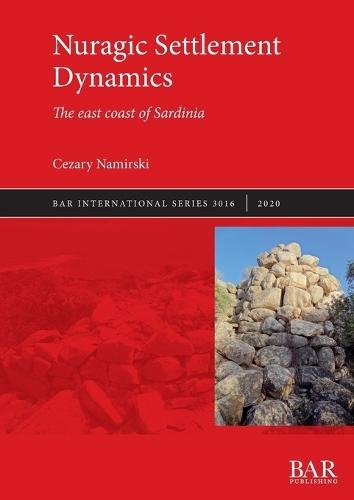
Nuragic Settlement Dynamics: The east coast of Sardinia

Author:   Cezary Namirski
Publisher:   BAR Publishing
ISBN:  

9781407357669


Pages:   272
Publication Date:   09 December 2020
Format:   Paperback
Availability:   Available To Order   Availability explained
We have confirmation that this item is in stock with the supplier. It will be ordered in for you and dispatched immediately.

Our Price $183.71 Quantity:  
Add to Cart

Share |

Nuragic Settlement Dynamics: The east coast of Sardinia


Overview

This book presents findings on Bronze Age and Early Iron Age Nuragic settlement dynamics in two selected areas of the east coast of Sardinia, placing them in a wider context of Nuragic settlement in Sardinia and Central Mediterranean prehistory and protohistory. The research addresses the use of coastline, investigates the relationship between domestic and ritual sites, and provides a chronology of settlement. These issues are analysed using data gathered through a series of landscape surveys conducted in both study areas of the east coast of Sardinia, as well as Geographical Information Systems (GIS). The results demonstrate significant differences between the Nuragic settlement patterns, architecture, and distribution of ritual sites in different areas of the east coast, emphasising the need to study the Bronze Age and Early Iron Age settlement dynamics in Sardinia in their local context.

Full Product Details

Author:   Cezary Namirski
Publisher:   BAR Publishing
Imprint:   BAR Publishing
Weight:   1.085kg
ISBN:  

9781407357669


ISBN 10:   1407357662
Pages:   272
Publication Date:   09 December 2020
Audience:   Professional and scholarly ,  Professional & Vocational
Format:   Paperback
Publisher's Status:   Active
Availability:   Available To Order   Availability explained
We have confirmation that this item is in stock with the supplier. It will be ordered in for you and dispatched immediately.

Table of Contents

List of figures List of tables 1. Research aims 2. Nuragic settlement dynamics: an introduction 2.1 Early Bronze Age (c.2300-1800 bc) 2.2 Middle Bronze Age (c.1800-1300 bc) 2.3 Recent Bronze Age (c.1300-1150 bc) 2.4 Final Bronze Age (c.1150-900 bc) 2.5 Early Iron Age (c.900-750 bc) 2.6 Late Iron Age (c.750-500 bc) 3. Research methodology 3.1 Theoretical approaches 3.2 Survey methodology 3.2.1 Architectural typology 3.2.2 Landscape location and context 3.2.3 Location in relation to other sites and intervisibility 3.2.4 Location in relation to the coastline 3.2.5 Location in relation to pre-Nuragic sites 3.3 Geographical Information Systems (GIS) 3.4 Published excavation reports 3.5 Identification of methodological difficulties and limitations 4. The Nuragic east coast of Sardinia: research context 4.1 Sample areas: a geographical context 4.2 Sarrabus (sample area 1): history and current state of research 4.3 Barisardo-Cardedu (sample area 2): history and current state of research 4.4 Other parts of the east coast of Sardinia 4.5 Conclusions 5. The Early and Middle Bronze Age (c.2300-1300 bc) 5.1 The Early and Middle Bronze Age in sample area 1 5.1.1 Settlement patterns and territoriality 5.1.2 Relations between domestic and funerary sites 5.2 The Early and Middle Bronze Age in sample area 2 5.2.1 Settlement patterns and territoriality 5.2.2 Relations between domestic and funerary sites 5.3 The Early and Middle Bronze Age of the Sardinian east coast in a central Mediterranean context 5.4 Conclusions 6. The Recent and Final Bronze Age (c.1300-900 bc) 6.1 The Recent and Final Bronze Age in sample area 1 6.1.1 Settlement patterns and territoriality 6.1.2 Ritual and funerary sites 6.2 The Recent and Final Bronze Age in sample area 2 6.2.1 Settlement patterns 6.2.2 Relations between domestic and ritual sites 6.3 The Recent and Final Bronze Age of the Sardinian east coast in a central Mediterranean context 6.4 Conclusions 7. The Iron Age (c.900-500 bc) 7.1 The Iron Age in sample area 1 7.2 The Iron Age in sample area 2 7.3 Conclusions 8. Site biographies: selected case studies 8.1 Nuraghe Cea (Loceri) 8.2 Pozzo sacro Su Presoni (Cardedu) 9. East and West: a comparison 9.1 Settlement patterns and territoriality 9.2 Ritual sites and their relationship with settlement sites 9.3 Use of the coast and trade 9.4 Identity 9.5 Conclusions 10. Conclusions and future research prospects Appendix 1. Nuragic sites in sample area 1 1. Protonuraghi 2. Single towered nuraghi and nuraghi-capanne (nuracheddus) 3. Complex nuraghi 4. Nuraghi of undefinable typology 5. Settlements associated with the nuraghi 6. Open settlements 7. Tombe di giganti 8. Undefined and negatively verified sites Appendix 2. Nuragic sites in sample area 2 1. Protonuraghi 2. Mixed-type nuraghi 3. Single-towered nuraghi 4. Complex nuraghi 5. Settlements 6. Fortifications 7. Tombe di giganti 8. Pozzi sacri Appendix 3. Spatial relations between pre-Nuragic and Nuragic sites in sample area 1 1. Probable relationship 2. Possible relationship Bibliography

Reviews

An important contribution to Nuragic literature which challenges traditional general (island-wide) models in favour of a regional perspective. Gary Webster, Docent in Archaeology


Author Information

Cezary Namirski graduated with an MA and a PhD in archaeology from Durham University. He has participated in archaeological projects in Sardinia, including excavations in Barbagia di Seulo (2014) and Nuraghe Arrubiu (2017-2020). He published his first book (in Polish) about Nuragic Sardinia, Nuragiczna Sardynia, in 2016.

Tab Content 6

Author Website:  

Countries Available

All regions
Latest Reading Guide

April RG 26_2


Shopping Cart
Your cart is empty
Shopping cart
Mailing List