Overview
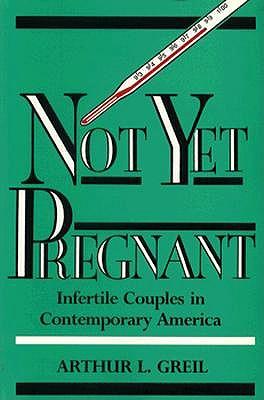
Although voluntary childlessness has come to be accepted as permissible, the ""normal"" plans of most American couples include parenthood. Having a child is still seen as a rite of passage to adulthood. When a couple finds out that they are infertile and that life is not going to go according to plan, they ask, ""why me?"" Greil explores not only ""why me?"" and the difficulty of finding a satisfying answer, but other questions as well. Why do women and men respond differently to infertility? Do gender differences play a role in the experience of infertility? How has medical technology affected the experience of infertility? Why are infertile couples so committed to the goal of having biological children? Greil argues that the complexity of infertility comes from its changing statusÐÐit is no longer considered a provate problem but a medical problem that can be solved. The human body is thought of as a finely-tuned machine and infertility is just a mechanical problem. In America, the author claims, those who suffer from medical problems become subject to cultural beliefs about the nature of illness and the role of the sick. This includes the belief that the sufferer should do everything in his or her power to get better; in the cae of infertility the infertile couple should do everything possible to have a baby. What results is often painful, humiliating, and never-ending treatment programs. But infertile couples are reluctant to stop treatment because new techniques are being developed, and there is always next month. Couples do not consider themselves infertile forever, they consider themselves ""not yet pregnant."" Greil explores the effect that infertility has on men and women, and why men seem to accept infertility more easily than women. Women see infertility as failure, they see themselves as incomplete. Men, seeing infertility more frequently as something they cannot change, ask why worry about it? Greil also explores what effect these attitudes have on the couple's marriage, on relationships with their relatives, and with their fertile friends. Infertility is not just a medical problem, it is a personal and emotional problem that affects all other aspects of the couple's life. This is a thorough investigation of what fertility means to contemporary American couples.
Full Product Details
Author: Arthur L. Greil
Publisher: Rutgers University Press
Imprint: Rutgers University Press
Dimensions:
Width: 15.20cm
, Height: 1.70cm
, Length: 22.90cm
Weight: 0.397kg
ISBN: 9780813516837
ISBN 10: 0813516838
Pages: 252
Publication Date: 01 July 1991
Audience:
College/higher education
,
General/trade
,
Undergraduate
,
General
Format: Paperback
Publisher's Status: Active
Availability: Temporarily unavailable

The supplier advises that this item is temporarily unavailable. It will be ordered for you and placed on backorder. Once it does come back in stock, we will ship it out to you.
Author Information
LARRY GREIL is a professor of sociology at Alfred University.