|
|
|||
|
||||
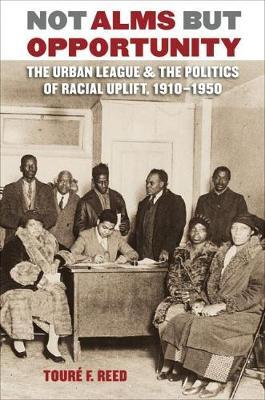
OverviewIlluminating the class issues that shaped the racial uplift movement, Toure Reed explores the ideology and policies of the Urban League's activities in New York and Chicago during the first half of the twentieth century. Reed argues that racial uplift in the Urban League reflected many of the class biases pervading contemporaneous social reform movements, resulting in an emphasis on behavioral, rather than structural, remedies to the disadvantages faced by African Americans.Reed traces the Urban League's ideology to the famed Chicago School of Sociology. The Chicago School offered Leaguers powerful scientific tools with which to foil the thrust of eugenics. However, Reed argues, concepts such as ethnic cycle and social disorganization and reorganization led the League to embrace behavioral models of uplift that reflected a deep circumspection about poor African Americans and fostered a preoccupation with the needs of middle-class blacks. According to Reed, the League's reform endeavors from the migration era through World War II oscillated between projects to ""adjust"" or even ""contain"" unacculturated African Americans and projects intended to enhance the status of the African American middle class. Reed's analysis complicates the mainstream account of how particular class concerns and ideological influences shaped the League's vision of group advancement as well as the consequences of its endeavors. Full Product DetailsAuthor: Touré F. ReedPublisher: The University of North Carolina Press Imprint: The University of North Carolina Press Edition: New edition Dimensions: Width: 15.60cm , Height: 2.30cm , Length: 23.50cm Weight: 0.522kg ISBN: 9780807832233ISBN 10: 0807832235 Pages: 272 Publication Date: 01 September 2008 Audience: College/higher education , Postgraduate, Research & Scholarly Format: Hardback Publisher's Status: Out of Print Availability: Awaiting stock Table of ContentsReviews[An] excellent study of the National Urban League. . . . What distinguishes Reed's study from previous scholarship is not his critique of the economic and cultural biases of racial uplift but, rather, his detailed analysis of their effects. <br> -- U.S. Intellectual-History.blogspot.com ""A first-rate treatment of its subject."" -- Journal of American History ""Reed succeeds in making sense of the ideological and class perspectives that shaped the initiatives of the Urban League. . . . He also makes a compelling argument for a more holistic approach to any project designed to 'uplift the race.'"" -- Journal of American Ethnic History Author InformationTOURE F. REED is associate professor of Afro-American history at Illinois State University. Tab Content 6Author Website:Countries AvailableAll regions |
||||