Overview
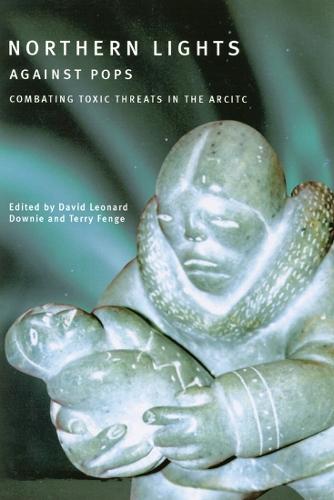
Representatives of 111 nations gathered in Stockholm in May 2001 to sign a legally binding convention to eliminate or reduce emissions of pesticides, insecticides, and other industrial combustion by-products. Long-range transport by air and water carries many of these pollutants to the circumpolar north, where they threaten the health and cultural survival of Inuit and other northern Indigenous peoples. Northern Lights Against POPs tells the many-faceted scientific, policy, legal, and advocacy story that led to the Stockholm convention. Unique in its perspective, scope, and breadth, it reveals the key links among environmental and health science, international politics, advocacy, law, and global negotiations. Never before have public health concerns articulated by northern Indigenous peoples in Canada and throughout the circumpolar Arctic had such a direct impact on global policy-making. Authors show how research on POPs (persistent organic pollutants) in the Arctic from the mid-1980s influenced international negotiations and analyze the potential for the convention to be effective. Contributors include elected representatives, researchers, civil servants, Indigenous people who participated in the negotiations, and scientists who provided the compelling Arctic data that prompted the United Nations Environment Programme to sponsor negotiations. Contributors include David Anderson (Minister of the Environment, Canada); Nigel Bankes (University of Calgary); John Buccini (Consultant, former chair of the Global POPs Negotiations); Sheila Watt-Cloutier (Inuit Circumpolar Conference-Canada); Barry Commoner, Paul Woods Bartlett, Holger Eisl, Kimberly Couchot (Center for the Biology of Natural Systems, Queens College, City University of New York); Eric Dewailly (Laval University); David Downie (Director of Educational Partnerships, Columbia Earth Institute, Columbia University, New York); Terry Fenge (Inuit Circumpolar Conference-Canada); Henry Huntington (Consultant, Anchorage) and Michelle Sparck (Circumpolar Conservation Union, Washington, D.C.) ; Harriet Kuhnlein, Laurie Chan (Centre for Indigenous Peoples' Nutrition and Environment, McGill University), and Olivier Receveur (formerly Centre for Indigenous Peoples' Nutrition and Environment, McGill University); Lars-Otto Reiersen (Arctic Monitoring and Assessment Programme Secretariat,Oslo); Henrik Selin (Massachusetts Institute of Technology); David Stone, Russell Shearer (Northern Contaminants Program, Department of Indian Affairs and Northern Development, Canada); Klaus Topfer (Executive Director, United Nations Environment Programme).
Full Product Details
Author: David Leonard Downie ,
Terry Fenge ,
Terry Fenge ,
Terry Fenge
Publisher: McGill-Queen's University Press
Imprint: McGill-Queen's University Press
Dimensions:
Width: 16.50cm
, Height: 78.90cm
, Length: 24.50cm
Weight: 0.800kg
ISBN: 9780773524484
ISBN 10: 0773524487
Pages: 400
Publication Date: 19 February 2003
Audience:
Professional and scholarly
,
Professional & Vocational
Format: Hardback
Publisher's Status: Active
Availability: Out of stock

The supplier is temporarily out of stock of this item. It will be ordered for you on backorder and shipped when it becomes available.
Author Information
CA Terry Fenge is a consultant with decades of experience in Arctic, environmental, and Aboriginal issues, and co-editor of Northern Lights Against POPs. Jim Aldridge is partner at the Vancouver law firm Aldridge and Rosling and has been counsel to the Nisg