|
|
|||
|
||||
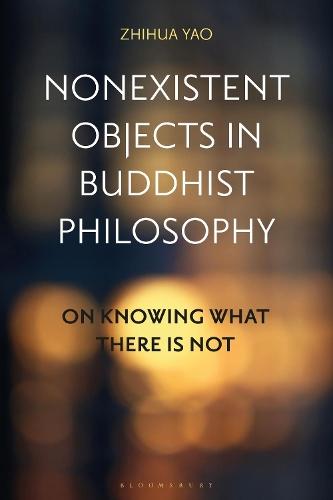
OverviewCan we know what there is not? This book examines the historical development of the concept of the cognition of nonexistent objects in several major Buddhist philosophical schools. Beginning with a study of the historical development of the concept in Mahasamghika, Darstantika, Yogacara and Sautrantika, it evaluates how successfully they have argued against the extreme view of their main opponent the Sarvastivadins and established their view that one can know what there is not. It also includes thematic studies on the epistemological issues of nonexistence, discussing making sense of empty terms, controversies over negative judgments, and a proper classification of the conceptions of nothing or nonexistence. Taking a comparative approach to these topics, this book considers contemporary Western philosophers such as Husserl, Heidegger, Meinong and Russell alongside representative figures of the Buddhist Pramana School. Based on first-hand study of primary sources in Sanskrit, Chinese and Tibetan, Nonexistent Objects in Buddhist Philosophy makes available the rich discussions and debates on the epistemological issues of nonexistence in Buddhist philosophy to students and researchers in Asian and comparative philosophy. Full Product DetailsAuthor: Zhihua Yao (Chinese University of Hong Kong, China)Publisher: Bloomsbury Publishing PLC Imprint: Bloomsbury Academic Weight: 0.454kg ISBN: 9781350121478ISBN 10: 1350121479 Pages: 200 Publication Date: 23 January 2020 Audience: College/higher education , Professional and scholarly , Tertiary & Higher Education , Professional & Vocational Format: Hardback Publisher's Status: Active Availability: Manufactured on demand We will order this item for you from a manufactured on demand supplier. Table of ContentsIntroduction Part I: Cognition of Nonexistent Objects: A Historical Development 1. Mahasamghika 2. Darstantika 3. Yogacara 4. Vasubandhu Part II: Epistemological Approaches to Nonexistence 5. Non-cognition 6. Empty Terms 7. Negative Judgments 8. Typology of Nothing Bibliography IndexReviewsLucid and informative. This book will be a rare guide for readers who are interested in the Indian (Buddhist) notion of nonexistence found in various sources. * Kei Kataoka, Associate Professor in the Department of Indology, Kyushu University, Japan * Author InformationZhihua Yao is Associate Professor in the Department of Philosophy and Associate Director of the Research Centre for Chinese Philosophy and Culture at The Chinese University of Hong Kong, China. Tab Content 6Author Website:Countries AvailableAll regions |
||||