Overview
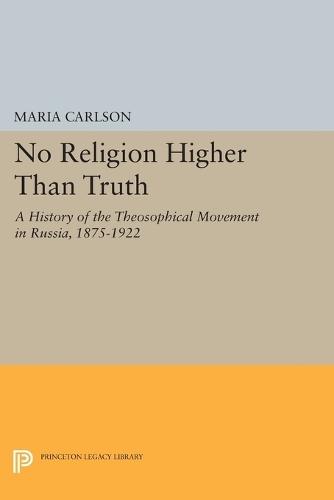
Among the various kinds of occultism popular during the Russian Silver Age (1890-1914), modern Theosophy was by far the most intellectually significant. This contemporary gnostic gospel was invented and disseminated by Helena Blavatsky, an expatriate Russian with an enthusiasm for Buddhist thought and a genius for self-promotion. What distinguished Theosophy from the other kinds of ""mysticism""--the spiritualism, table turning, fortune-telling, and magic--that fascinated the Russian intelligentsia of the period? In answering this question, Maria Carlson offers the first scholarly study of a controversial but important movement in its Russian context. Carlson's is the only work on this topic written by an intellectual historian not ideologically committed to Theosophy. Placing Mme Blavatsky and her ""secret doctrine"" in a Russian setting, the book also discusses independent Russian Theosophical circles and the impact of the Theosophical-Anthroposophical schism in Russia.It surveys the vigorous polemics of the Theosophists and their critics, demonstrates Theosophy's role in the philosophical dialogues of the Russian creative intelligentsia, and chronicles the demise of the movement after 1917. By exploring this long neglected aspect of the Silver Age, Carlson greatly enriches our knowledge of fin-de-sicle Russian culture. Originally published in 1993. The Princeton Legacy Library uses the latest print-on-demand technology to again make available previously out-of-print books from the distinguished backlist of Princeton University Press. These editions preserve the original texts of these important books while presenting them in durable paperback and hardcover editions. The goal of the Princeton Legacy Library is to vastly increase access to the rich scholarly heritage found in the thousands of books published by Princeton University Press since its founding in 1905.
Full Product Details
Author: Maria Carlson
Publisher: Princeton University Press
Imprint: Princeton University Press
Volume: 1750
Dimensions:
Width: 15.20cm
, Height: 1.70cm
, Length: 23.50cm
Weight: 0.425kg
ISBN: 9780691607818
ISBN 10: 0691607818
Pages: 310
Publication Date: 08 March 2015
Audience:
College/higher education
,
Professional and scholarly
,
Tertiary & Higher Education
,
Professional & Vocational
Format: Paperback
Publisher's Status: Active
Availability: Manufactured on demand

We will order this item for you from a manufactured on demand supplier.
Language: English
Reviews
[Carlson's] book is primarily concerned ... with fin de-si cle Russian culture, more particularly the Russian Silver Age (1890-1914)... 'No Religion Higher than the Truth' is ground-breaking for its careful investigation of previously untapped Russian sources on theosophical history. --Religious Studies Review
[Carlson's] book is primarily concerned ... with fin de-siAcle Russian culture, more particularly the Russian Silver Age (1890-1914)... 'No Religion Higher than the Truth' is ground-breaking for its careful investigation of previously untapped Russian sources on theosophical history. --Religious Studies Review
[Carlson's] book is primarily concerned ... with fin de-si cle Russian culture, more particularly the Russian Silver Age (1890-1914).... 'No Religion Higher than the Truth' is ground-breaking for its careful investigation of previously untapped Russian sources on theosophical history. --Religious Studies Review