Overview
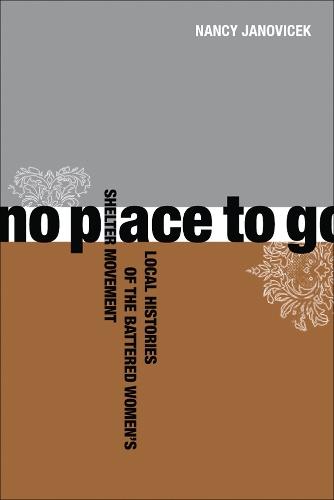
The first history of the battered women's shelter movement in Canada, No Place to Go traces the development of transition houses and services for abused women and the campaign that made wife battering a political issue. Nancy Janovicek focuses on women's groups in small cities and rural communities, examining anti-violence activism in Thunder Bay, Kenora, Nelson, and Moncton. She also pays close attention to Aboriginal women in northwestern Ontario, where the connections between family violence and the devaluation of indigenous culture in Canadian society complicated effots to end domestic violence. This book lays bare the aims and challenges of establishing women's shelters in non-urban areas. The local histories presented here show how transition houses became hubs in a larger movement to change attitudes about domestic violence and to lobby for legislation to protect women.
Full Product Details
Author: Nancy Janovicek
Publisher: University of British Columbia Press
Imprint: University of British Columbia Press
Weight: 0.280kg
ISBN: 9780774814225
ISBN 10: 0774814225
Pages: 184
Publication Date: 01 July 2008
Audience:
General/trade
,
Professional and scholarly
,
General/trade
,
General
,
Postgraduate, Research & Scholarly
Format: Paperback
Publisher's Status: Active
Availability: In Print

This item will be ordered in for you from one of our suppliers. Upon receipt, we will promptly dispatch it out to you. For in store availability, please contact us.
Reviews
Historian Nancy Janovicek has undertaken the important task of outlining the history of establishing transnational housing (and services) for battered women in Canadian small towns. Her writing is accessible, combining narrative from shelter activists with her interpretation of the early documents from each of the communities. This is a much needed contribution to the scholarly knowledge about the battered women's shelter movement, documenting the struggles to get services for abused women and to frame domestic violence as a public issue rather than a private one. [...] This would be an excellent text for undergraduate courses as an exploration of the way we were and the journey to where we are and hope to move. -- Cheryl Athersych, York University Labour / Le Travail, Vol. 62, Fall 2008
Historian Nancy Janovicek has undertaken the important task of outlining the history of establishing transnational housing (and services) for battered women in Canadian small towns. Her writing is accessible, combining narrative from shelter activists with her interpretation of the early documents from each of the communities. This is a much needed contribution to the scholarly knowledge about the battered women's shelter movement, documenting the struggles to get services for abused women and to frame domestic violence as a public issue rather than a private one. […] This would be an excellent text for undergraduate courses as an exploration of the way we were and the journey to where we are and hope to move. - Cheryl Athersych, York University (Labour / Le Travail, Vol. 62, Fall 2008)
Historian Nancy Janovicek has undertaken the important task of outlining the history of establishing transnational housing (and services) for battered women in Canadian small towns. Her writing is accessible, combining narrative from shelter activists with her interpretation of the early documents from each of the communities. This is a much needed contribution to the scholarly knowledge about the battered women's shelter movement, documenting the struggles to get services for abused women and to frame domestic violence as a public issue rather than a private one. [...] This would be an excellent text for undergraduate courses as an exploration of the way we were and the journey to where we are and hope to move. -- Cheryl Athersych, York University * Labour / Le Travail, Vol. 62, Fall 2008 *
Author Information
Nancy Janovicek is Assistant Professor in the Department of History at the University of Calgary.