Overview
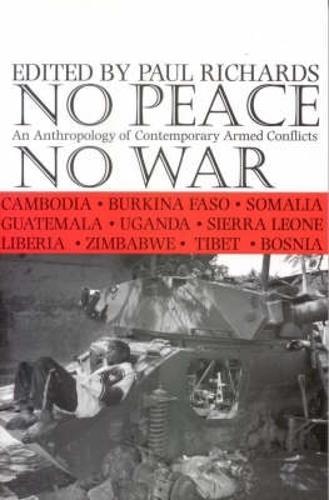
The proliferation of 'new wars' since the end of the Cold War has forced scholars to re-open the debate about 'what is war?' For most commentators, 'new war' is 'mindless' mass action. It has become a behavioural problem. Like a disease, the risk of infection must be contained. This book takes a different approach. Anthropologists who have lived with and through the wars they describe here reflect a paradoxical assumption that to understand war we must deny it a special status. Rather than quarantine war and leave it to security specialists they attempt to grasp its character as but one among many phases or aspects of social reality, organised by social agents, made through social action. All war is long-term struggle organised for political ends, and neither the means nor the ends can be understood without reference to a specific social context.
Full Product Details
Author: Paul Richards ,
Paul Richards
Publisher: James Currey
Imprint: James Currey
Dimensions:
Width: 15.60cm
, Height: 1.30cm
, Length: 23.40cm
Weight: 0.378kg
ISBN: 9780852559352
ISBN 10: 0852559356
Pages: 232
Publication Date: 09 November 2004
Audience:
College/higher education
,
Professional and scholarly
,
Undergraduate
,
Postgraduate, Research & Scholarly
Format: Paperback
Publisher's Status: Active
Availability: Manufactured on demand

We will order this item for you from a manufactured on demand supplier.
Reviews
'Where Richards' collection is particularly interesting is in its reverse twist to this argument, in showing 'peace' as an analytically more problematic and socially much rarer phenomenon than 'war'- Mark Leopold in 'African Affairs'----------`Paul Richards offers a brilliant critique of some of the most influential explanations of African conflicts in the introductory chapter to this book. He successfully demolishes theories, delivers the coup de grace to Kaplan's long moribund ""new barbarism"" thesis and goes on to tackle Paul Collier's ""greed not grievance"" theory. 'The nub of his critique is as straightforward as it is convincing: [Collier's] analysis shows that internal wars are more likely where mineral wealth combines with poverty and where there is high unemployment among young men with limited education, but (perversely) he considers neither circumstance grounds for valid grievance."" As he goes on to note: "" This seems very odd to anyone with on-the-ground knowledge of youth activism against oil companies in the Niger Delta or rebels facing mercenary-backed kimberlite concession holders in Sierra Leone. Why it is `greedy' to want a basic education or a job Collier does not explain."" 'As always Richards is nothing if not challenging and provocative' - Rene Lemarchand in 'African Studies Review'----------'This work is an excellent study of current conflicts, wars and intractably violent contexts.'...the authors display a convincing coherence in establishing some key points about the ethnography of armed conflict in particular the way in which ethnographic engagement with fighter and their victims belies the kinds of analysis proffered by security experts and international relations scholars.'This collection is an important illustration of what theoretically informed ethnography can achieve in the study of violence and armed conflict. This volume well represents the power of renewed anthropological approaches to warfare and the relation of politics, media and the global order. It is to be thoroughly recommended for not just anthropologists but political scientists and international relations specialists as well.' - Neil Whitehead in 'Anthropos'----------
"'Where Richards' collection is particularly interesting is in its reverse twist to this argument, in showing 'peace' as an analytically more problematic and socially much rarer phenomenon than 'war'- Mark Leopold in 'African Affairs'----------`Paul Richards offers a brilliant critique of some of the most influential explanations of African conflicts in the introductory chapter to this book. He successfully demolishes theories, delivers the coup de grace to Kaplan's long moribund ""new barbarism"" thesis and goes on to tackle Paul Collier's ""greed not grievance"" theory. 'The nub of his critique is as straightforward as it is convincing: [Collier's] analysis shows that internal wars are more likely where mineral wealth combines with poverty and where there is high unemployment among young men with limited education, but (perversely) he considers neither circumstance grounds for valid grievance."" As he goes on to note: "" This seems very odd to anyone with on-the-ground knowledge of youth activism against oil companies in the Niger Delta or rebels facing mercenary-backed kimberlite concession holders in Sierra Leone. Why it is `greedy' to want a basic education or a job Collier does not explain."" 'As always Richards is nothing if not challenging and provocative' - Rene Lemarchand in 'African Studies Review'----------'This work is an excellent study of current conflicts, wars and intractably violent contexts.'...the authors display a convincing coherence in establishing some key points about the ethnography of armed conflict in particular the way in which ethnographic engagement with fighter and their victims belies the kinds of analysis proffered by security experts and international relations scholars.'This collection is an important illustration of what theoretically informed ethnography can achieve in the study of violence and armed conflict. This volume well represents the power of renewed anthropological approaches to warfare and the relation of politics, media and the global order. It is to be thoroughly recommended for not just anthropologists but political scientists and international relations specialists as well.' - Neil Whitehead in 'Anthropos'----------"
'Where Richards' collection is particularly interesting is in its reverse twist to this argument, in showing 'peace' as an analytically more problematic and socially much rarer phenomenon than 'war'- Mark Leopold in 'African Affairs'----------`Paul Richards offers a brilliant critique of some of the most influential explanations of African conflicts in the introductory chapter to this book. He successfully demolishes theories, delivers the coup de grace to Kaplan's long moribund new barbarism thesis and goes on to tackle Paul Collier's greed not grievance theory. 'The nub of his critique is as straightforward as it is convincing: [Collier's] analysis shows that internal wars are more likely where mineral wealth combines with poverty and where there is high unemployment among young men with limited education, but (perversely) he considers neither circumstance grounds for valid grievance. As he goes on to note: This seems very odd to anyone with on-the-ground knowledge of youth activism against oil companies in the Niger Delta or rebels facing mercenary-backed kimberlite concession holders in Sierra Leone. Why it is `greedy' to want a basic education or a job Collier does not explain. 'As always Richards is nothing if not challenging and provocative' - Rene Lemarchand in 'African Studies Review'----------'This work is an excellent study of current conflicts, wars and intractably violent contexts.'...the authors display a convincing coherence in establishing some key points about the ethnography of armed conflict in particular the way in which ethnographic engagement with fighter and their victims belies the kinds of analysis proffered by security experts and international relations scholars.'This collection is an important illustration of what theoretically informed ethnography can achieve in the study of violence and armed conflict. This volume well represents the power of renewed anthropological approaches to warfare and the relation of politics, media and the global order. It is to be thoroughly recommended for not just anthropologists but political scientists and international relations specialists as well.' - Neil Whitehead in 'Anthropos'----------
Author Information
PAUL RICHARDS is Adjunct Professor at Njala University, Sierra Leone and Emeritus Professor of Technology and Agrarian Development at Wageningen University, The Netherlands. PAUL RICHARDS is Adjunct Professor at Njala University, Sierra Leone and Emeritus Professor of Technology and Agrarian Development at Wageningen University, The Netherlands.