Overview
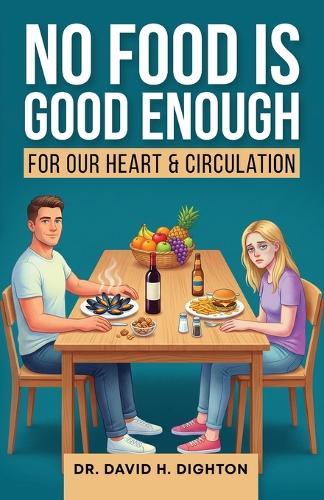
Natural food was not designed for humans. The plants and animals we regard as food, has long had its own raison d'être. So, who knows what food is best for our heart and circulation, when most of it is compromised by too many calories, detrimental fats, few protective substances, by taste and cost? How are we to make scientifically informed food choices? Most people have fixed ideas about food - especially, what is 'bad for them' (fats in 'junk food', they think). Far fewer know what might be positively good for their heart and arteries (rather than just 'not so bad'). Most believe that fresh fruit and vegetables, nuts, fish, olive oil and salads are best. Are these myths based on hearsay or is there a scientific basis for them? Nobody has yet devised a readily usable index for 'how good' or 'how bad' any particular food, food group or diet is for our arteries, heart and circulation. Can certain foods protect us from heart attacks and strokes? If so, how strong might each protective nutrient be? Perhaps, only drugs like 'statins' can be relied on to do the job. I was once asked by a heart patient of mine (who had just had a heart by-pass), what he should eat to help protect his arteries. I had to admit I wasn't sure. So, I undertook some research. Some animal experiments have observed artery 'furring' in relationship to various nutrients. There were those that caused 'furring', while others had a protective effect. Although, I did manage to collect together a few damaging nutrients, like saturated fat, I was only able to find sixteen protective ones. Soon, other questions arose. Where are these nutrients to be found in food? And, how much does each food contain? How bad are the damaging nutrients, and how good the protective ones? Few books list the full nutrient content of natural foods; that of prepared foods often remaining secret. Even then, not every known protective nutrient will be listed. Nutrients like allicin (in garlic), resveratrol and flavonoids in wine and deep colored fruit - all likely to be of importance - but rarely mentioned. We have long needed a usable index for both potential effects; alternatively, one could use their ratio - the Cardiac Value of Food. But wait! Perhaps it's not the ratio that counts most. Perhaps the 'good' nutrients easily overwhelm the dangerous effects of the 'bad' ones. That vital question has yet to be answered. This book introduces an index for each food, food group and diet, based not on hearsay, but on actual nutrient content. This is a new approach to food choice, especially for those with a family history of coronary heart disease and those who already have it. As a cardiologist with almost 60-years of experience, I have always had doubts about the role food plays in the generation of artery 'furring' (atherosclerosis), coronary artery disease, heart attacks and strokes. I don't believe those who carry strong artery 'furring' genes will completely overcome their problem, just by choosing what I think is best to eat. But since we must all eat, there will be best and worst food choices to consider. I believe those with no trace of 'furring' genes can probably eat what they like, regardless of any best or worst food concept, taken from either animal experiments or population studies. If we are to get the maximum nutrient benefit for the heart and circulation, taking supplements might be the answer. At least, there should not be any damaging nutrients or too many calories. In the meantime, most of us have one prominent desire - to enjoy the food we eat; foods that hopefully help us to survive healthily within our social and cultural groups.
Full Product Details
Author: David H Dighton
Publisher: Medicause
Imprint: Medicause
Dimensions:
Width: 14.00cm
, Height: 1.40cm
, Length: 21.60cm
Weight: 0.318kg
ISBN: 9781919458120
ISBN 10: 1919458123
Pages: 270
Publication Date: 16 February 2026
Audience:
General/trade
,
General
Format: Paperback
Publisher's Status: Active
Availability: In Print

This item will be ordered in for you from one of our suppliers. Upon receipt, we will promptly dispatch it out to you. For in store availability, please contact us.
Author Information
Cardiologist. Formerly, British Heart Foundation Research Fellow, St. George's Hospital, London. Lecturer in Cardiology, Charing Cross Hospital, London.Chef de Clinique, Cardiologist, Vrije Universiteit. Amsterdam.Former Director: Cardiac Centre. Loughton. Essex, UK.Dr. David H. Dighton qualified at the London Hospital Medical College in 1966 with MB and BS (London) degrees. In 1970, after a year or so in NHS general practice, he became a British Heart Foundation Fellow in Cardiology at St. George's Hospital, Hyde Park Corner, London, working with cardiologists Dr. Aubrey Leatham and Dr. Alan Harris. In 1973, he became a MRCP(UK), and later a Lecturer (London University) in Medicine and Cardiology at Charing Cross Hospital, London. In 1980, as Chef de Clinique (Assistant Professor) at the Vrije University Hospital, Amsterdam, he helped to introduce transvenous pacing, and collaborated in ongoing coronary artery research with Dr. Pim de Feyter and others. After returning to the UK in 1982, he worked both in his own private medical and cardiac practice in Loughton, Essex (The Loughton Clinic, established in 1973), undertaking invasive cardiac investigations at the Wellington Hospital, London. In 2000, he started a private cardiac diagnostic centre, specialising in the early detection and prevention of coronary artery disease (The Cardiac Centre, Loughton). This closed, once the Public Services Authority directed the GMC to withdraw his licence to practice in the UK (the political reasons are detailed in his book, 'The NHS. Our Sick Sacred Cow.' 2023). As an independent private cardiologist and general physician, he disagreed with UK medical bureaucracy and who they thought most qualified to devise, regulate and supervise medical practice; opinions he based on having been a medical student, general physician and cardiologist for sixty years without ever having one complaint from any patient. Between 2003 and 2006, he undertook food research and wrote two books on food and the heart. Between 2023 and 2025, he published ten books on medical and cardiac subjects. A recent technical book (2025), explores the possible neurophysiological bases for tiredness, fatigue and exhaustion and the relationship to heart disease. Another recent medical book (his 11th) explains tiredness and its cure to a general audience (Tired All the Time, 2025). His latest book, 'Always Tired? 2026, explains tiredness and its relationship to life, illness and mortality, in the simplest of ways. He continues to publish books on cardiac topics, to write haiku (his most recent - his twelfth book - 'A Life: Contemplated in Haiku, Poems and Senryu, 2025) and to research cardiac prevention. This is his fourteenth book (see the list of other books by the author).His interest in the frontier that lies between art and science in medical practice, led to his book, The Art and Science of Medical Practice. It details not only what he was taught by many experienced, world-class physicians and surgeons, but what he learned from practising both the art and science of medicine in teaching hospitals and in private practice. He has other interests. He is a poor linguist but loves learning languages and communicating in those other than his mother tongue. He draws and paints in oils on canvas. For his own amusement he plays the guitar and piano. He likes to compose and play simple melodies, one of which introduces his YouTube videos for patients on understanding heart problems (Dr. Dighton Interviews). Another he played live for a friend on Facebook. For further information: www.daviddighton.com email: david@daviddighton.com