|
|
|||
|
||||
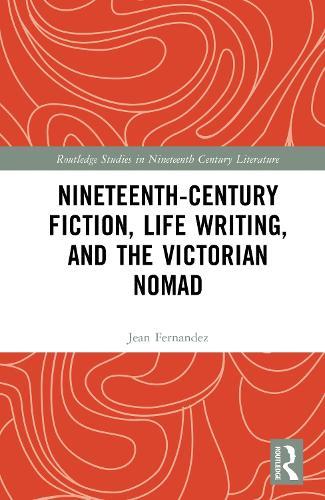
OverviewNineteenth-Century Fiction, Life Writing, and the Victorian Nomad employs canonical literary texts, and introduces new noncanonical works of fiction and autobiography, to uncover how nineteenth-century fiction and life writing engaged with the figure of the nomad as a problematic phenomenon during the Victorian age. Exploring constructions of the nomad in legal, ethnological, and imperial discourse, this volume examines how literary texts responded to nomadism in national and imperial contexts when global flows of population necessitated by empire operated in tension with policies of sedentarization pursued by the nation and the colonial state. This book reveals how literary texts explored and interrogated the sedentary-nomad binary with implications for genre, reader relations, and the ideological underpinnings of sedentism. It examines works by Charlotte Bronte, William Makepeace Thackeray, Wilkie Collins, Joseph Thomson, Flora Annie Steel, and Rudyard Kipling, as well as a Romani autobiography by Samson Loveridge, and will be of strong interest to scholars of Victorian literature and empire studies. Full Product DetailsAuthor: Jean FernandezPublisher: Taylor & Francis Ltd Imprint: Routledge ISBN: 9781041209157ISBN 10: 1041209150 Pages: 248 Publication Date: 25 February 2026 Audience: College/higher education , Professional and scholarly , Postgraduate, Research & Scholarly , Professional & Vocational Format: Hardback Publisher's Status: Forthcoming Availability: Not yet available This item is yet to be released. You can pre-order this item and we will dispatch it to you upon its release. Table of Contents1. Introduction. 2. “Drear flight and homeless wandering”: The Great House, Spectral Nomadism, and the Nomadic Subject in Charlotte Bronte’s Jane Eyre (1847). 3. “No better than a vagabond upon this earth”: Mobile Bodies and Mobile Economies in William Makepeace Thackeray’s Vanity Fair (1848). 4. “Wandering off in search of Lord knows what, Lord knows where”: Nomadism and the Strange Family Story in William Wilkie Collins’s The Moonstone (1868). 5. Finding the Nomadic Voice: Life writing and the problematic production of Nomadic Subjectivity in No 747 being the Autobiography of a Gypsy (1890). 6. Nomads, Empire, and Colonial Modernity: Joseph Thomson’s Ulu: An African Romance (1888), Flora Annie Steel’s “Habitual Criminals” (1894) and Rudyard Kipling’s “The Bridge Builders” (1893).ReviewsAuthor InformationJean Fernandez is Professor of English at the University of Maryland Baltimore County. She obtained her Ph.D. from the University of Iowa, where she was a Seashore Dissertation Fellow. She is the author of Victorian Servants, Class, and the Politics of Literacy (Routledge 2009) and Geography and the Literary Imagination in Victorian Fictions of Empire: The Poetics of Imperial Space (Routledge, 2020). Her essays on Victorian fiction, gender studies, and empire studies have appeared in leading scholarly journals of nineteenth-century British literature. Tab Content 6Author Website:Countries AvailableAll regions |
||||