Awards
- Children's Book Committee at Bank Street College Best Children's Book of the Year
- Cooperative Children's Book Center (CCBC) Choices
- NCTE Notable Children's Books in the Language Arts
- New York Public Library Best Books for Kids
Overview
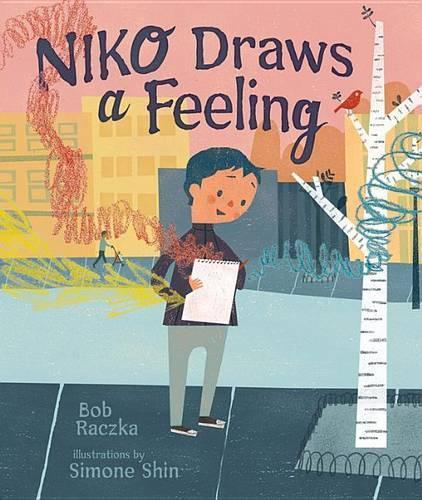
Niko loves to draw his world: the ring-a-ling of the ice cream truck, the warmth of sun on his face. But no one appreciates his art. Until one day, Niko meets Iris . . . This imaginative and tender story explores the creative process, abstract art, friendship, and the universal desire to feel understood. A Junior Library Guild selection, Charlotte Zolotow Honor Book, Children's Book Committee at Bank Street College Best Children's Book of the Year, Chicago Public Library Best of the Best Books, Cooperative Children's Book Center Choice, Midwest Connections Pick, NCTE Notable Children's Book in the Language Arts, and New York Public Library Best Book for Kids
Reviews
Young Niko loves drawing pictures and finds inspiration everywhere--like a mother bird building her nest, or an ice-cream truck's 'ring-a-linging.' Being inspired feels 'like a window opening in his brain, ' which sends his colored pencils in a flurry of swirls on the page. However, from home to school, no one seems to understand his pictures, even after he explains them--like how his picture of 'the warm of the sun on my face, ' a reddish-orange scribblelike abstraction, depicts just the warmth, not the sun or his face. He feels somewhat disheartened, but when he meets new neighbor Iris, who shares a feeling evoked by one of Niko's pictures, they bond over his strange but, to them, recognizable art. Colorful, simply composed mixed-media illustrations portray the multicultural characters in familiar scenes and settings, all the while incorporating Niko's deeply expressive, abstract drawings, which reflect how he engages with the world around him. While some elements may be esoteric for younger children, they'll likely find much to relate to in this insightful and supportive celebration of creativity and imagination. --Booklist --Journal A dedicated young artist finds a friend who understands his vision in this picture book ode to the creative spirit. Niko carries a pad of paper and a box of colored pencils everywhere he goes, and his urban community provides plenty of inspiration for his artwork. Unfortunately, his abstract attempts to capture the 'ring-a-ling' of the ice-cream truck's bell, the hard work of a bird building her nest, and the warmth of the sun on his face only confuse his classmates, parents, and teacher, who seem stuck on the concrete objects missing from his drawings. Then a new girl named Iris moves in next door, and when she recognizes her own feelings of sadness in one of his drawings, Niko knows he's found a kindred spirit. Shin's digital and mixed-media illustrations perfectly capture Niko's passion and creativity, visually connecting his drawing pad to the world around him through joyous, scribbled colored pencil lines. Niko's drawings are appropriately naive, employing geometric shapes and bright colors that are echoed in Shin's visuals. Raczka's child-centered text expertly uses accessible language to describe the process of creative expression, likening it to a butterfly fluttering and a window opening in the mind. Pink-skinned Niko appears to come from a biracial family, and his classmates are depicted with a realistically diverse array of skin tones. VERDICT: Niko's journey will resonate with budding artists and inspire young audiences of all abilities to create something meaningful. --starred, School Library Journal --Journal Niko is an abstract expressionist, although he doesn't know it, nor does anyone around him. Showing his parents a drawing composed of yellow striations and red swirls and knots, he explains, 'It's the warm of the sun on my face.' When Dad says he can't see the sun or the face, Niko responds, 'It's not my face. It's the warm.' So it goes at school, too: everyone wants to know why Niko's artwork doesn't show what they see: the world in concretely visual terms. Niko's sadness and sense of being misunderstood lifts when he meets his new neighbor, Iris: her thoughtful, elated expressions as she takes in his creations make for some of Shin's (If I Could Drive, Mama) loveliest scenes in this touching story. 'Niko waited for her questions, ' writes Raczka (Wet Cement), but Iris doesn't need Niko to explain anything. Her own feelings of dislocation and, more importantly, her self-awareness about them, make her both a soul mate and the ideal audience. What more could an artist ask for? --Publishers Weekly --Journal Everywhere Niko, a budding artist, looks, he sees something that calls out to be drawn. 'It might be a mother bird building her nest. Or the low autumn sun peeking out from behind a cloud. Or the ice cream truck ring-a-linging down the street.' Inspired, he draws and draws. But when he shows his pictures--fantastic, abstract scribbles of line and color and shape--to other people, they just don't get it. 'What is it?' they ask. 'It doesn't look like the ice cream truck.' Niko explains: 'It's not the ice cream truck.... It's the ring-a-ling.' They ask, 'Where's the bell?' Patiently, Niko repeats: 'It's not the bell. It's the ring-a-ling.' Discouraged, Niko seems ready to retreat into himself when he meets the new girl next door, who turns out to be a kindred spirit, one who experiences his art, rather than trying to pigeonhole it. The creative process is clearly near and dear to the hearts of Bob Raczka (Fall Mixed Up; Wet Cement: A Mix of Concrete Poems) and Simone Shin (If I Could Drive, Mama). In Niko Draws a Feeling, Raczka provides possibly the best description of artistic inspiration ever '[I]t felt like a window opening in his brain. An idea would flit through the open window like a butterfly, flutter down to his stomach, then along his arm and fingers to his pencils, where it would escape onto his paper in a whirlwind of color.' Shin's mixed-media, digital and acrylic artwork wonderfully captures the passion and poignance of a misunderstood artist. Discover: In this sensitive picture book, no one understands the abstract work of a young artist until he meets a new friend. --Shelf Awareness --Website A boy finds ample artistic inspiration, but people find his artwork baffling. Niko's art has atypical subject matter. He is excited by 'a mother bird building a nest . . . . Or the ice cream truck ring-a-linging down the street, ' but he doesn't draw the physical things he sees. He draws the robin's hard work and the ice cream truck's sound. 'Where's the robin?' asks his teacher, and then, puzzled, 'So this is the nest?' Niko tries to explain: 'It's not the nest. It's her hard work.' Similarly, the kids find neither ice cream truck nor bell in his picture, because 'It's not the bell. It's the ring-a-ling.' Even his parents don't get it. His drawing of 'the warm of the sun on my face' elicits the question, 'Where's your face?' 'It's not my face. It's the warm, ' Niko says, dejected. While Shin's child-style portrayals of Niko's abstract drawings wouldn't be definable by readers without Niko's explanation, that's hardly the point; the point is finding one person who appreciates his abstract work--a new neighbor--and Niko's freedom to draw nonrepresentationally. The mixed-media illustrations, which include digital rendering and acrylic paint, are gentle and two-dimensional; their colors lean toward tertiaries and blue-grays. Niko has ruddy pink skin and black hair; his dad is brown-skinned, and his mom is probably Asian. Conceptual and thoughtful, like Niko's own pieces. --Kirkus Reviews --Journal
[An] insightful and supportive celebration of creativity and imagination. --Booklist -- (3/15/2017 12:00:00 AM) [A] picture book ode to the creative spirit. . . . Niko's journey will resonate with budding artists and inspire young audiences of all abilities to create something meaningful. --starred, School Library Journal -- (2/1/2017 12:00:00 AM) Conceptual and thoughtful, like Niko's own pieces. --Kirkus Reviews -- (3/1/2017 12:00:00 AM) Niko's sadness and sense of being misunderstood lifts when he meets his new neighbor, Iris: her thoughtful, elated expressions as she takes in his creations make for some of Shin's . . . loveliest scenes in this touching story. . . . What more could an artist ask for? --Publishers Weekly -- (1/30/2017 12:00:00 AM) Raczka provides possibly the best description of artistic inspiration ever. . . . Shin's mixed-media, digital and acrylic artwork wonderfully captures the passion and poignance of a misunderstood artist. --Shelf Awareness -- (4/11/2017 12:00:00 AM)
Niko is an abstract expressionist, although he doesn't know it, nor does anyone around him. Showing his parents a drawing composed of yellow striations and red swirls and knots, he explains, 'It's the warm of the sun on my face.' When Dad says he can't see the sun or the face, Niko responds, 'It's not my face. It's the warm.' So it goes at school, too: everyone wants to know why Niko's artwork doesn't show what they see: the world in concretely visual terms. Niko's sadness and sense of being misunderstood lifts when he meets his new neighbor, Iris: her thoughtful, elated expressions as she takes in his creations make for some of Shin's (If I Could Drive, Mama) loveliest scenes in this touching story. 'Niko waited for her questions, ' writes Raczka (Wet Cement), but Iris doesn't need Niko to explain anything. Her own feelings of dislocation and, more importantly, her self-awareness about them, make her both a soul mate and the ideal audience. What more could an artist ask for? --Publishers Weekly --Journal Everywhere Niko, a budding artist, looks, he sees something that calls out to be drawn. 'It might be a mother bird building her nest. Or the low autumn sun peeking out from behind a cloud. Or the ice cream truck ring-a-linging down the street.' Inspired, he draws and draws. But when he shows his pictures--fantastic, abstract scribbles of line and color and shape--to other people, they just don't get it. 'What is it?' they ask. 'It doesn't look like the ice cream truck.' Niko explains: 'It's not the ice cream truck.... It's the ring-a-ling.' They ask, 'Where's the bell?' Patiently, Niko repeats: 'It's not the bell. It's the ring-a-ling.' Discouraged, Niko seems ready to retreat into himself when he meets the new girl next door, who turns out to be a kindred spirit, one who experiences his art, rather than trying to pigeonhole it. The creative process is clearly near and dear to the hearts of Bob Raczka (Fall Mixed Up; Wet Cement: A Mix of Concrete Poems) and Simone Shin (If I Could Drive, Mama). In Niko Draws a Feeling, Raczka provides possibly the best description of artistic inspiration ever '[I]t felt like a window opening in his brain. An idea would flit through the open window like a butterfly, flutter down to his stomach, then along his arm and fingers to his pencils, where it would escape onto his paper in a whirlwind of color.' Shin's mixed-media, digital and acrylic artwork wonderfully captures the passion and poignance of a misunderstood artist. Discover: In this sensitive picture book, no one understands the abstract work of a young artist until he meets a new friend. --Shelf Awareness --Website Young Niko loves drawing pictures and finds inspiration everywhere--like a mother bird building her nest, or an ice-cream truck's 'ring-a-linging.' Being inspired feels 'like a window opening in his brain, ' which sends his colored pencils in a flurry of swirls on the page. However, from home to school, no one seems to understand his pictures, even after he explains them--like how his picture of 'the warm of the sun on my face, ' a reddish-orange scribblelike abstraction, depicts just the warmth, not the sun or his face. He feels somewhat disheartened, but when he meets new neighbor Iris, who shares a feeling evoked by one of Niko's pictures, they bond over his strange but, to them, recognizable art. Colorful, simply composed mixed-media illustrations portray the multicultural characters in familiar scenes and settings, all the while incorporating Niko's deeply expressive, abstract drawings, which reflect how he engages with the world around him. While some elements may be esoteric for younger children, they'll likely find much to relate to in this insightful and supportive celebration of creativity and imagination. --Booklist --Journal A boy finds ample artistic inspiration, but people find his artwork baffling. Niko's art has atypical subject matter. He is excited by 'a mother bird building a nest . . . . Or the ice cream truck ring-a-linging down the street, ' but he doesn't draw the physical things he sees. He draws the robin's hard work and the ice cream truck's sound. 'Where's the robin?' asks his teacher, and then, puzzled, 'So this is the nest?' Niko tries to explain: 'It's not the nest. It's her hard work.' Similarly, the kids find neither ice cream truck nor bell in his picture, because 'It's not the bell. It's the ring-a-ling.' Even his parents don't get it. His drawing of 'the warm of the sun on my face' elicits the question, 'Where's your face?' 'It's not my face. It's the warm, ' Niko says, dejected. While Shin's child-style portrayals of Niko's abstract drawings wouldn't be definable by readers without Niko's explanation, that's hardly the point; the point is finding one person who appreciates his abstract work--a new neighbor--and Niko's freedom to draw nonrepresentationally. The mixed-media illustrations, which include digital rendering and acrylic paint, are gentle and two-dimensional; their colors lean toward tertiaries and blue-grays. Niko has ruddy pink skin and black hair; his dad is brown-skinned, and his mom is probably Asian. Conceptual and thoughtful, like Niko's own pieces. --Kirkus Reviews --Journal A dedicated young artist finds a friend who understands his vision in this picture book ode to the creative spirit. Niko carries a pad of paper and a box of colored pencils everywhere he goes, and his urban community provides plenty of inspiration for his artwork. Unfortunately, his abstract attempts to capture the 'ring-a-ling' of the ice-cream truck's bell, the hard work of a bird building her nest, and the warmth of the sun on his face only confuse his classmates, parents, and teacher, who seem stuck on the concrete objects missing from his drawings. Then a new girl named Iris moves in next door, and when she recognizes her own feelings of sadness in one of his drawings, Niko knows he's found a kindred spirit. Shin's digital and mixed-media illustrations perfectly capture Niko's passion and creativity, visually connecting his drawing pad to the world around him through joyous, scribbled colored pencil lines. Niko's drawings are appropriately naive, employing geometric shapes and bright colors that are echoed in Shin's visuals. Raczka's child-centered text expertly uses accessible language to describe the process of creative expression, likening it to a butterfly fluttering and a window opening in the mind. Pink-skinned Niko appears to come from a biracial family, and his classmates are depicted with a realistically diverse array of skin tones. VERDICT: Niko's journey will resonate with budding artists and inspire young audiences of all abilities to create something meaningful. --starred, School Library Journal --Journal
Everywhere Niko, a budding artist, looks, he sees something that calls out to be drawn. 'It might be a mother bird building her nest. Or the low autumn sun peeking out from behind a cloud. Or the ice cream truck ring-a-linging down the street.' Inspired, he draws and draws. But when he shows his pictures--fantastic, abstract scribbles of line and color and shape--to other people, they just don't get it. 'What is it?' they ask. 'It doesn't look like the ice cream truck.' Niko explains: 'It's not the ice cream truck.... It's the ring-a-ling.' They ask, 'Where's the bell?' Patiently, Niko repeats: 'It's not the bell. It's the ring-a-ling.' Discouraged, Niko seems ready to retreat into himself when he meets the new girl next door, who turns out to be a kindred spirit, one who experiences his art, rather than trying to pigeonhole it. The creative process is clearly near and dear to the hearts of Bob Raczka (Fall Mixed Up; Wet Cement: A Mix of Concrete Poems) and Simone Shin (If I Could Drive, Mama). In Niko Draws a Feeling, Raczka provides possibly the best description of artistic inspiration ever '[I]t felt like a window opening in his brain. An idea would flit through the open window like a butterfly, flutter down to his stomach, then along his arm and fingers to his pencils, where it would escape onto his paper in a whirlwind of color.' Shin's mixed-media, digital and acrylic artwork wonderfully captures the passion and poignance of a misunderstood artist. Discover: In this sensitive picture book, no one understands the abstract work of a young artist until he meets a new friend. --Shelf Awareness --Website Niko is an abstract expressionist, although he doesn't know it, nor does anyone around him. Showing his parents a drawing composed of yellow striations and red swirls and knots, he explains, 'It's the warm of the sun on my face.' When Dad says he can't see the sun or the face, Niko responds, 'It's not my face. It's the warm.' So it goes at school, too: everyone wants to know why Niko's artwork doesn't show what they see: the world in concretely visual terms. Niko's sadness and sense of being misunderstood lifts when he meets his new neighbor, Iris: her thoughtful, elated expressions as she takes in his creations make for some of Shin's (If I Could Drive, Mama) loveliest scenes in this touching story. 'Niko waited for her questions, ' writes Raczka (Wet Cement), but Iris doesn't need Niko to explain anything. Her own feelings of dislocation and, more importantly, her self-awareness about them, make her both a soul mate and the ideal audience. What more could an artist ask for? --Publishers Weekly --Journal Young Niko loves drawing pictures and finds inspiration everywhere--like a mother bird building her nest, or an ice-cream truck's 'ring-a-linging.' Being inspired feels 'like a window opening in his brain, ' which sends his colored pencils in a flurry of swirls on the page. However, from home to school, no one seems to understand his pictures, even after he explains them--like how his picture of 'the warm of the sun on my face, ' a reddish-orange scribblelike abstraction, depicts just the warmth, not the sun or his face. He feels somewhat disheartened, but when he meets new neighbor Iris, who shares a feeling evoked by one of Niko's pictures, they bond over his strange but, to them, recognizable art. Colorful, simply composed mixed-media illustrations portray the multicultural characters in familiar scenes and settings, all the while incorporating Niko's deeply expressive, abstract drawings, which reflect how he engages with the world around him. While some elements may be esoteric for younger children, they'll likely find much to relate to in this insightful and supportive celebration of creativity and imagination. --Booklist --Journal A boy finds ample artistic inspiration, but people find his artwork baffling. Niko's art has atypical subject matter. He is excited by 'a mother bird building a nest . . . . Or the ice cream truck ring-a-linging down the street, ' but he doesn't draw the physical things he sees. He draws the robin's hard work and the ice cream truck's sound. 'Where's the robin?' asks his teacher, and then, puzzled, 'So this is the nest?' Niko tries to explain: 'It's not the nest. It's her hard work.' Similarly, the kids find neither ice cream truck nor bell in his picture, because 'It's not the bell. It's the ring-a-ling.' Even his parents don't get it. His drawing of 'the warm of the sun on my face' elicits the question, 'Where's your face?' 'It's not my face. It's the warm, ' Niko says, dejected. While Shin's child-style portrayals of Niko's abstract drawings wouldn't be definable by readers without Niko's explanation, that's hardly the point; the point is finding one person who appreciates his abstract work--a new neighbor--and Niko's freedom to draw nonrepresentationally. The mixed-media illustrations, which include digital rendering and acrylic paint, are gentle and two-dimensional; their colors lean toward tertiaries and blue-grays. Niko has ruddy pink skin and black hair; his dad is brown-skinned, and his mom is probably Asian. Conceptual and thoughtful, like Niko's own pieces. --Kirkus Reviews --Journal A dedicated young artist finds a friend who understands his vision in this picture book ode to the creative spirit. Niko carries a pad of paper and a box of colored pencils everywhere he goes, and his urban community provides plenty of inspiration for his artwork. Unfortunately, his abstract attempts to capture the 'ring-a-ling' of the ice-cream truck's bell, the hard work of a bird building her nest, and the warmth of the sun on his face only confuse his classmates, parents, and teacher, who seem stuck on the concrete objects missing from his drawings. Then a new girl named Iris moves in next door, and when she recognizes her own feelings of sadness in one of his drawings, Niko knows he's found a kindred spirit. Shin's digital and mixed-media illustrations perfectly capture Niko's passion and creativity, visually connecting his drawing pad to the world around him through joyous, scribbled colored pencil lines. Niko's drawings are appropriately naive, employing geometric shapes and bright colors that are echoed in Shin's visuals. Raczka's child-centered text expertly uses accessible language to describe the process of creative expression, likening it to a butterfly fluttering and a window opening in the mind. Pink-skinned Niko appears to come from a biracial family, and his classmates are depicted with a realistically diverse array of skin tones. VERDICT: Niko's journey will resonate with budding artists and inspire young audiences of all abilities to create something meaningful. --starred, School Library Journal --Journal
Author Information
Author of the art appreciation series, Bob Raczka's Art Adventures, Bob Raczka studied both art and advertising in college. He has worked as an advertising writer for 30+ years, and has published more than 30 children's books. His work has received multiple awards including the Claudia Lewis Award for his first poetry book, Guyku: A Year of Haiku for Boys, and a Charlotte Zolotow Honor for Niko Draws a Feeling. Bob and his wife Amy have three grown children, Robert, Carl and Emma, plus two dogs, Penny and Pippa. He is based in Illinois. Simone Shin is an award-winning editorial and children's book illustrator based in California's Bay Area. She has illustrated numerous children's books since 2011, and her work can also be seen in magazines and newspapers.