Overview
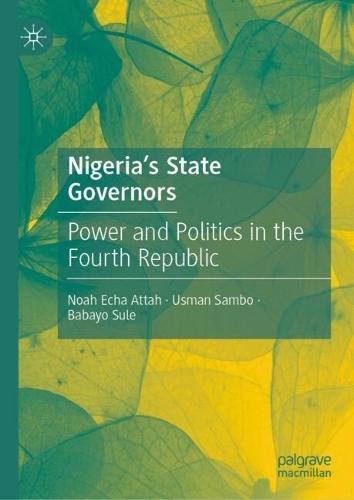
This book examines how State Governors, the chief executives in the second tier of government in Nigeria’s constitutional order, have become the pivotal actors in the Fourth Republic. Following the post–Civil War state creations and the expansion to 36 states in 1996, governors have consolidated their influence over party machinery, candidate selection, and resource control. They also shape presidential tickets in major parties and nominate federal cabinet members, as well as decide who become their successors, a hallmark of godfatherism, in their states. In addition, they influence nominations to the Senate, House of Representatives, and State Houses of Assembly, and dominate local government finances and administration. Since 2007, former governors have routinely emerged as presidential contenders, underscoring their centrality to national politics. Yet, their outsized roles, have seldom been interrogated in Nigeria’s political discourse. This detailed examination of gubernatorial authority, tactics, and consequences for democratic progress, governance procedures, and electoral dynamics in the Fourth Republic, fills a gap in the literature.
Full Product Details
Author: Noah Echa Attah ,
Usman Sambo ,
Babayo Sule
Publisher: Springer Nature Switzerland AG
Imprint: Palgrave Macmillan
ISBN: 9783032186782
ISBN 10: 3032186781
Pages: 406
Publication Date: 06 April 2026
Audience:
Professional and scholarly
,
Professional & Vocational
Format: Hardback
Publisher's Status: Forthcoming
Availability: Not yet available

This item is yet to be released. You can pre-order this item and we will dispatch it to you upon its release.
Author Information
Noah Echa Attah is a Professor of African History at the National University of Lesotho. He is a recipient of the African Peacebuilding Network’s Individual Research Fellowship, from the Social Science Research Council. His research interests span agrarian and environmental studies, natural resource conflicts, and peacebuilding. Usman Sambo is an Associate Professor at Yobe State University. His research interests include public policy, democratic studies and good governance. He has co‑authored studies on presidential elections and deradicalization in Northeast Nigeria. Babayo Sule is Senior Lecturer in the Department of Political and Administrative Studies, National University of Lesotho. He has written about political party financing and electoral politics in Nigeria, Nigerian political parties in the fourth republic, and has co‑authored studies on presidential elections, deradicalization in Northeast Nigeria, political economy of banditry in Nigeria, and election administration and reforms in Nigeria’s fourth republic. His research covers elections, parties, security, corruption, and African politics.