Overview
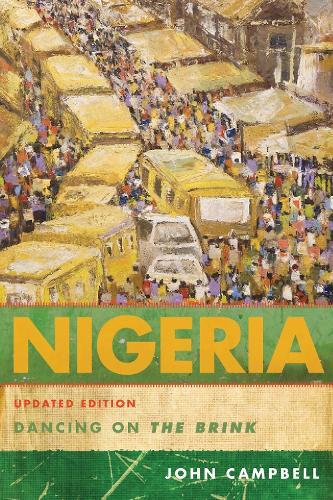
Nigeria, the United States’ most important strategic partner in West Africa, is in grave trouble. While Nigerians often claim they are masters of dancing on the brink without falling off, the disastrous administration of President Goodluck Jonathan, the radical Islamic insurrection Boko Haram, and escalating violence in the delta and the north may finally provide the impetus that pushes it into the abyss of state failure. In this thoroughly updated edition, John Campbellexplores Nigeria’s post-colonial history and presents a nuanced explanation of the events and conditions that have carried this complex, dynamic, and very troubled giant to the edge. Central to his analysis are the oil wealth, endemic corruption, and elite competition that have undermined Nigeria’s nascent democratic institutions and alienated an increasingly impoverished population. However, state failure is not inevitable, nor is it in the interest of the United States. Campbell provides concrete new policy options that would not only allow the United States to help Nigeria avoid state failure but also to play a positive role in Nigeria’s political, social, and economic development.
Full Product Details
Author: John Campbell
Publisher: Bloomsbury Publishing Plc
Imprint: Rowman & Littlefield
Edition: Revised edition
Dimensions:
Width: 16.00cm
, Height: 2.20cm
, Length: 23.40cm
Weight: 0.481kg
ISBN: 9781442221567
ISBN 10: 1442221569
Pages: 240
Publication Date: 07 June 2013
Audience:
College/higher education
,
Professional and scholarly
,
General/trade
,
Tertiary & Higher Education
,
Professional & Vocational
Format: Hardback
Publisher's Status: Active
Availability: Manufactured on demand

We will order this item for you from a manufactured on demand supplier.
Reviews
Nigeria, onetime giant of Africa, rich in both human and natural resources, has in the past decades or so descended into what Samuel P. Huntington calls 'praetorianism'-control of society by force or fraud, especially by venal, corruptible, and often sycophantic people; into what Richard Joseph calls 'prebendalism'-the disbursing of public offices and state rents to one's ethnic-based clients; and into what Larry Diamond calls 'uncivil society'-lacking the horizontal relations of reciprocity and cooperation that breed the honesty, trust, and law abidingness that mark the civic community. The aforementioned descriptions of Nigeria raised the specter of a failed state. Campbell (Ralph Bunche Senior Fellow for Africa Policy Studies, Council on Foreign Relations), former US ambassador to Nigeria, cites numerous factors responsible for this situation: endemic corruption, maladministration, election malpractices, and sectarian violence perpetrated by Boko Haram. Campbell condemns Washington's indifference in the past and cautions the Obama administration to be circumspect in helping Nigerian civil society in reversing this trend. A must-read for people interested in security of Nigeria and US-Nigeria bilateral relations; recommended for other readers. Summing Up: Recommended. Upper-division undergraduate, graduate, research, and professional collections. CHOICE
Author Information
John Campbell is the Ralph Bunche Senior Fellow for Africa Policy Studies at the Council on Foreign Relations. He served twice in Nigeria, from 1988 to 1990 as political counselor and from 2004 to 2007 as U.S. ambassador.