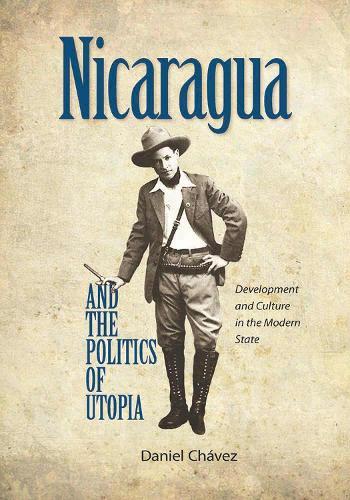
Full Product Details
Author: Daniel Chávez
Publisher: Vanderbilt University Press
Imprint: Vanderbilt University Press
Dimensions:
Width: 17.50cm
, Height: 3.00cm
, Length: 25.60cm
Weight: 0.951kg
ISBN: 9780826520470
ISBN 10: 0826520472
Pages: 376
Publication Date: 08 December 2015
Audience:
College/higher education
,
Professional and scholarly
,
Tertiary & Higher Education
,
Professional & Vocational
Format: Hardback
Publisher's Status: Active
Availability: Available To Order

We have confirmation that this item is in stock with the supplier. It will be ordered in for you and dispatched immediately.
Reviews
Highly original . . . Ch�vez carefully dissects official speeches and constitutional texts and expertly elucidates their literary and discursive origins. --Richard Feinberg, Foreign Affairs -Beyond Central Americanists, this book is relevant for scholars across the humanities and social sciences concerned with the study of 'practices of meaning-making' in any context. This book is part of the general shift across disciplines and its unique contribution is to show how definitions of 'utopia' lie at the center of such meaning-making practices in Nicaragua, especially with regard to notions of development. In particular, the author shows how there are both conservative and left-liberal, even liberatory, utopias at play.- --David Pedersen, author of American Value: Migrants, Money, and Meaning in El Salvador and the United States -The most important book on Nicaragua published in the United States in recent years.- --Nicasio Urbina, Confidencial -Highly original . . . Chavez carefully dissects official speeches and constitutional texts and expertly elucidates their literary and discursive origins.- --Richard Feinberg, Foreign Affairs Highly original . . . Chavez carefully dissects official speeches and constitutional texts and expertly elucidates their literary and discursive origins. --Richard Feinberg, Foreign Affairs Beyond Central Americanists, this book is relevant for scholars across the humanities and social sciences concerned with the study of 'practices of meaning-making' in any context. This book is part of the general shift across disciplines and its unique contribution is to show how definitions of 'utopia' lie at the center of such meaning-making practices in Nicaragua, especially with regard to notions of development. In particular, the author shows how there are both conservative and left-liberal, even liberatory, utopias at play. --David Pedersen, author of American Value: Migrants, Money, and Meaning in El Salvador and the United States The most important book on Nicaragua published in the United States in recent years. --Nicasio Urbina, Confidencial
Beyond Central Americanists, this book is relevant for scholars across the humanities and social sciences concerned with the study of 'practices of meaning-making' in any context. This book is part of the general shift across disciplines and its unique contribution is to show how definitions of 'utopia' lie at the center of such meaning-making practices in Nicaragua, especially with regard to notions of development. In particular, the author shows how there are both conservative and left-liberal, even liberatory, utopias at play. --<b>David Pedersen</b>, author of <i>American Value: Migrants, Money, and Meaning in El Salvador and the United States</i>
Beyond Central Americanists, this book is relevant for scholars across the humanities and social sciences concerned with the study of 'practices of meaning-making' in any context. This book is part of the general shift across disciplines and its unique contribution is to show how definitions of 'utopia' lie at the center of such meaning-making practices in Nicaragua, especially with regard to notions of development. In particular, the author shows how there are both conservative and left-liberal, even liberatory, utopias at play. --David Pedersen, author of American Value: Migrants, Money, and Meaning in El Salvador and the United States
Highly original . . . Ch�vez carefully dissects official speeches and constitutional texts and expertly elucidates their literary and discursive origins. --Richard Feinberg, Foreign Affairs Beyond Central Americanists, this book is relevant for scholars across the humanities and social sciences concerned with the study of 'practices of meaning-making' in any context. This book is part of the general shift across disciplines and its unique contribution is to show how definitions of 'utopia' lie at the center of such meaning-making practices in Nicaragua, especially with regard to notions of development. In particular, the author shows how there are both conservative and left-liberal, even liberatory, utopias at play. --David Pedersen, author of American Value: Migrants, Money, and Meaning in El Salvador and the United States The most important book on Nicaragua published in the United States in recent years. --Nicasio Urbina, Confidencial
Author Information
Daniel Chavez is Assistant Professor of Spanish and American Studies at the University of Virginia, USA.