|
|
|||
|
||||
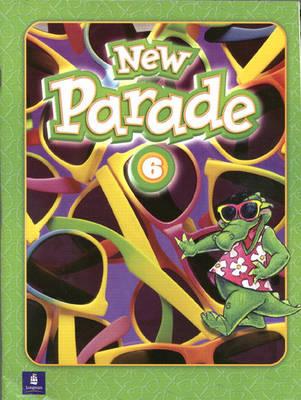
OverviewNew Parade is a seven-level, communicative language program, that features Total Physical Response (TPR), rhymes, songs, chants, pair work, cooperative learning, and hands-on projects. Each level of New Parade contains the following components: A Student Book, Workbook, Teacher's Edition, Audio Program, Picture Cards, Posters, and Video and Video Guide. Full Product DetailsAuthor: Mario Herrera , Theresa ZanattaPublisher: Pearson Education (US) Imprint: Pearson Education (US) Edition: 2nd edition Dimensions: Width: 21.00cm , Height: 0.50cm , Length: 28.00cm Weight: 0.245kg ISBN: 9780201604320ISBN 10: 0201604329 Pages: 112 Publication Date: 28 March 2000 Audience: ELT/ESL , ELT General Format: Paperback Publisher's Status: Active Availability: In Print This item will be ordered in for you from one of our suppliers. Upon receipt, we will promptly dispatch it out to you. For in store availability, please contact us. Table of ContentsMeet Alexis and Anna. 1. Famous People. Theme: Biographies. Communication Objectives: To Discuss Favorite Performers and Famous People; To Talk About Events in the Past; To Ask and Answer Questions; To Complete Timelines. Language Objectives: To Use Regular and Irregular Past Tense; To Use Appropriate Form Questions. Learning Strategies/Thinking Skills: To Use Music and Rhythm; To Understand Chronological Order; To Skim for Information; Top Sequence Events in a Time Line; To Conduct Research; To Guess a Person's Identity from Clues. Content Connections: Art: Drama: Literature/Language Arts; Music; Social Studies. 2. My Story. Theme: Personal Experiences. Communication Objectives: To Talk About Personal Experiences; To Read and Write Friendly Letters; To Conduct a Survey; To Fill in a Personal Questionnaire. Language Objectives: To Use Past Participles; To Use the Present Perfect. Learning Strategies/Thinking Skills: To Brainstorm; To Figure Out Meaning From Context; To Identify Main Ideas; To Conduct a Survey; To Make Charts and Graphs; To Make Predictions; To Skim for specific Information; To Use Pictures to Determine Meaning. Content Connections: Drama: Literature/Language Arts; Music; Social Studies. 3. Jobs. Theme: Jobs. Communication Objectives: To Discuss Career Aptitudes and Requirements; To Interview Someone. Language Objectives: To Use Gerunds; To Use Present Conditionals (If clauses). Learning Strategies/Thinking Skills: Content Connections: Art: Literature/Language Arts; Social Studies. 4. The Future. Theme: The Future. Communication Objectives: To Make Predictions; To Talk and Write About the Future: To Conduct an Opinion Poll; To Say a Poem; To Plan and Put on a Radio Show. Language Objectives: To Use the Future Tense With Will; To Use May, Might, Could. Learning Strategies/Thinking Skills: To Use Pictures to Make Predictions; To Make Vocabulary Flashcards; To Use Drawings and Diagrams; To Understand Cause and Effect. Content Connections: Art: Literature/Language Arts; Math; Science; Social Studies. 5. The Planets. Theme: Planets and Outer Space. Communication Objectives: To Learn Facts About the Planets; To Make Comparison; To Read and Write About Imaginary Trips to Another Planet. Language Objectives: To Use Comparative and Superlative Forms of Adjectives; To Use Contrary-to-fact Conditionals (If + Past Tense + Would + Verb); To Form Questions. Learning Strategies/Thinking Skills: To Read and Interpret Graphs and Diagrams; To Make Comparisons. Content Connections: Art: Drama: Literature/Language Arts; Math; Music; Science. 6. Adventures. Theme: Adventure Stories. Communication Objectives: To Discuss Leisure Time Activities and Adventure Stories; To Tell What One Would or Wouldn't Like to Do; To Narrate Past Events. Language Objectives: To Use If Clauses and Modals; To Use the Past Tense. Learning Strategies/Thinking Skills: To Figure Out Meaning From Context; To Summarize a Story; To Identify Main Ideas; To Use Graphic Organizers. Content Connections: Geography; Literature/Language Arts. 7. Records Theme: Games and Contests. Communication Objectives: To Discuss Games; Contests, and Records; To Ask and Answer Information Questions; To Organize a Classroom Olympics . Language Objectives: To Use Superlative Forms; To Use Most/Fewest + Nouns; To Form Information Questions. Learning Strategies/Thinking Skills: To Skim; To Use Headings to Locate Information; To Categorize; To Gather Information for Reports. Content Connections: Geography Literature/Language Arts; Math; Music. 8. Symbols. Theme: Nonverbal Communication. Communication Objectives: To Discuss Signs and Symbols; To Make Suggestions; To Give and Follow Directions; To Read and Write a Poem. Language Objectives: To Use Might, Could, and Must to Express Probability; To Understand and Write Directions; To Use Color Idioms. Learning Strategies/Thinking Skills: To Give and Interpret Nonverbal Messages; To Figure Out Meaning From Context; To Use Illustrations. Content Connections: Art; Literature/Language Arts; Math; Social Studies. 9. On Stage. Theme: Talents and Entertainment. Communication Objectives: To Discuss Personal Talents and Entertainment; To State Opinions; To Read and Write Review; To Conduct a Survey; To Plan and Put on a Talent Show; To Follow Directions; To Tell and Appreciate Jokes. Language Objectives: To Use the Language of Opinion; To Understand Directions; To Use Good at + Gerund. Learning Strategies/Thinking Skills: To Use Music and Rhyme; To Understand and Use Synonyms and Antonyms; Order Tasks; To Classify; To Listen for Details. Content Connections: Art: Drama: Literature/Language Arts; Music. Alex and Anna's Good-Bye . Cutout Pages.ReviewsAuthor InformationTheresa Zanatta is an author, teacher, teacher trainer and education consultant. She has been writing, teaching and training teachers and trainers for more than fifteen years. She is based in Barcelona but has worked in more than 20 countries around the world in Europe, the Middle East, Africa, Asia, Canada and the United States. During this time she has also held the positions of Director, North American Institute in Badalona, Spain and Director, Adult English Program of the North American Institute in Barcelona, Spain. In addition to this, she regularly teaches at the University of Barcelona, in their post graduate program for elementary teachers as part of the national education Reforma and has given several courses, lectures and presentations on methodology for TESOL, IATEFL, the British Council, various Ministries of Education and several universities, including, the Ministries of Education, in Abu Dhabi, the United Arab Emirates, Qatar, the Sultanate of Oman, the Universitat Central de Barcelona (Masters Program in TEFL), the American University of Beirut, Lebanon and the Homs (Al-Bath) University in Syria. Ms. Zanatta also publishes, directs and edits 10magazine, a free monthly, magazine distributed to over 10,000 families in Barcelona, Spain. The magazine serves as a resource guide linking the home, the school and the community for parents, teachers and all those involved in the care and education of young children and teenagers. Ms. Zanatta has a B.Science from the University of Toronto, St. MichaelA's College, a teaching Certificate in TEFL from the Royal Society of Arts, London England and completed a Masters in TEEFL in curriculum design and development at the Universitat de Barcelona. Ms. Zanatta is co-author of the the primary EFL series PARADE (1996) published by Scott Foresman,English PARADE (1997), the English PARADE Alphabet Book (1999) published by Longman,New Parade (2000) and New English Parade (2001) published by Pearson Education and author/collaborator of the University of Barcelona's UB Media Internet Course (1998). Tab Content 6Author Website:Countries AvailableAll regions |
||||