|
|
|||
|
||||
Awards
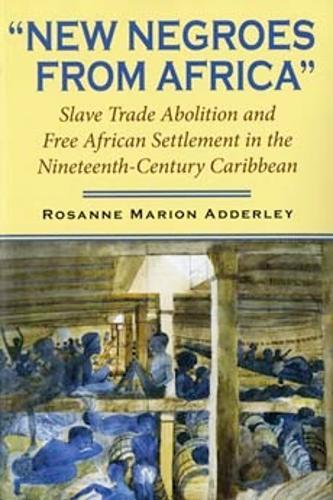
OverviewIn 1807 the British government outlawed the slave trade, and began to interdict slave ships en route to the Americas. Through decades of treaties with other slave trading nations and various British schemes for the use of non-slave labor, tens of thousands of Africans rescued from illegally operating slave ships were taken to British Caribbean colonies as free settlers. Some became paid laborers, others indentured servants. The encounter between English-speaking colonists and the new African immigrants are the focus of this study of the Bahamas and Trinidad—colonies which together received fifteen thousand of these ""liberated Africans"" taken from captured slave ships. Adderley describes the formation of new African immigrant communities in territories which had long depended on enslaved African labor. Working from diverse records, she tries to tease out information about the families of liberated Africans, the labor they performed, their religions, and the culture they brought with them. She addresses issues of gender, ethnicity, and identity, and concludes with a discussion of repatriation. Full Product DetailsAuthor: Rosanne Marion AdderleyPublisher: Indiana University Press Imprint: Indiana University Press Dimensions: Width: 15.60cm , Height: 2.30cm , Length: 23.50cm Weight: 0.522kg ISBN: 9780253218278ISBN 10: 0253218276 Pages: 360 Publication Date: 11 December 2006 Audience: Professional and scholarly , Professional & Vocational Format: Paperback Publisher's Status: Active Availability: In Print This item will be ordered in for you from one of our suppliers. Upon receipt, we will promptly dispatch it out to you. For in store availability, please contact us. Table of ContentsAcknowledgments Introduction 1. Potential Laborers or ""Troublesome Savages""? Settlement of Liberated Africans in the Bahamas 2. ""Binding them to the trade of digging cane holes"": Settlement of Liberated Africans in Trinidad 3. ""A fine family of what we call Creole Yarabas"": African Ethnic Identities in Liberated African Community Formation 4. ""Assisted by his wife, an African"": Gender, Family, and Household Formation in the Experience of Liberated Africans 5. Orisha Worship and ""Jesus Time"": Religious Worlds of Liberated Africans 6. ""Powers superior to those of other witches"": New African Immigrants and Supernatural Practice beyond Religious Spheres 7. ""Deeply attached to his native country"": Visions of Africa and Mentalities of Exile in Liberated African Culture Conclusion: African Creoles and Creole Africans Appendix 1. Reports of Liberated African Arrivals in the Bahamas from Governors' Correspondence Appendix 2. Reports of Liberated African Arrivals in Trinidad from Governors' Correspondence Notes Select Bibliography IndexReviews<p>This interesting and well researched book makes a valuable contribution to our understanding of the multifaceted experiences of the liberated Africans who were brought in the nineteenth century to the Caribbean and, through them, to the cultural history of the African experience in the Americas. --Bridget Brereton, University of the West Indies Journal of British Studies <p> For the student of Caribbean culture, Adderley's work fills a gap in theavailable scholarship. Her study offers strong evidence that the creolizationprocess in the Caribbean was neither a simple nor a unidirectional affair...Adderley's book is an important addition to any Caribbean library. -- New WestIndian Guide, Vol. 84, No. 3 & 4, 2010 Author InformationRosanne Marion Adderley is Associate Professor of History at Tulane University in New Orleans. Tab Content 6Author Website:Countries AvailableAll regions |
||||