Overview
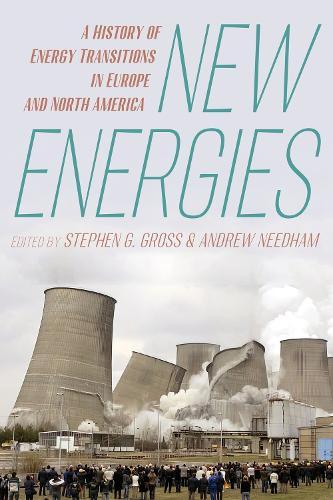
Over the past 250 years, energy transitions have occurred repeatedly—the rise of coal in the nineteenth century, the explosion of oil in the twentieth century, the nuclear utopianism of the 1950s and 1960s. These transitions have been as revolutionary as any political or economic upheaval, and they required changes in infrastructure and behavior. Yet new energies never wholly replace old ones. This volume historicizes energy production and consumption while demonstrating how energy use has reshaped everything from social life and economic organization to political governance. It foregrounds the importance of energy for big historical questions about capitalism, democracy, inequality, the environment, and identity, and it argues that energy systems themselves merit attention as key agents of historical change. Given the urgency of climate change, and the central position that energy plays in causing and potentially solving global warming, this volume engages history as a discipline in the debate over what may be most monumental energy transition of all time: the shift away from fossil fuels.
Full Product Details
Author: Andrerw Needham ,
Stephen Gross
Publisher: University of Pittsburgh Press
Imprint: University of Pittsburgh Press
ISBN: 9780822968474
ISBN 10: 0822968479
Pages: 348
Publication Date: 04 May 2026
Audience:
Professional and scholarly
,
Professional & Vocational
Format: Paperback
Publisher's Status: Forthcoming
Availability: Not yet available

This item is yet to be released. You can pre-order this item and we will dispatch it to you upon its release.
Reviews
A book of this kind is therefore very welcome in the field of energy history. It helps refine the understanding we have of past energy transitions and systems. It should also contribute to a clearer analysis of our current situation and offer a better view of the ways out of a fossil-fueled economy that is destroying the world. As such, it is another witness to the central role of humanities in the answer to global warming—provided that decision-makers listen to them. * Technology and Culture * A landmark collection that deserves to find a wide audience. * American Historical Review * A meticulously researched and presented collection that sets the agenda for future energy transitions research. * H-Net Reviews * Essential reading to those who pursue energy history in the twentieth century. * EuropeNow * A remarkable and welcome contribution to scholarly work available on energy transitions. It tells hidden histories and counternarratives around climate change, the history of environmentalism, nuclear energy, and nuclear risk. It illustrates the fraught, complex, contested, and nonlinear nature of energy transitions and how it can inform the current transition. A must-read for any energy historian. -- Jeffrey Jacquet, Ohio State University Battles over energy are at the heart of modern economic and political systems. New Energies illuminates the complex history of energy transitions and points toward broad transformations resulting from a move away from fossil fuels. Theoretically engaged and conceptually wide-ranging, these stimulating essays will help provoke fresh approaches to energy studies. -- Paul Sabin, Yale University This is a valuable book for scholars interested in energy. -- J. Tavakoli, emeritus, Lafayette College New Energiesis an excellent text for a wide range of scholars, from environmental historians to those studying political history and domestic policy and the United States and Europe. -- Joshua Coleman, University of Nevada, Las Vegas [This book] is timely, as global warming due to the combustion of fossil fuels has become daily news across the world. The text reviews the impact that successive energy transitions have made on social, political, and economic organizations of west European countries and the US—from coal to petroleum and natural gas, then to nuclear power and renewable sources. Given that energy has continually been exploited to accomplish humans' daily objectives, its production and delivery has affected wealth, distribution of political power, and the social structure of countries. Although the first major confrontation was waged between the oil and coal industries, stories of alternative oil competitors—for example, the biofuels industry in France—are also presented. Another focal topic of the book is nuclear energy, including its pros and cons. The challenges to this energy form becoming a widely used alternative are well documented. With the increasing global concentration of CO2 and lacking sufficient renewable sources to replace fossil fuel generators, the next transition stage seems challenging. The book concludes with a chapter on Germany and the UK, considered pioneers in deployment of new technologies that use so-called inexhaustible natural resources. This is a valuable book for scholars interested in energy. Highly recommended. * Choice *
Author Information
Andrew Needham (Editor) Andrew Needham is associate professor of history at New York University. He is the author of Power Lines: Phoenix and the Making of the Modern Southwest and coeditor of Indian Cities: Histories of Indigenous Urbanization. Stephen G. Gross (Editor) Stephen G. Gross is associate professor of history and the director of the Center for European and Mediterranean Studies at New York University. He is the author of Export Empire: German Soft Power in Southeastern Europe, 1890–1945 and Germany in the Age of Oil, Atoms, and Climate Change.