Overview
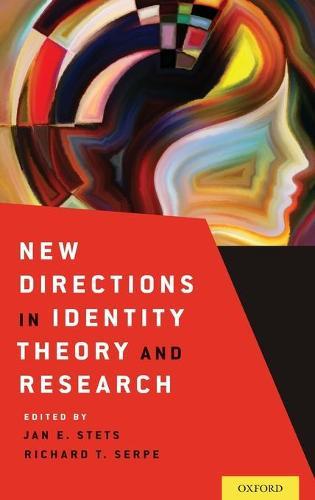
Over the past four decades - and most especially in recent years as issues of identity continue to play out across the public stage - identity theory has developed into one of the most fascinating and active research programs within the spheres of sociological social psychology. Having emerged out of a landmark 2014 national conference that sought to integrate various research programs and to honor the groundbreaking work of Dr. Peter J. Burke, New Directions in Identity Theory and Research brings together the pioneers, scholars, and researchers of identity theory as they present the important theoretical, methodological, and substantive work in identity theory today.Edited by Dr. Jan E. Stets and Dr. Richard T. Serpe, this volume asserts that researchers and scholars can no longer rely on using samples, measures, concepts, and mechanisms that limit the overall advancement of identity theory and research. Instead, as Stets and Serpe contend in their introductory chapter, ""Researchers constantly must try out new ideas, test the ideas with more refined measures, use samples that are representative yet racially and ethnically diverse, and employ methods (perhaps mixed methods) that capture the different dimensions of the identity process."" This book is the truest testament to this idea.In New Directions in Identity Theory and Research, Stets, Serpe, and contributing authors urge readers to think outside the box by providing the road map necessary to guide future work and thought in this emerging field.
Full Product Details
Author: Jan E. Stets (Co-Director of the Social Psychology Research Laboratory and Professor, Co-Director of the Social Psychology Research Laboratory and Professor, University of California, Riverside) ,
Richard T. Serpe (Professor and Chair of the Department of Sociology, Professor and Chair of the Department of Sociology, Kent State University)
Publisher: Oxford University Press Inc
Imprint: Oxford University Press Inc
Dimensions:
Width: 13.70cm
, Height: 3.10cm
, Length: 21.30cm
Weight: 0.635kg
ISBN: 9780190457532
ISBN 10: 0190457538
Pages: 710
Publication Date: 18 August 2016
Audience:
College/higher education
,
Professional and scholarly
,
Tertiary & Higher Education
,
Professional & Vocational
Format: Hardback
Publisher's Status: Active
Availability: Manufactured on demand

We will order this item for you from a manufactured on demand supplier.
Reviews
By showcasing the writings of the most prominent senior sociologists and the most promising scholars studying identity, this volume skillfully demonstrates the importance of identity theory, its ability to integrate different theoretical vantage points, and its broad applicability to an array of social issues. This volume should give us great confidence in the continued vitality and integration of theoretical and empirical explorations of identity. --Brian Powell, James H. Rudy Professor, Department of Sociology, Indiana University New Directions in Identity Theory and Research is a refreshing look toward the rich futures of identity theory. Featuring contributions from both legendary identity scholars such as Peter Burke and George McCall, the chapters explore still-unanswered theoretical and methodological questions through application to contemporary 21st c. concerns. Questions such as whether and how ever-increasing reliance on digital communication may affect identity formation and verification, or how the experience of age-related medical crises may partially destroy deeply held identities, or the importance of identity verification in shielding those who are deaf from the high levels of depression experienced by this community, suggest that this volume merits a central place on the shelf of any contemporary social psychologist. --Judith A. Howard, Divisional Dean of Social Sciences, College of Arts and Sciences, University of Washington In this volume, readers will find an impressive array of linkages to other domains of social psychology (e.g., emotions, trust, exchange, social identity) as well as analytical applications of specific identities (e.g., religious, racial, stigmatized). For the next decade and beyond, this will be the 'manual' for charting the direction of identity research. --Karen A. Hegtvedt, Professor, Department of Sociology, Emory University By showcasing the writings of the most prominent senior sociologists and the most promising scholars studying identity, this volume skillfully demonstrates the importance of identity theory, its ability to integrate different theoretical vantage points, and its broad applicability to an array of social issues. This volume should give us great confidence in the continued vitality and integration of theoretical and empirical explorations of identity. --Brian Powell, James H. Rudy Professor, Department of Sociology, Indiana University New Directions in Identity Theory and Research is a refreshing look toward the rich futures of identity theory. Featuring contributions from both legendary identity scholars such as Peter Burke and George McCall, the chapters explore still-unanswered theoretical and methodological questions through application to contemporary 21st c. concerns. Questions such as whether and how ever-increasing reliance on digital communication may affect identity formation and verification, or how the experience of age-related medical crises may partially destroy deeply held identities, or the importance of identity verification in shielding those who are deaf from the high levels of depression experienced by this community, suggest that this volume merits a central place on the shelf of any contemporary social psychologist. --Judith A. Howard, Divisional Dean of Social Sciences, College of Arts and Sciences, University of Washington In this volume, readers will find an impressive array of linkages to other domains of social psychology (e.g., emotions, trust, exchange, social identity) as well as analytical applications of specific identities (e.g., religious, racial, stigmatized). For the next decade and beyond, this will be the 'manual' for charting the direction of identity research. --Karen A. Hegtvedt, Professor, Department of Sociology, Emory University
By showcasing the writings of the most prominent senior sociologists and the most promising scholars studying identity, this volume skillfully demonstrates the importance of identity theory, its ability to integrate different theoretical vantage points, and its broad applicability to an array of social issues. This volume should give us great confidence in the continued vitality and integration of theoretical and empirical explorations of identity. --Brian Powell, James H. Rudy Professor, Department of Sociology, Indiana University New Directions in Identity Theory and Research is a refreshing look toward the rich futures of identity theory. Featuring contributions from both legendary identity scholars such as Peter Burke and George McCall, the chapters explore still-unanswered theoretical and methodological questions through application to contemporary 21st c. concerns. Questions such as whether and how ever-increasing reliance on digital communication may affect identity formation and verification, or how the experience of age-related medical crises may partially destroy deeply held identities, or the importance of identity verification in shielding those who are deaf from the high levels of depression experienced by this community, suggest that this volume merits a central place on the shelf of any contemporary social psychologist. --Judith A. Howard, Divisional Dean of Social Sciences, College of Arts and Sciences, University of Washington In this volume, readers will find an impressive array of linkages to other domains of social psychology (e.g., emotions, trust, exchange, social identity) as well as analytical applications of specific identities (e.g., religious, racial, stigmatized). For the next decade and beyond, this will be the 'manual' for charting the direction of identity research. --Karen A. Hegtvedt, Professor, Department of Sociology, Emory University
Author Information
Jan E. Stets is Professor of Sociology and Co-director of the Sociology Psychology Research Laboratory at the University of California, Riverside. She is a micro-theorist with expertise in identity theory. Her research is in the areas of self, identity, emotions, and morality. She is the author or editor of six books and over 70 articles and book chapters. She is the recipient of several National Science Foundation grants and has served as a program officer at the Foundation. Dr. Stets is also a Fellow of the American Association for the Advancement of Science, and has chaired the American Sociological Association (ASA) Section on Emotions, the ASA Section on Social Psychology, and the ASA Section on Altruism, Morality, and Social Solidarity. She has co-edited Social Psychology Quarterly. Richard T. Serpe is Professor and Chair of the Department of Sociology at Kent State University. He is a sociological social psychologist who has been working in the area of identity theory for the past thirty years. His research contextualizes identity processes in terms of differential placement within the social structure. In addition to New Directions in Identity Theory and Research, he is the editor of one other book and the author of over 25 articles and book chapters. Dr. Serpe is the recipient of over twenty funded grants. He has served as vice president of the Pacific Sociological Association and has chaired the sociology department at California State University, San Marcos. He has co-edited both Sociological Perspectives and Social Psychology Quarterly.