Overview
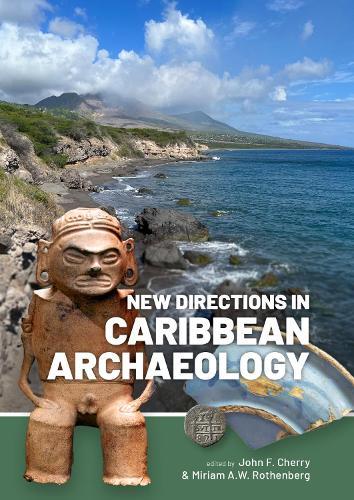
This volume expands on an online lecture series at Brown University that was organized to help fill the gap, created by the Covid-19 pandemic, of in-person Caribbean archaeology lectures and conferences. From an initial group of six presentations, the present volume has been expanded to include 11 chapters written by a range of scholars with diverse interests, geographical foci, and personal experiences. These contributions highlight research that encompasses new data and types of site, fresh approaches and novel methods of analysis (e.g., to past foodways and pre-contact art), and involvement with pressing issues in the field, such as impacts of climate change, migration, ethics, community engagement, and social justice. From the outset, the series was deliberately broad in scope, bringing together research from the pre-contact and historical periods, locations throughout the Antillean archipelago, as well as perspectives from areas as diverse as chemistry, art history, anthropology, and community activism. The volume begins with a contribution by the co-editors, which introduces and contextualizes many of the themes addressed in the chapters that follow, also providing some quantitative analysis of trends in Caribbean archaeology over the past 60 or more years. This meta-scholarly work is followed by 8 research chapters presenting new data, approaches, and syntheses under the broad umbrella of Caribbean archaeology. The book concludes with two reflective responses to the preceding chapters—one by a Caribbean historian, the other by an environmental archaeologist. In its early decades, the small and still-developing field of Caribbean archaeology was (understandably) focused on issues of classification, terminology, and relative chronology. Some 75 years later and at the end of the first quarter of the 21st century, it will be instructive—both now and as a marker for the future—to provide an overview of the current state of the field and indications of some new directions in which it may be heading.
Full Product Details
Author: John F. Cherry ,
Miriam A.W. Rothenberg
Publisher: Sidestone Press
Imprint: Sidestone Press
ISBN: 9789464271447
ISBN 10: 9464271442
Pages: 286
Publication Date: 25 March 2026
Audience:
Professional and scholarly
,
Professional & Vocational
Format: Paperback
Publisher's Status: Active
Availability: Not yet available

This item is yet to be released. You can pre-order this item and we will dispatch it to you upon its release.
Author Information
John F. Cherry is Joukowsky Family Emeritus Professor of Archaeology & the Ancient World and Emeritus Professor of Classics at Brown University, having previously taught at the University of Michigan (1993–2005) and the University of Cambridge (1980–1993). His main research interests include island archaeology, Aegean and wider Mediterranean prehistory, Caribbean archaeology, regional survey, and lithic studies. He has been involved in fieldwork in Greece, the Caribbean, the UK, USA, Italy, and Armenia. Miriam A. W. Rothenberg is a Junior Research Fellow at Christ Church at the University of Oxford, having received her PhD in Archaeology and the Ancient World from Brown University in 2021. She has worked on Montserrat and Martinique in the Caribbean, and in Italy, Greece, Sudan, England, and various parts of the United States. Rothenberg’s research interests link environmental disasters, landscape, memory, and trauma. Since 2015, she has investigated these questions—and how they relate to the Caribbean’s enduring legacy of slavery and colonialism—in the context of Montserrat’s 30 years of contemporary volcanic crisis.