Overview
Past efforts to colonize the environment and domesticate living species, coupled with scientific research, have resulted in the possession (but not always the real control) by humans of any available terrestrial space. However, oceans, which represent up to two thirds of the surface of the planet, had not been really approached until the middle of this century. As oceanographic science develops, the picture of a rich, diverse, complex and also, in many respects, specific marine life, is coming into view. In a broad sense, marine biotechnologies can be understood as the various means or techniques of managing marine living systems for the benefit of mankind. The first goal we have is for marine life to provide biomass for food. However, today it is not certain that a significant increase of total world fisheries' catches will be possible in the future. There are several ways to address this. First, we need to generate better, more complete, or different uses of the biomass actually fished. This is mainly a matter of upgrading fish and fish wastes. Second, we need to artificially grow the living species. This falls within the scope of cell cultivation and of aquaculture. Both approaches have to be appreciated si multaneously in terms of biology, ecology, and economy. In both approaches, profit improvements are linked to the introduction of biotechnological methods and to the use of biotechnological processes.
Full Product Details
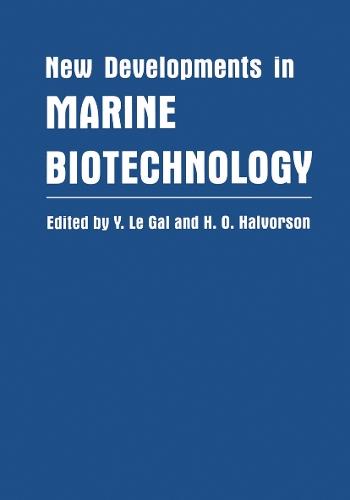
Author: Y. Le Gal , H.O. Halvorson
Publisher: Springer-Verlag New York Inc.
Imprint: Springer-Verlag New York Inc.
Edition: Softcover reprint of the original 1st ed. 1998
Dimensions:
Width: 17.80cm
, Height: 1.80cm
, Length: 25.40cm
Weight: 0.692kg
ISBN: 9781441933003
ISBN 10: 144193300
Pages: 343
Publication Date: 01 December 2010
Audience:
Professional and scholarly
,
Professional & Vocational
Format: Paperback
Publisher's Status: Active
Availability: In Print 
This item will be ordered in for you from one of our suppliers. Upon receipt, we will promptly dispatch it out to you. For in store availability, please contact us.
Table of Contents
Biotechnology: Biology or Technology? Keynote Lecture; A. Kornberg. Molecular Biology and Transgenic Animals: The Paradox of Growth Acceleration in Fish; J. de La Fuente et al. Natural Products and Processes: A Novel Antioxidant Derived from Seaweed; W.C. Dunlap, et al. Aquaculture: The Development and Commercialization of Tetraploid Technology for Oysters; S.K. Allen, Jr., X. Guo. Develomental Biology: Expression of Thyroid Hormone Receptor-alpha in the Growth and Development of the Sea Bream (Sparus Aurata); L. Llewellyn, et al. Biology of Cell Factories: North American Porphyra Cultivation: From Molecules to Markets; I.A. Levine, D. Cheney. Bioremediation, Extremophiles, and Host-pathogen Interactions: The Architecture of Degradative Complex Polysaccharide Enzyme Arrays in a Marine Bacterium Has Implications for Bioremediation; R. Weiner, et al. Biodiversity, Environmental Adaptation, and Evolution: Intron as a Source of Genetic Polymorphism for Fish Population Genetics; S. Chow. Biomarkers, Symbiosis, and Viruses: Mannose Adhesin-Glycan Interactions in the Euprymna Scolopes-Vibrio Fischeri Symbiosis; M. McFall-Ngai, et al. Workshop: Workshop on Biodiversity: Synthetic Report; J.F. Grassle, J.B.L. Matthews. 59 Additional Chapters. Index.
Reviews
'The book is a must for all practitioners of marine (and freshwater) biotechnology, as a compendium of what is becoming possible, and of the remaining obstacles on the road to an environmentally acceptable exponential growth in the exploitation of marine resources for the production of safe products. ... the book is of great interest to practitioners of biotechnology in any other domain, microbial, agricultural, and animal.' Journal of Experimental Marine Biology and Ecology, 246 (2000)
'The book is a must for all practitioners of marine (and freshwater) biotechnology, as a compendium of what is becoming possible, and of the remaining obstacles on the road to an environmentally acceptable exponential growth in the exploitation of marine resources for the production of safe products. ... the book is of great interest to practitioners of biotechnology in any other domain, microbial, agricultural, and animal.' Journal of Experimental Marine Biology and Ecology, 246 (2000)
'The book is a must for all practitioners of marine (and freshwater) biotechnology, as a compendium of what is becoming possible, and of the remaining obstacles on the road to an environmentally acceptable exponential growth in the exploitation of marine resources for the production of safe products. ... the book is of great interest to practitioners of biotechnology in any other domain, microbial, agricultural, and animal.' Journal of Experimental Marine Biology and Ecology, 246 (2000)
Author Information
Tab Content 6
Author Website:
Countries Available
All regions
|