Overview
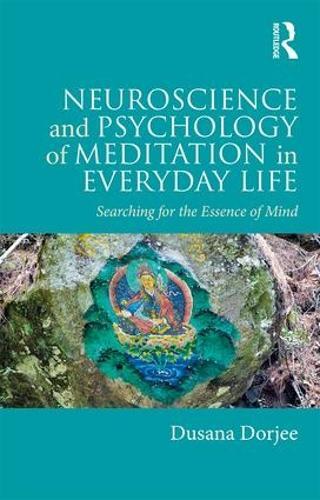
Neuroscience and Psychology of Meditation in Everyday Life addresses essential and timely questions about the research and practice of meditation as a path to realization of human potential for health and well-being. Balancing practical content and scientific theory, the book discusses long-term effects of six meditation practices: mindfulness, compassion, visualization-based meditation techniques, dream yoga, insight-based meditation and abiding in the existential ground of experience. Each chapter provides advice on how to embed these techniques into everyday activities, together with considerations about underlying changes in the mind and brain based on latest research evidence. This book is essential reading for professionals applying meditation-based techniques in their work and researchers in the emerging field of contemplative science. The book will also be of value to practitioners of meditation seeking to further their practice and understand associated changes in the mind and brain.
Full Product Details
Author: Dusana Dorjee (Lecturer and Research Lead, Centre for Mindfulness Research and Practice, Bangor University)
Publisher: Taylor & Francis Ltd
Imprint: Routledge
Weight: 0.320kg
ISBN: 9781138691858
ISBN 10: 1138691852
Pages: 196
Publication Date: 18 July 2017
Audience:
College/higher education
,
Professional and scholarly
,
Tertiary & Higher Education
,
Professional & Vocational
Format: Paperback
Publisher's Status: Active
Availability: In Print

This item will be ordered in for you from one of our suppliers. Upon receipt, we will promptly dispatch it out to you. For in store availability, please contact us.
Reviews
Dusana Dorjee masterfully presents a wealth of information from diverse areas-neuroscience, psychology of meditation, contemplative practices, existential wellbeing, and Buddhism-in a flawless narrative that is sure to prove a classic in the field of meditation. Informed by research and practice, the book lays out the essence of six meditation practices, the changes that occur in the brain as a result of short- and long-term formal and informal practices, and how meditation enhances our general wellbeing. One of the great strengths of the book is that it presents this material in a very accessible form that can be used by practitioners and researchers alike. Nirbhay N. Singh, PhD, Editor-in-Chief, Mindfulness, Clinical Professor of Psychiatry and Health Behavior, Medical College of Georgia, Augusta University, USA
Dusana Dorjee masterfully presents a wealth of information from diverse areas-neuroscience, psychology of meditation, contemplative practices, existential wellbeing, and Buddhism-in a flawless narrative that is sure to prove a classic in the field of meditation. Informed by research and practice, the book lays out the essence of six meditation practices, the changes that occur in the brain as a result of short- and long-term formal and informal practices, and how meditation enhances our general wellbeing. One of the great strengths of the book is that it presents this material in a very accessible form that can be used by practitioners and researchers alike. Nirbhay N. Singh, PhD, Editor-in-Chief, Mindfulness, Clinical Professor of Psychiatry and Health Behavior, Medical College of Georgia, Augusta University, USA
Author Information
Dusana Dorjee, PhD, is a cognitive neuroscientist in the School of Psychology at Bangor University. Her research investigates how meditation, particularly mindfulness, impacts well-being and modifies the mind and brain. Dusana is also a long-term meditation practitioner and teacher in the Tibetan Buddhist tradition of Dzogchen.