Overview
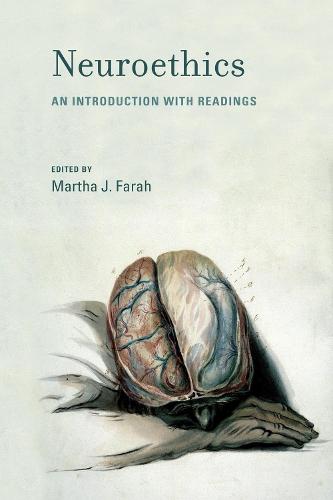
Explores the ethical, legal, and societal issues arising from brain imaging, psychopharmacology, and other new developments in neuroscience. Neuroscience increasingly allows us to explain, predict, and even control aspects of human behavior. The ethical issues that arise from these developments extend beyond the boundaries of conventional bioethics into philosophy of mind, psychology, theology, public policy, and the law. This broader set of concerns is the subject matter of neuroethics. In this book, leading neuroscientist Martha Farah introduces the reader to the key issues of neuroethics, placing them in scientific and cultural context and presenting a carefully chosen set of essays, articles, and excerpts from longer works that explore specific problems in neuroethics from the perspectives of a diverse set of authors. Included are writings by such leading scientists, philosophers, and legal scholars as Carl Elliot, Joshua Greene, Steven Hyman, Peter Kramer, and Elizabeth Phelps. Topics include the ethical dilemmas of cognitive enhancement; issues of personality, memory and identity; the ability of brain imaging to both persuade and reveal; the legal implications of neuroscience; and the many ways in which neuroscience challenges our conception of what it means to be a person. Neuroethics is an essential guide to the most intellectually challenging and socially significant issues at the interface of neuroscience and society. Farah's clear writing and well-chosen readings will be appreciated by scientist and humanist alike, and the inclusion of questions for discussion in each section makes the book suitable for classroom use. Contributors Zenab Amin, Ofek Bar-Ilan, Richard G. Boire, Philip Campbell, Turhan Canli, Jonathan Cohen, Robert Cook-Degan, Lawrence H. Diller, Carl Elliott, Martha J. Farah, Rod Flower, Kenneth R. Foster, Howard Gardner, Michael Gazzaniga, Jeremy R. Gray, Henry Greely, Joshua Greene, John Harris, Andrea S. Heberlein, Steven E. Hyman, Judy Iles, Eric Kandel, Ronald C. Kessler, Patricia King, Adam J. Kolber, Peter D. Kramer, Daniel D. Langleben, Steven Laureys, Stephen J. Morse, Nancey Murphy, Eric Parens, Sidney Perkowitz, Elizabeth A. Phelps, President's Council on Bioethics, Eric Racine, Barbara Sahakian, Laura A. Thomas, Paul M. Thompson, Stacey A. Tovino, Paul Root Wolpe
Full Product Details
Author: Martha J. Farah (University of Pennsylvania) , Martha J. Farah (University of Pennsylvania) , Roderick Flower (Professor of Biochemical Pharmacology, Queen Mary's School of Medicine and Dentistry) , Judy Illes (University of British Columbia)
Publisher: MIT Press Ltd
Imprint: MIT Press
Dimensions:
Width: 15.20cm
, Height: 1.90cm
, Length: 22.90cm
Weight: 0.544kg
ISBN: 9780262514606
ISBN 10: 0262514605
Pages: 400
Publication Date: 16 July 2010
Recommended Age: From 18 years
Audience:
Professional and scholarly
,
Professional & Vocational
Format: Paperback
Publisher's Status: Active
Availability: In Print 
This item will be ordered in for you from one of our suppliers. Upon receipt, we will promptly dispatch it out to you. For in store availability, please contact us.
Table of Contents
Reviews
[ Neuroethics] nicely captures the most intriguing and contentious issues in neuroethics. It is clearly the best introduction to the field, an ideal text for undergraduate and graduate courses on the subject, and an essential resource for anyone interested in a wide range of conceptual and practical issues associated with neuroscience and our ability to monitor and manipulate the brain. --Walter Glannon, Neuroethics
This is a timely and extremely important book. It deals with one of the defining topics of our time: how the new knowledge generated by modern neuroscience overlaps with the domains of law, medicine, and ethics. What can brain scans tell us about lying? Do animals feel pain? Is Ritalin overprescribed? Is cognitive enhancement a good idea? How should we define death? These epic questions don't have easy answers, but this book gives us essential insights into the issues at stake. --Jonah Lehrer, author of How We Decide The use of new discoveries, principles, and procedures from the neurosciences has outpaced careful analysis and discussion of the unintended consequences and the personal and societal implications of these new applications. Neuroethics underscores the scope and depth of this gap and begins to fill it. This foundational volume is essential reading for those who seek to use the neurosciences to address human problems, those who seek to regulate such applications, and those who simply wish to be able to engage in a rational discussion of the role of the neurosciences in society. --John T. Cacioppo, Tiffany and Margaret Blake Distinguished Service Professor and Director, Center for Cognitive and Social Neuroscience, The University of Chicago An invaluable introduction to a field of growing importance and interest. --Steven Pinker, Harvard College Professor of Psychology, Harvard University, and author of How the Mind Works and The Stuff of Thought
An invaluable introduction to a field of growing importance and interest. Steven Pinker, Harvard College Professor of Psychology, Harvard University, and author of How the Mind Works and The Stuff of Thought
Author Information
Martha J. Farah is Walter H. Annenberg Professor of Natural Sciences in the Department of Psychology at the University of Pennsylvania, where she directs the Center for Neuroscience & Society. She has worked on many topics within neuroscience, including vision, prefrontal function, emotion, and development. In her three decades of research she has witnessed the advent of functional neuroimaging, the burgeoning of cognitive neuroscience, and its expansion into the study of social and affective processes. She is now focusing her attention on the ethical, legal and social implications of these developments. Martha J. Farah is Walter H. Annenberg Professor of Natural Sciences in the Department of Psychology at the University of Pennsylvania, where she directs the Center for Neuroscience & Society. She has worked on many topics within neuroscience, including vision, prefrontal function, emotion, and development. In her three decades of research she has witnessed the advent of functional neuroimaging, the burgeoning of cognitive neuroscience, and its expansion into the study of social and affective processes. She is now focusing her attention on the ethical, legal and social implications of these developments. Howard Gardner is John H. and Elisabeth A. Hobbs Research Professor of Cognition and Education at the Harvard Graduate School of Education. Best known as the originator of the Theory of Multiple Intelligences, he is the author of thirty books, including Frames of Mind: The Theory of Multiple Intelligences; Truth, Beauty, and Goodness Reframed; and The App Generation (with Katie Davis). Henry T. Greely is Professor of Law, Professor by Courtesy of Genetics, and Director of the Stanford Center for Law and the Biosciences at Stanford University, where he also chairs the Steering Committee of the Stanford University Center for Biomedical Ethics and directs the Stanford Program in Neuroscience and Society. Michael S. Gazzaniga is Professor of Psychological and Brain Sciences and Director of the SAGE Center for the Study of the Mind at the University of California, Santa Barbara, Codirector of the Kavli Summer Institute in Cognitive Neuroscience, and editor or coeditor of the five previous editions of The Cognitive Neurosciences (all published by the MIT Press). Carl Elliott is Professor in the Center for Bioethics and the Departments of Pediatrics and Philosophy at the University of Minnesota. Kenneth R. Foster is Associate Professor in the Department of Bioengineering at the University of Pennsylvania. Elizabeth A. Phelps is Professor of Psychology at New York University. Eric Racine is Director of the Neuroethics Research Unit at the Clinical Research Institute of Montreal and Assistant Research Professor at the Clinical Research Institute of Montreal. He also holds appointments at the University of Montreal (Medicine, Preventive and Social Medicine, and Bioethics) and McGill University (Neurology and Neurosurgery and Biomedical Ethics). Jonathan Cohen is Associate Professor and Director of Graduate Studies in the Department of Philosophy at the University of California, San Diego. Steven E. Hyman is Harvard University Distinguished Professor of Stem Cell and Regenerative Biology and Director of the Stanley Center for Psychiatric Research at the Broad Institute of MIT and Harvard.
Tab Content 6
Author Website:
Countries Available
All regions
|