Overview
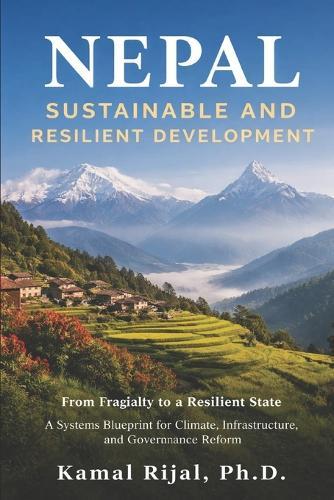
Nepal stands at a critical juncture in 2026. For decades, the nation's infrastructure and development strategies have been built on what engineers call the ""Myth of Stationary""-the assumption that the future will resemble the past. Roads, bridges, irrigation systems, and hydropower projects have been designed based on historical rainfall patterns, river flows, and climatic averages. That assumption no longer holds. Across the Hindu Kush Himalaya, the accelerating climate crisis is rewriting the rules of infrastructure and development. Glaciers are retreating, monsoon patterns are becoming increasingly erratic, and extreme weather events are occurring with growing frequency. Floods that once appeared in a century now occur within a decade. Landslides are becoming more frequent as fragile slopes are destabilized by both climate change and poorly planned construction. At the same time, decades of unregulated ""bulldozer development""-the rapid opening of roads without proper geological assessment or drainage systems-have turned large areas of the hills into zones of chronic instability. The result is a dangerous reality. Nepal's challenge today is not simply a Delivery Gap-the familiar problem of bureaucratic delay and incomplete projects. It is a far deeper Resilience Gap. If the nation continues to build infrastructure using outdated assumptions, it will simply be investing in future ruins. The Vision: From a Project State to a Delivery Republic This book argues that Nepal must fundamentally rethink its development model. For decades, national progress has been measured by the number of projects announced or initiated. Yet too many of these projects remain incomplete, underperforming, or vulnerable to environmental disruption. Nepal must therefore move beyond a project-based state toward a systems-based state-a republic that prioritizes integrated infrastructure systems, reliable institutions, and long-term resilience. In such a state, development is not measured by foundation stones or ribbon-cutting ceremonies. It is measured by systems that function reliably over decades. A Delivery Republic is one where infrastructure is designed to survive extreme climate conditions, where institutions ensure timely implementation, and where national planning aligns engineering, finance, and governance into a coherent whole. Resilience is not an environmental luxury. It is the core software that allows national infrastructure to survive the volatility of the coming century.
Full Product Details
Author: Kamal Rijal, PH D
Publisher: Independently Published
Imprint: Independently Published
Dimensions:
Width: 15.20cm
, Height: 1.60cm
, Length: 22.90cm
Weight: 0.376kg
ISBN: 9798254418061
Pages: 278
Publication Date: 31 March 2026
Audience:
General/trade
,
General
Format: Paperback
Publisher's Status: Active
Availability: Available To Order

We have confirmation that this item is in stock with the supplier. It will be ordered in for you and dispatched immediately.