Overview
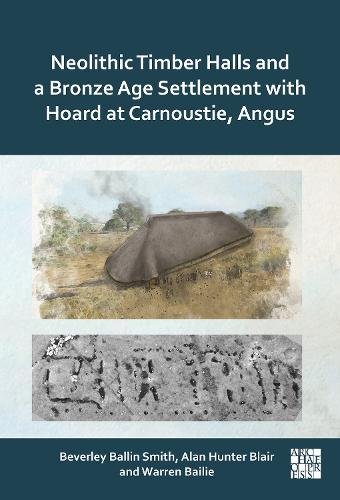
Excavations at Carnoustie produced exceptional archaeological results from the prehistoric past. The remains of the longest early Neolithic timber hall so far found in Scotland were identified. Beside it were the postholes and pits of another contemporary but less well preserved large hall. A final but smaller timber hall was constructed at one end but within the footprint of the largest timber hall. This latter structure indicated the importance of the place and the perpetuation of ideologies and traditions of the earlier building. During the later Neolithic, other evidence included the sparse remains of an oval house built over the remains of one timber hall with temporary re-occupation of part of another. The main focus of activities during the middle and late Neolithic were groups of pits whose presence indicated changes in social structure and possibly economic conditions. A period of abandonment with only sporadic use of the area during the early Bronze Age was followed by a roundhouse settlement. A small number of buildings of the middle and late Bronze Age were replaced in rotation. The last buildings were intimately associated with a rare late Bronze Age metalwork hoard, buried close to them. The hoard included a sword, spearhead with gold decoration and a long pin wrapped in textile and sheep-skin.
Full Product Details
Author: Beverley Ballin Smith , Alan Hunter Blair , Warren Bailie
Publisher: Archaeopress
Imprint: Archaeopress Archaeology
Weight: 1.748kg
ISBN: 9781805831334
ISBN 10: 180583133
Pages: 354
Publication Date: 27 November 2025
Audience:
Professional and scholarly
,
Professional & Vocational
Format: Hardback
Publisher's Status: Active
Availability: Manufactured on demand 
We will order this item for you from a manufactured on demand supplier.
Table of Contents
Summary Foreword Acknowledgements Contributors Part 1: The Background to the Project – Warren Bailie, Alan Hunter Blair and Beverley Ballin Smith Introduction Site location, topography and geology Archaeological background Aims and objectives - Warren Bailie Methodologies used Archives and finds disposal The main research questions of the project Part 2: The Excavation Results – Alan Hunter Blair and Beverley Ballin Smith Topsoil and plough marks Mesolithic traces Early Neolithic timber structures Evidence of the Bronze Age The Bronze Age hoard Later structures Part 3: Dating The radiocarbon dates – Beverley Ballin Smith Archaeomagnetic studies of two fired features from Carnoustie – Samuel E Harris and Cathy M Batt Part 4: Environmental Evidence Introduction – Beverley Ballin Smith Archaeobotany – Susan Ramsay Animal bone – Catherine Smith Soil micromorphology – Carol Lang Multi-element analysis – Dorothy McLaughlin Part 5: Material Culture Evidence Introduction – Beverley Ballin Smith Lithic assemblage – Torben Bjarke Ballin Use-ware analysis on stone tools – Peter Bye Jensen Stone artefacts – Beverley Ballin Smith and Alison Sheridan Pottery – Beverley Ballin Smith Clay and fired clay – Beverley Ballin Smith Part 6: The Late Bronze Age Metal Hoard – Warren Bailie, Alan Hunter Blair, Jordan Barbour, Esther Cameron, Trevor Cowie, Jane Evans, Susanna Harris, Raphael Hermann, Will Murray, Peter Northover, Brendan O’Connor, Vanessa Pashley, Ernst Pernicka, Susan Ramsay, Alison Sheridan, Beth Spence and Lore Troalen Introduction – Warren Bailie and Alan Hunter Blair The initial assessment – Beth Spence and Will Murray Specialist study and analysis – Warren Bailie, Esther Cameron, Jane Evans, Susanna Harris, Raphael Hermann, Will Murray, Peter Northover, Brendan O’Connor, Vanessa Pashley, Susan Ramsay, Alison Sheridan and Lore Troalen The radiocarbon date Metallurgical analysis – Peter Northover Discussion – Alison Sheridan Post-depositional processes affecting the hoard – Jordan Barbour Part 7: General Discussion – Beverley Ballin Smith The changing landscape and environment The early Neolithic The Bronze Age Early medieval and later uses of the site Part 8: General Conclusions – Beverley Ballin Smith The changing patterns of life at Carnoustie Part 9: Afterword Answering the research questions – Beverley Ballin Smith Community involvement and outreach – Warren Bailie Bibliography Index
Reviews
'In this site report, the desk-based assessment, excavation, and post-excavation analysis are clearly and precisely documented, allowing the results of an important project to be fully appreciated.' – Dr Kathryn Krakowka (2026): Current Archaeology, issue 433
Author Information
Beverley Ballin Smith is the Publications Manager for GUARD Archaeology and editor of ARO (Archaeology Reports Online). She also specialises in the analysis of prehistoric pottery and coarse stone tools. She has published widely: the Howe Broch and the Crantit Tomb, both on Orkney; the Neolithic and Bronze Age aspects of Iain Crawford’s work on the Udal, North Uist; and with Barbara Crawford on the Norse site of the Biggings at Papa Stour, Shetland. Alan Hunter Blair has over 20 years experience working on and directing a wide range of rural and urban archaeological projects in Scotland and England, including major projects such as the prehistoric Carnoustie excavation in Angus and the medieval to post-medieval Tram Scheme in Edinburgh. He has co-authored several published reports on these excavations. Warren Bailie is the Managing Director for GUARD Archaeology and has more than 20 years’ experience in commercial archaeology. During this time, he has directed a wide range of archaeological excavations dating from the Mesolithic to the post-medieval across Ireland and Scotland, and has managed major archaeological works including at St Kilda and the Antonine Wall.
Tab Content 6
Author Website:
Countries Available
All regions
|