Overview
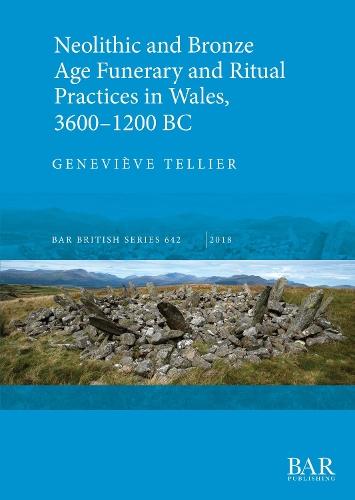
This book brings together, for the first time, all of the burials and funerary practices from the Middle Neolithic to the end of the Middle Bronze Age (3600-1200 BC) in Wales into one coherent volume. The work is the first to provide an up-to-date synthesis of monument form and mortuary practice in Neolithic and Bronze Age Wales. It provides a comprehensive overview of all human bone deposits (both cremation and inhumation) throughout this time span. This comprises the osteological analysis of over 250 human bone deposits, with new observations and interpretations. The book engages with current debates on the changing character and significance of burial rites in later prehistory. Nominated for the 2020 Current Archaeology Book of the Year award.
Full Product Details
Author: Geneviève Tellier
Publisher: BAR Publishing
Imprint: BAR Publishing
Weight: 0.853kg
ISBN: 9781407316499
ISBN 10: 1407316494
Pages: 214
Publication Date: 28 September 2018
Audience:
Professional and scholarly
,
Professional & Vocational
Format: Paperback
Publisher's Status: Active
Availability: Available To Order

We have confirmation that this item is in stock with the supplier. It will be ordered in for you and dispatched immediately.
Reviews
'This book is a considerable achievement, being the first time that all available human burials from the middle Neolithic to middle Bronze Age in Wales have been catalogued, analysed, and presented in one volume.The real strength of this study is the osteological investigation, with more than 250 human-bone deposits analysed. The methodology is meticulous and provides a useful model for future work, particularly the analysis of cremations.The book will provide invaluable data for comparative use with other current large-scale human burial projects, such as UCL's 'The Beaker People' and 'Grave Goods' at Reading.' Susan Greaney, Current Archaeology, Issue 349, April 2019 'Timely and important. . The material from Wales is little known, yet has the potential to contribute to wider discussions regarding changes to social organisation, ritual practice and belief systems in prehistory. . This is a comprehensive analysis of a dataset that will be of interest to prehistorians working in Britain, Ireland and northwest Europe.' Dr Joanna Bruck, University of Bristol 'This is a significant contribution that advances research into British prehistoric burial practices in a meaningful way.' Dr Duncan Garrow, University of Reading 'This is an innovative and original piece of work. . The analysis by the author of 257 human bone deposits from Neolithic and Bronze Age Wales provides a wealth of new patterns, observations and interpretations regarding burial rituals, funerary processes and a host of other insights. . This book also offers an important and up-to-date methodology for the future analysis of cremated bone.' Dr Catriona Gibson, University of Reading
'Timely and important. . The material from Wales is little known, yet has the potential to contribute to wider discussions regarding changes to social organisation, ritual practice and belief systems in prehistory. . This is a comprehensive analysis of a dataset that will be of interest to prehistorians working in Britain, Ireland and northwest Europe.' Dr Joanna Bruck, University of Bristol 'This is a significant contribution that advances research into British prehistoric burial practices in a meaningful way.' Dr Duncan Garrow, University of Reading 'This is an innovative and original piece of work. . The analysis by the author of 257 human bone deposits from Neolithic and Bronze Age Wales provides a wealth of new patterns, observations and interpretations regarding burial rituals, funerary processes and a host of other insights. . This book also offers an important and up-to-date methodology for the future analysis of cremated bone.' Dr Catriona Gibson, University of Reading
'This book is a considerable achievement, being the first time that all available human burials from the middle Neolithic to middle Bronze Age in Wales have been catalogued, analysed, and presented in one volume.The real strength of this study is the osteological investigation, with more than 250 human-bone deposits analysed. The methodology is meticulous and provides a useful model for future work, particularly the analysis of cremations.The book will provide invaluable data for comparative use with other current large-scale human burial projects, such as UCL's 'The Beaker People' and 'Grave Goods' at Reading.' Susan Greaney, Current Archaeology, Issue 349, April 2019 'Timely and important. . The material from Wales is little known, yet has the potential to contribute to wider discussions regarding changes to social organisation, ritual practice and belief systems in prehistory. . This is a comprehensive analysis of a dataset that will be of interest to prehistorians working in Britain, Ireland and northwest Europe.' Dr Joanna Bruck, University of Bristol 'This is a significant contribution that advances research into British prehistoric burial practices in a meaningful way.' Dr Duncan Garrow, University of Reading 'This is an innovative and original piece of work. . The analysis by the author of 257 human bone deposits from Neolithic and Bronze Age Wales provides a wealth of new patterns, observations and interpretations regarding burial rituals, funerary processes and a host of other insights. . This book also offers an important and up-to-date methodology for the future analysis of cremated bone.' Dr Catriona Gibson, University of Reading
Author Information
Geneviève Tellier is the director of North Wales Osteology, which provides osteological services for academic and commercial archaeology. She trained as an osteologist and completed her PhD at the University of Bradford, where her interest in British prehistory was developed.