Overview
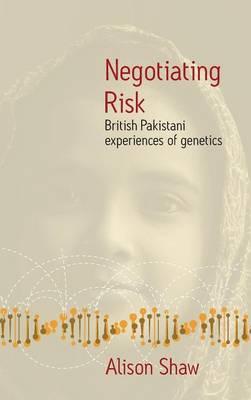
Drawing on fieldwork with British Pakistani clients of a UK genetics service, this book explores the personal and social implications of a ‘genetic diagnosis’. Through case material and comparative discussion, the book identifies practical ethical dilemmas raised by new genetic knowledge and shows how, while being shaped by culture, these issues also cross-cut differences of culture, religion and ethnicity. The book also demonstrates how identifying a population-level elevated ‘risk’ of genetic disorders in an ethnic minority population can reinforce existing social divisions and cultural stereotypes. The book addresses questions about the relationship between genetic risk and clinical practice that will be relevant to health workers and policy makers.
Full Product Details
Author: Alison Shaw
Publisher: Berghahn Books
Imprint: Berghahn Books
Dimensions:
Width: 15.20cm
, Height: 1.80cm
, Length: 22.90cm
Weight: 0.562kg
ISBN: 9781845455484
ISBN 10: 1845455487
Pages: 320
Publication Date: 01 January 2009
Audience:
Professional and scholarly
,
Professional & Vocational
Format: Hardback
Publisher's Status: Active
Availability: In Print

This item will be ordered in for you from one of our suppliers. Upon receipt, we will promptly dispatch it out to you. For in store availability, please contact us.
Reviews
...a timely analysis...Shaw's work offers many insights to those working with potentially affected people, healthcare policy makers and planners, and those in the general public who are interested in these issues. * Social Anthropology/Anthropologie sociale This book is a long awaited breath of fresh air to put risky genes and tradition into proper scientific context. * Human Biology This is a sensitively written and engaging account of a very difficult topic - both intellectually and emotionally. Shaw's long-standing research with British Pakistanis in the Oxford area is very evident in her ability to develop strong relationships with informants, based on shared understandings and empathy. Shaw manages to produce a book which is both academically rigorous and highly readable, indeed compelling. This is not only a remarkable achievement in itself; it also means that the volume can - and should - be read not just by anthropologists and other social scientists, but by health professionals and policy makers. It should be compulsory reading for medical students! * Anthropos This is a thoughtful examination of important issues of risk, genetic information and the development of diaspora specific narratives. It is both systematic and engaging, which is not an easy thing to accomplish. Overall I think Shaw has made a remarkable contribution to a topic which is rife with words printed but sadly lacking in innovative approaches. * Stephen Lyon, Durham University ...an excellent piece of work [that] addresses a very important debate at the intersection of clinical genetics, delivery of health services to ethnic minorities and anthropology * Bob Simpson, Durham University
This is a thoughtful examination of important issues of risk, genetic information and the development of diaspora specific narratives. It is both systematic and engaging, which is not an easy thing to accomplish. Overall I think Shaw has made a remarkable contribution to a topic which is rife with words printed but sadly lacking in innovative approaches.A * Stephen Lyon, Durham University - an excellent piece of work [that] addresses a very important debate at the intersection of clinical genetics, delivery of health services to ethnic minorities and anthropology * Bob Simpson, Durham University
Author Information
Alison Shaw is Senior Research Fellow at the Ethox Centre, University of Oxford, having taught at Brunel (1997-2004), London and Oxford Brookes universities. Her research interests include medical anthropology, ethnicity, kinship and social aspects of genetics. Her books include Kinship and Continuity: Pakistani families in Britain (Routledge 2000); A Pakistani Community in Britain (Blackwell 1888); and Changing Sex and Bending Gender (Berghahn 2005), edited with Shirley Ardener.