Overview
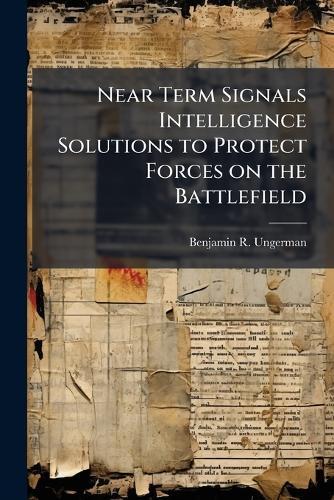
Lessons from Operations ENDURING FREEDOM (OEF) and IRAQI FREEDOM (OIF) highlight serious shortfalls in the US airborne signals intelligence (SIGINT) capability to support forces on the battlefield. The realities of the post Cold War era reveal limitations in the capability of space-based systems to collect tactical SIGINT on rapidly evolving capabilities of terrorist organizations. To develop new technology solutions, with the ability to exploit this target set, requires a substantial investment and years of research, development, and testing. US forces are currently left on the battlefield without sufficient tactical SIGINT support. Until newer technologies and platforms deliver in the future, airborne SIGINT systems provide the best potential of meet SIGINT needs. The Low Density/High Demand (LD/HD) nature of airborne intelligence, surveillance, and reconnaissance (ISR) assets makes them more vulnerable to over tasking. The extended surge in combat operations in the Middle East has taken its toll on LD/HD systems, which further complicates their ability to meet commanders' needs. Solutions to overcome SIGINT shortfalls should explore options that expand the existing airborne SIGINT deployment capability. Military leadership has addressed the issue of developing future SIGINT systems, using unmanned aerial vehicles (UAVs), but must focus more on options that deliver more capability today to support US forces. This paper will analyze aspects of the United States airborne SIGINT architecture, exploring cost and time effective solutions to deliver increased capability to improve the level of protection for troops in combat. This work has been selected by scholars as being culturally important, and is part of the knowledge base of civilization as we know it. This work was reproduced from the original artifact, and remains as true to the original work as possible. Therefore, you will see the original copyright references, library stamps (as most of these works have been housed in our most important libraries around the world), and other notations in the work. This work is in the public domain in the United States of America, and possibly other nations. Within the United States, you may freely copy and distribute this work, as no entity (individual or corporate) has a copyright on the body of the work. As a reproduction of a historical artifact, this work may contain missing or blurred pages, poor pictures, errant marks, etc. Scholars believe, and we concur, that this work is important enough to be preserved, reproduced, and made generally available to the public. We appreciate your support of the preservation process, and thank you for being an important part of keeping this knowledge alive and relevant.
Full Product Details
Author: Benjamin R Ungerman
Publisher: Hutson Street Press
Imprint: Hutson Street Press
Dimensions:
Width: 15.60cm
, Height: 0.20cm
, Length: 23.40cm
Weight: 0.064kg
ISBN: 9781025105208
ISBN 10: 1025105206
Pages: 34
Publication Date: 22 May 2025
Audience:
General/trade
,
General
Format: Paperback
Publisher's Status: Active
Availability: Available To Order

We have confirmation that this item is in stock with the supplier. It will be ordered in for you and dispatched immediately.