Overview
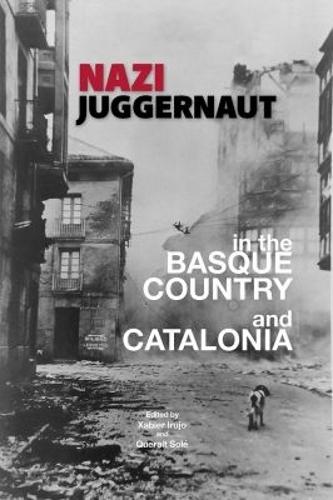
Hitler and Mussolini's decision to help General Franco with war materiel and troops brought war to the Basque Country and Catalonia. Between 1936 and 1939, the German Condor Legion and the Italian Aviazione Legionaria carried out a brutal campaign of terror bombings that resulted in thousands of air strikes against open cities. This caused innumerable casualties among the civilian population. Franco's victory in 1939 caused the exile of hundreds of thousands of Basque and Catalan civilians, but the beginning of World War Two and the subsequent occupation of the Northern Basque Country and Northern Catalonia by German troops gave rise to new forms of repression: concentration camps, forced labour, executions and imprisonment. As a consequence, the period from 1936 to 1945 is one of the bloodiest episodes in the contemporary history of Catalonia and the Basque Country. ""In total, at least 32,000 children under the age of sixteen had to be evacuated between early May and mid-August 1937, in the face of the infant mortality that the terror bombing campaign was generating in the Basque Country. It was the largest evacuation of children in European history. They were called ""the children of Gernika"" and most of them would never return home.""
Full Product Details
Author: Xabier Irujo ,
Queralt Solé
Publisher: Center for Basque Studies
Imprint: Center for Basque Studies
Dimensions:
Width: 15.20cm
, Height: 2.80cm
, Length: 22.80cm
Weight: 0.735kg
ISBN: 9781949805055
ISBN 10: 1949805050
Pages: 277
Publication Date: 30 August 2019
Audience:
Professional and scholarly
,
Professional & Vocational
Format: Paperback
Publisher's Status: Active
Availability: Temporarily unavailable

The supplier advises that this item is temporarily unavailable. It will be ordered for you and placed on backorder. Once it does come back in stock, we will ship it out to you.
Reviews
"""During the course of the bombing of Gernika more than two thousand people lost their lives, most of them civilians, many of them children. Faced with the dimension that the terror bombing campaign was taking on and, in the face of the impossibility of protecting children from aerial bombings, the Basque government organized the massive evacuation abroad of Basque children. In May 1937, Bilbao, the main city of the Basques, took in 150,000 refugees that had fled zones occupied by the rebels, among them tens of thousands of children. Just three days after the bombing of Gernika the French prime minister, Léon Blum, and the minister of foreign affairs, Yvon Delbos, agreed to receive 100,000 Basque refugees, which goes to show that everyone took the threats of the rebel leadership and its terror strategy very seriously. Barely ten days after the bombing, the number of refugees in Bilbao had risen to 250,000 according to the American consul in Bilbao, William E. Chapman.2 In total, at least 32,000 children under the age of sixteen had to be evacuated between early May and mid-August 1937, in the face of the infant mortality that the terror bombing campaign was generating in the Basque Country. It was the largest evacuation of children in European history. They were called ""the children of Gernika"" and most of them would never return home."" - Nazi Juggernaut in the Basque Country and Catalonia"
During the course of the bombing of Gernika more than two thousand people lost their lives, most of them civilians, many of them children. Faced with the dimension that the terror bombing campaign was taking on and, in the face of the impossibility of protecting children from aerial bombings, the Basque government organized the massive evacuation abroad of Basque children. In May 1937, Bilbao, the main city of the Basques, took in 150,000 refugees that had fled zones occupied by the rebels, among them tens of thousands of children. Just three days after the bombing of Gernika the French prime minister, Leon Blum, and the minister of foreign affairs, Yvon Delbos, agreed to receive 100,000 Basque refugees, which goes to show that everyone took the threats of the rebel leadership and its terror strategy very seriously. Barely ten days after the bombing, the number of refugees in Bilbao had risen to 250,000 according to the American consul in Bilbao, William E. Chapman.2 In total, at least 32,000 children under the age of sixteen had to be evacuated between early May and mid-August 1937, in the face of the infant mortality that the terror bombing campaign was generating in the Basque Country. It was the largest evacuation of children in European history. They were called the children of Gernika and most of them would never return home. - Nazi Juggernaut in the Basque Country and Catalonia
Author Information
Queralt Solé works at the University of Barcelona, her area of expertise being contemporary history and the Spanish Civil War.