Overview
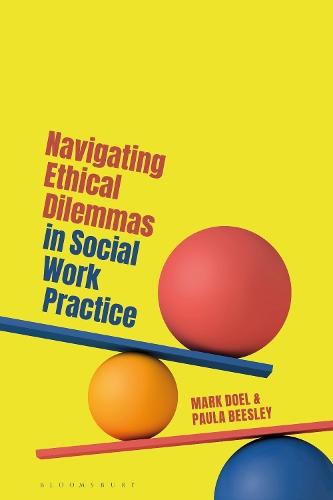
Ethical decision-making lies at the heart of social work practice. As a social worker, you’ll regularly encounter complex situations where your professional values may conflict with one another. Navigating Ethical Dilemmas in Social Work Practice guides you through the ethical complexities you may face, helping you develop the confidence and critical thinking skills needed to make sound decisions. Framed around distinct themes, each chapter presents detailed case studies that invite you to reflect on the dilemma as it unfolds, and are opened with unique contributions from experienced social workers who explore ethical ideas through a chosen ‘object’. This book will help you to: - Connect theory to social work practice in a meaningful and applicable way - Explore ethical challenges using core social work skills - Link each topic to a contemporary ethical dilemma beyond the field of social work Supported by guidance from ethical codes, standards and principles from around the world, this book equips you with the tools to make informed decisions when clear answers aren’t always easy to find.
Full Product Details
Author: Mark Doel (Sheffield Hallam University, UK) ,
Dr Paula Beesley (Leeds Beckett University, UK)
Publisher: Bloomsbury Publishing PLC
Imprint: Bloomsbury Academic
ISBN: 9781350508880
ISBN 10: 1350508888
Pages: 248
Publication Date: 05 March 2026
Audience:
College/higher education
,
Tertiary & Higher Education
Format: Hardback
Publisher's Status: Active
Availability: Manufactured on demand

We will order this item for you from a manufactured on demand supplier.
Reviews
A very useful approach to the different philosophical understandings of ethics. Good range of key practice concerns where a nuanced ethical approach is needed. Good summary of professional responses to matters of (informed and uninformed) public social discourse. The framing of decisions around ‘singularities’ is good, and would help students see that, despite SW practice being guided by national codes of ethics, there is not a ‘one-size-fits-all’ solution. Use of image and story certainly add to students’ capacity for digesting the content of the chapter. I like the idea of an ‘object’ and accompanying story. The curation of objects/stories has been a particularly useful teaching strategy in a number of our subjects. Whole-of-life applicability is also good, especially for our graduates who may not actually practice social work, or for international students who may return to their home countries. Cross-referencing to different countries codes of ethics as applied to sample ethical dilemmas is good. The book proposal needs to indicate that its approach can avoid the risk of teaching ‘white’ ways of doing social work, as most of the theoretical/philosophical positions in the first edition are grounded in Western thought. Is there a chance of including content from other cultural/religious traditions? 3-4 discussion questions at the end of each chapter would be good, particularly useful for students when they are responsible for presenting and/or leading discussion in a tutorial. The authors may be interested in linking their chapters to some of the leading worldwide social work podcasts: Social Work Stories (AUS), Social Work Discoveries (AUS), The Social Work Podcast (US) as part of recommended further reading/listening for students. * Neil Hall, Director of Programmes (Social Work and Communities), Western Sydney University, Australia * Written in an accessible style. Combines theoretical concepts with practical scenarios. Covers all key areas where practice dilemmas might occur, including social media. I think the introduction of an identified ‘object’ to illustrate the chapter’s key theme is good and provides a nice way into the subject matter. I note that the authors propose to separate Professionalism and Power into two different chapters for the new edition, which makes sense. I like the expansion of ‘Need and risk’ to include ‘decision-making’ in the new edition, as this links to the fact that social workers are still required to make decisions, despite the complexity of dilemmas that they may be faced with. Also, the expansion from ‘Social media’ in the first edition, to include ‘Technology’, so covering AI developments, is a useful development. The practical application of this book would make it very popular in my view, particularly in introductory sessions to ethics and value concepts, and once students encounter such situations when on placement. There is a clear link to the PCF framework. * Peter Benbow, Senior Lecturer and Course Lead, Nottingham Trent University, UK * The use of ‘objects’ is great. I think anything that can provide the reader with a more grounded narrative is helpful for learning and memory retention. I suspect I’ll go away remembering the bin bags long after reading the chapter. Hearing about the social worker and seeing their photo is a helpful technique for learning; it connects in with students sense of relatedness and therefore motivation to learn. I would look at the scenarios discussed in each chapter and, if there was a scenario relevant to the Australian context, I would consider using that chapter. * Christian Frost, Lecturer in Social Work, Griffith University, Australia * Engaging - The author explores ethical ideas and behaviour generatively using case examples which are thoughtfully explored and expanded upon. Global focus – supports the development of broad ideas about ethical behaviour informed by diverse cultural perspectives, moves away from a ‘single truth.' Practical and thought-provoking examples and questions. I found the new draft chapter very engaging. The authors refer to a range of jurisdictions (England, India, Canada, Australia) showing that social work is a global profession but with differences depending on the location. The authors have rewritten some of the previous examples to illustrate power on different levels, and examine ethics in different forms of relationships. The revised chapter provides a little more theoretical discussion and analysis than the previous version which I valued. * Maree Higgins, Senior Lecturer of Social Work, UNSW Sydney, Australia * The simplicity and straightforwardness of the writing seem to make the key points easier to understand. I think that because the instructor would not have to spend significant time explaining the text time would be available for robust classroom discussions. I like the glossary of ethical terms. I love the international perspective and think this would be a strength in teaching an Ethics course in America but would like so see clarification for some of the terminology (ex: ceilidhs). I think the biographies are a significant strength of this text and are very appropriate for undergraduate social work students. * Catherine Early, Assistant Professor of Social Work, Midwestern State University, USA * I regularly recommend books written by Mark Doel, but I have not as yet recommended books by the second author, Paula Beesley. Mark writes in a very accessible style and has written the prefaces to both my published textbooks. I am happy with our current Reference List, but I would be very open to include a new edition of anything written by Mark Doel! I was not familiar with it until I was asked to review it. Having now read it, I wish I had known about it before! I would certainly have recommended it to students as preparation for Ethics and Values modules. I think the original format still works well, but I really like the introduction of Mark’s use of ‘objects’ as a lens through which to initiate discussion and exploration. This is not really a weakness, but the world – and the world of social work – has changed radically since the publication of the first edition, and therefore the examples are in need of updating. The new edition certainly needs to address increased digitization in social work (following the COVID pandemic) and how this has affected social workers’ ability to act within a framework of ethics and values – and how it has affected different countries differently. It also needs to speak to a new understanding of loss and grief following the COVID pandemic and how this has profoundly changed ethical social work practice throughout the world. * Sue Taplin, Senior Lecturer in Social Work, University of Winchester, UK *
This book makes a valuable contribution to the field of values and ethics in social work. Rooted in social work values, such as trust, care and social justice, this resource provides students with practical examples of ethical dilemmas that encourage the reader to really think about and unpick complex ethical ideas. * Mark Gregory, Lecturer in Social Work, University of East Anglia, UK * This eminently readable book explores the moral and ethical dimensions of social work encounters with clarity and honesty. Using true-to-life case studies, it skilfully steers the reader through the complex ethical dilemmas of all aspects of social work practice. * Peter Benbow, Senior Lecturer in Social Work, Nottingham Trent University, UK * In this book, Doel and Beesley introduce an engaging cast of characters experiencing a range of ethical dilemmas, which resonate with the real lives of the service users who students will encounter in practice. This book represents a rich resource to help prepare students for the reality of professional social work. * Sue Taplin, Senior Lecturer in Social Work, University of Winchester, UK *
Author Information
Professor Mark Doel is Emeritus Professor of Social Work at Sheffield Hallam University, UK. He is the author of over 20 books on social work and the curator of the website www.socialworkin40objects.com Dr Paula Beesley is a Senior Lecturer in Social Work and Academic Practice Lead at Leeds Beckett University, UK. Her teaching interests are centred in social work skill development and preparation for practice and she has written a book on communication skills and practice placement issues.