Overview
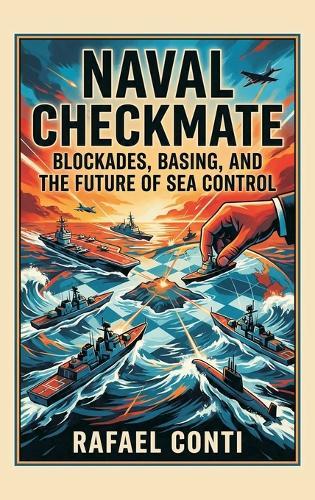
For centuries, the most consequential naval victories have often been won without a climactic battle. Pressure at sea is frequently built the slower way: by constraining routes, controlling ports, and making an opponent's trade and military movement too risky to sustain. From the First World War's far-reaching interdiction campaigns to Cold War confrontations framed as limited ""quarantines"", the strategic question has persisted: not who can win a single engagement, but who can remain on station, enforce restrictions, and manage escalation while the world watches. Naval Checkmate reframes sea control as a practical contest of access and endurance. Rafael Conti examines what makes a maritime blockade credible in a globalised economy, how chokepoint strategy concentrates leverage and danger, and why basing rights and access agreements can matter as much as ship numbers. He follows the sustainment problem through naval logistics: replenishment, repair, ammunition realities, and the vulnerability of the support fleet. He then shows how maritime surveillance complicates concealment and manoeuvre, tightening decision time and raising the costs of miscalculation in crowded seas. Written for students of strategy, informed general readers, and policy and military analysts, the book provides a disciplined framework for assessing maritime options without relying on secret data or fashionable predictions. Readers finish with a clearer grasp of how geography, sustainment, and escalation constraints shape what navies can credibly threaten, what they can reliably protect, and how maritime power is converted into lasting leverage.
Full Product Details
Author: Rafael Conti
Publisher: Vij Books
Imprint: Vij Books
Dimensions:
Width: 15.20cm
, Height: 2.20cm
, Length: 22.90cm
Weight: 0.612kg
ISBN: 9789377941345
ISBN 10: 9377941342
Pages: 332
Publication Date: 20 May 2026
Audience:
General/trade
,
General
Format: Hardback
Publisher's Status: Active
Availability: Not yet available

This item is yet to be released. You can pre-order this item and we will dispatch it to you upon its release.
Author Information
Rafael Conti writes about maritime power as a meeting point of geography, institutions, and political choice. His work is driven by a simple conviction: naval history becomes most useful when it illuminates how states actually sustain pressure, manage risk, and signal intent under uncertainty. Rather than treating the sea as an empty backdrop for decisive battles, he is drawn to the infrastructure of strategy - ports and replenishment lines, access permissions and chokepoints, the routine work that turns presence into influence.Conti's approach is comparative and historically minded. He is interested in how similar operational problems recur across eras even as technologies change: the gap between observing and targeting, the fragility of forward basing, the bargaining power embedded in a coaling station or a modern logistics hub. A recurring reference point in his thinking is the long argument, running from early twentieth-century blockade debates through Cold War maritime crises, over what counts as legitimate interdiction and what merely creates new escalatory traps.As an author, Conti aims for clarity without simplification. He writes for readers who want concepts they can apply: students building analytical habits, practitioners seeking better questions, and general readers looking for a grounded way to interpret maritime headlines. His guiding impulse is intellectual honesty - to show where strategy is constrained by distance and politics, and where choice still matters.