Overview
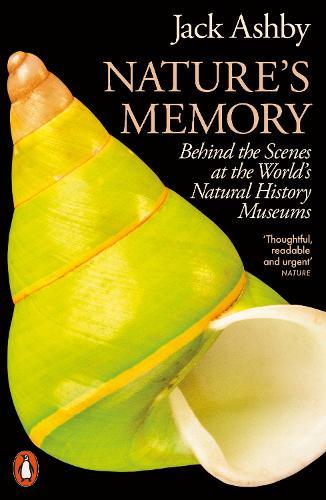
An affectionate and eye-opening insider's guide to the world's great natural history museums In Nature's Memory, zoologist Jack Ashby shares hidden stories behind the world's iconic natural history museums, from enormous mounted whale skeletons to cabinets of impossibly tiny insects. Look closely and all is not as it seems- these museums are not as natural, Ashby shows us, as we might think. Mammals dominate the displays, for example, even though they make up less than 1 percent of species; there are many more male specimens than females; and often a museum's most popular draw - the dinosaur skeletons - are not actually real. Over 99 percent of museum collections are held in immense, unseen storehouses. And it's becoming clear that these institutions have not been as honest about their complex histories as they should be. Yet natural history museums are also the only museums that can save the world - it is just starting to be understood that their vast collections are indispensable resources in the fight against biodiversity loss and climate catastrophe. Weaving together fresh historical research with surprising insights, Nature's Memory is a love letter to the joys, eccentricities and planet-saving potential of the world's best-loved museums.
Full Product Details
Author: Jack Ashby
Publisher: Penguin Books Ltd
Imprint: Penguin
Dimensions:
Width: 12.80cm
, Height: 2.00cm
, Length: 19.80cm
Weight: 0.254kg
ISBN: 9781802063837
ISBN 10: 1802063838
Pages: 336
Publication Date: 23 April 2026
Audience:
General/trade
,
College/higher education
,
Professional and scholarly
,
General
,
Tertiary & Higher Education
Format: Paperback
Publisher's Status: Forthcoming
Availability: Not yet available

This item is yet to be released. You can pre-order this item and we will dispatch it to you upon its release.
Reviews
Engaging, a timely reminder... Ashby has expertly navigated challenging topics and suggested clear and actionable solutions. In our current age of extinction, natural history museums can be powerful catalysts for change, spaces for honest narratives, and places where science meets society. Nature’s Memory makes a thoughtful, readable and urgent case for why that matters -- Claire Browning * Nature * Compelling, arresting... Reality bites, as Ashby deftly shows in this engaging book, which persuasively casts a critical eye over the imperfections of museums and how they aren't what we have often thought them to be -- Chris Stokel Walker * New Scientist * Very engaging, well researched and wide-ranging, Ashby knows more about this topic than anyone. He makes you look at museums in a different way, seeing the stories and choices beneath the surface of the displays -- Thomas Halliday Truly an accessible and memorable read for the naturally curious! Each page opens up the world of museums for all, as Ashby takes us through a wealth of insights on museum objects, specimens and stories. This book makes the unseen seen -- Miranda Lowe CBE, Principle Curator at the Natural History Museum This book is like many a museum – full of wonder and intrigue. Ashby opens the doors to their inner workings, telling us how they developed and how they are developing. Some of the stories are frustrating, others fantastical, some may even make you laugh (honestly who knew that about the Penguins) but all are thought-provoking -- Erica McAlister, author of <i> The Secret Life of Flies </i>
Engaging, a timely reminder... Ashby has expertly navigated challenging topics and suggested clear and actionable solutions. In our current age of extinction, natural history museums can be powerful catalysts for change, spaces for honest narratives, and places where science meets society. Nature’s Memory makes a thoughtful, readable and urgent case for why that matters -- Claire Browning * Nature * Compelling, arresting... Reality bites, as Ashby deftly shows in this engaging book, which persuasively casts a critical eye over the imperfections of museums and how they aren't what we have often thought them to be -- Chris Stokel-Walker * New Scientist * An “access all areas” pass to the great natural history museums of the world... One of the great joys of Nature’s Memory is Ashby’s ability to write with all the nerdy enthusiasm of a science teacher in charge of a school party. Or to put it another way, he is not a man to ignore an interesting fact -- Kathryn Hughes * The Times * Inspiring, engaging... Ashby makes a vital contribution to the literature on the history of natural history museums... Museum professionals and students aspiring to join their ranks will benefit from reading this carefully crafted book, as will anyone for whom natural history museums spark joy, wonder, curiosity, discomfort, or suspicion, and perhaps also a richer connection to nature and our living world -- Kristan M Hanson * H-Net Reviews * Very engaging, well researched and wide-ranging, Ashby knows more about this topic than anyone. He makes you look at museums in a different way, seeing the stories and choices beneath the surface of the displays -- Thomas Halliday Truly an accessible and memorable read for the naturally curious! Each page opens up the world of museums for all, as Ashby takes us through a wealth of insights on museum objects, specimens and stories. This book makes the unseen seen -- Miranda Lowe CBE, Principle Curator at the Natural History Museum This book is like many a museum – full of wonder and intrigue. Ashby opens the doors to their inner workings, telling us how they developed and how they are developing. Some of the stories are frustrating, others fantastical, some may even make you laugh (honestly who knew that about the Penguins) but all are thought-provoking -- Erica McAlister, author of <i> The Secret Life of Flies </i>
Engaging, a timely reminder... Ashby has expertly navigated challenging topics and suggested clear and actionable solutions. In our current age of extinction, natural history museums can be powerful catalysts for change, spaces for honest narratives, and places where science meets society. Nature’s Memory makes a thoughtful, readable and urgent case for why that matters -- Claire Browning * Nature * Compelling, arresting... Reality bites, as Ashby deftly shows in this engaging book, which persuasively casts a critical eye over the imperfections of museums and how they aren't what we have often thought them to be -- Chris Stokel Walker * New Scientist * An “access all areas” pass to the great natural history museums of the world... One of the great joys of Nature’s Memory is Ashby’s ability to write with all the nerdy enthusiasm of a science teacher in charge of a school party. Or to put it another way, he is not a man to ignore an interesting fact -- Kathryn Hughes * The Times * Very engaging, well researched and wide-ranging, Ashby knows more about this topic than anyone. He makes you look at museums in a different way, seeing the stories and choices beneath the surface of the displays -- Thomas Halliday Truly an accessible and memorable read for the naturally curious! Each page opens up the world of museums for all, as Ashby takes us through a wealth of insights on museum objects, specimens and stories. This book makes the unseen seen -- Miranda Lowe CBE, Principle Curator at the Natural History Museum This book is like many a museum – full of wonder and intrigue. Ashby opens the doors to their inner workings, telling us how they developed and how they are developing. Some of the stories are frustrating, others fantastical, some may even make you laugh (honestly who knew that about the Penguins) but all are thought-provoking -- Erica McAlister, author of <i> The Secret Life of Flies </i>
Author Information
Jack Ashby is the Assistant Director of the University Museum of Zoology, Cambridge, an honorary research fellow in the Department of Science and Technology Studies at University College London, and the President of the Society for the History of Natural History. He is the author of Platypus Matters- The Extraordinary Story of Australian Mammals and Animal Kingdom- A Natural History in 100 Objects, and winner of the Zoological Society of London's award for communicating zoology. He lives in Hertfordshire.